Citywealth Quick Insight Series on Wealth Trends – Duncan MacIntyre, Lombard Odier
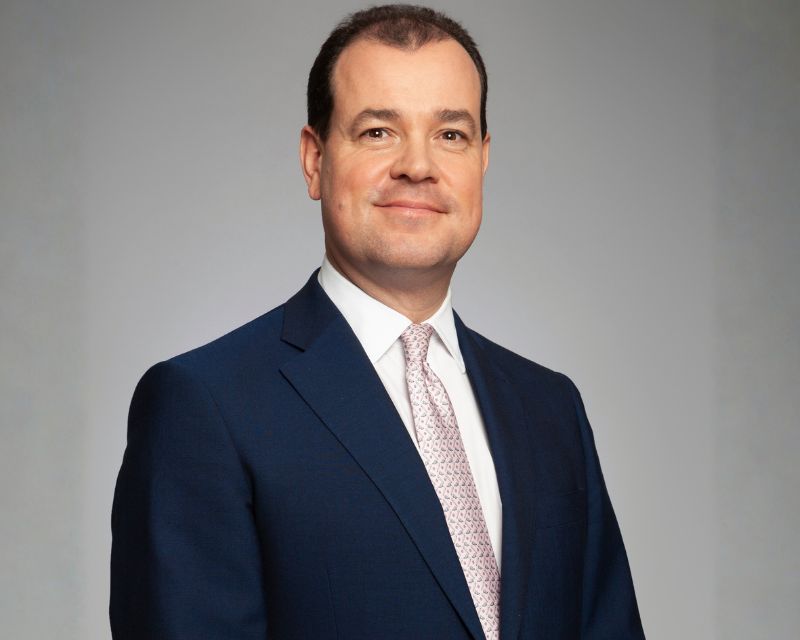
This week’s Quick Insight Series on Wealth Trends is dedicated to Duncan MacIntyre, UK Region Head at Lombard Odier.
What is your assessment of the current global political landscape and its impact on wealth management strategies?
2025 and now 2026, even though only a few weeks old, are years in which the narrative has changed, and a new global order is emerging. In a multipolar world of unpredictable trade policies, geopolitical tensions, and evolving alliances, we believe that effective investment strategies will require flexibility and even broader diversification than before.
In your opinion, how have recent policy shifts in major economies like the US, EU, China affected the long-term stability of private wealth?
Stability remains a key focus for Lombard Odier and reflects our core belief that we must find balance through movement, by constantly reevaluating the world around us. We believe that a nimble and agile approach will enable private wealth mangers to build portfolios that can not only navigate recent policy shifts but capitalise on the opportunities which they present, from the return of defence spending in Europe, to the emergence of China as a global sustainability leader and the buoyant position of emerging markets in a fragmented world competing for resources and technologies.
As we continue to navigate uncertainty in global markets, how are wealth managers adjusting their strategies to preserve and grow clients’ wealth?
The primary reaction to uncertainty can often be conservatism and ‘risk off’ investing. However, we would caution against this approach and instead believe that portfolio resilience and long-term growth will come not from retreat, but from seeking out the myriad opportunities being created in a rapidly changing investment landscape.
How important is diversification in a post-pandemic world, and which asset classes are your clients focusing on?
Our portfolios are adapting to a new world order. This backdrop, combined with a long-term outlook for more balanced returns across asset classes, demands greater portfolio diversification. In our strategic portfolio allocations, we have increased our exposure to emerging market equities where the earnings growth outlook is strong and long-term valuations look less demanding than US stocks’, and to European equities. We have maintained alternative asset exposures, increased gold allocations, and added a standalone allocation to convertible bonds. We also believe that the most robust, long-term portfolio outcomes are achievable through a ‘total wealth’ approach, that invests in both liquid and private assets where appropriate.
Sustainability investing has gained traction over the past few years. How are you seeing it affect the portfolios of high-net-worth individuals, and is this trend sustainable?
Many of our clients remain positive towards sustainable investing, and believe that sustainability factors can support superior returns, though the level of implementation lags intent. Within a changing landscape for sustainable investing, it is important to recognise the increasing importance of private capital against a backdrop of fracturing public climate ambition, and the increasing role of China as a leader in areas such as electric vehicles and solar power. We believe that our expertise in sustainability can help unlock long-term performance as new green technologies emerge and profit pools shift.
What are the emerging risks and opportunities that wealth managers should be most aware of?
In a changing investment landscape, security, sovereignty, and trade tensions are reshaping the rules of the game. This presents both risks and opportunities, with geopolitics and economics becoming increasingly interwoven.
Despite some prominent risks as we enter 2026, we still expect moderate growth in the global economy, supported by fiscal and monetary policies. Risks to our outlook could stem from US labour market weakness, geopolitical events, fiscal vulnerabilities, a reversal of positive AI sentiment, US politics or further politicisation of its institutions. We currently see tactical opportunities in emerging market assets, Swiss equities within developed markets, and in the materials, utilities and healthcare sectors. In fixed income, we see opportunities in UK Gilts, and we expect further weakening for the US dollar this year, and further gains for gold.
How have the needs and expectations of private clients evolved in recent months? Are there any new priorities or concerns they are expressing?
Our clients are very focused on portfolio resilience and diversification, with many seeking to protect their wealth across market cycles and showing an increased interest in assets like gold that can act as risk hedges. Clients are also increasingly asking about private assets, which we believe can be a key portfolio differentiator.
In what ways are clients seeking more personalized wealth management services, and how are you meeting those needs?
We have long prided ourselves on providing a personalised, holistic view of wealth, and this means we have been well prepared for the growing number of clients seeking truly bespoke wealth management services. Within this, we believe in building genuine, long-term relationships with every client, and our wealth managers take great time to understand what matters to each person – their goals, their family, their lifestyle – and then create a plan that fits them.
With the rise of digital, how are private clients responding to this?
It is clear that digital integration is set to become increasingly important in private banking, with clients demanding easier access and greater detail in the information about their investments. At Lombard Odier, we have developed our own digital platforms that offer our clients intuitive and secure interfaces, ensuring the whole private banking process is more efficient. However, it is equally important that private banks continue to have the human touch, and our approach to technology is focussed on enabling our people to be more informed, more responsive, and ultimately more able to provide a highly tailored service.
Are there any new technologies or platforms that are making a significant impact on how private wealth is managed or delivered?
At Lombard Odier, we have invested significantly in developing our own software, a process that has culminated in our global wealth management platform called G2, which is currently undergoing a 7-year development programme to deliver its next-generation iteration, GX. Built by bankers, for bankers, the platform is renowned among professional investors and our clients as one of the leading platforms in the wealth management industry. Combining a comprehensive integration with CRM and customer lifecycle management processes, GX enables bankers to navigate between dedicated client spaces and portfolio management within a single system, while also directly connecting to our clients’ e-banking interface, My LO, ensuring the full integration of end-to-end customer interactions.
Duncan MacIntyre’s Citywealth Leaders List profile
Lombard Odier’s Citywealth Leaders List profile
Subscribe to the Citywealth Weekly Newsletter to learn more about Private Wealth Management.
Read more:
Citywealth Magic Circle Awards 2010 – Online voting announced | Citywealth News
Celebrating its 20th Anniversary of Impactful Change
60 seconds with Oliver Hart, Lombard Odier
Citywealth profile: Sally Tennant, Head of Private Banking, Lombard Odier UK | Citywealth News
London has few competitors as a financial and lifestyle hub | Citywealth News
Oil prices are not causing undue financial strain | Citywealth News
“For the entrepreneur, Asia is an easy proposition” | Citywealth News

Citywealth Quick Insight Series on Wealth Trends – Michelle White, Rathbones Group
This week’s Quick Insight Series on Wealth Trends is dedicated to Michelle White, Private Office Lead at Rathbones Group.
Citywealth Quick Insight Series on Divorce Trends – Alexander Breedon, Withers
This week’s Quick Insight Series on Divorce Trends is dedicated to Alexander Breedon, Partner in the Divorce and Family at Withers.