Trusts, sanctions and the reality of control: A significant new EU court decision
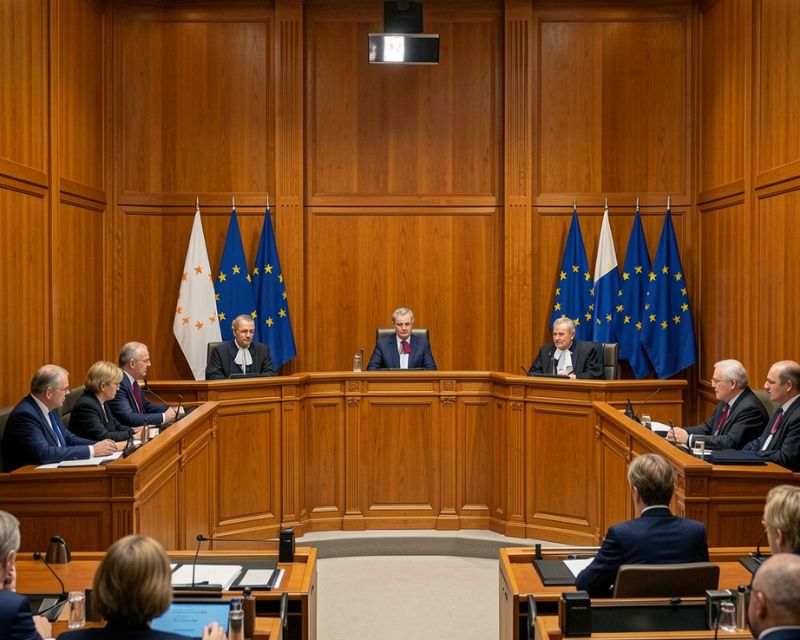
The Court of Justice of the European Union (CJEU) has delivered an important judgment on the treatment of trust assets under EU sanctions regimes. In T Trust (Case C-483/23) and the joined cases FZ AR and SX (Cases C-428/24 and C-476/24), the Court confirmed that assets held through trust structures may be frozen where a sanctioned settlor or beneficiary retains sufficient influence or control over those assets, even if the trust documentation appears to remove their legal ownership or formal control.
To understand the significance of the decision, it is important first to understand what a trust is from a legal perspective.
A trust is a legal relationship under which a person, known as the settlor, transfers assets to a trustee to hold and administer for the benefit of one or more beneficiaries or for a specified purpose. The trustee becomes the legal owner of the assets and is responsible for managing them in accordance with the trust deed and fiduciary duties imposed by law. Beneficiaries may receive income or capital from the trust and have rights to hold the trustee accountable, but they do not normally own the trust assets themselves. In some structures, a protector may also be appointed, often with powers to approve certain trustee decisions or appoint and remove trustees.
This separation of legal ownership from economic benefit is one of the defining characteristics of trust law and has long been recognised across common law jurisdictions.
The cases before the Court involved Bermuda trust structures connected to individuals who had become subject to EU sanctions. In some instances, sanctioned persons had been removed as beneficiaries before sanctions took effect, and the trust instruments expressly prohibited sanctioned individuals from exercising control over trust assets.
Nevertheless, the Italian authorities concluded that the assets remained attributable to those individuals and imposed freezing measures.
The key question referred to the CJEU was whether assets could still be regarded as “belonging to” or being “controlled by” a sanctioned settlor or beneficiary even where legal ownership rested entirely with trustees.
The judgments contain the Court’s detailed reasoning on:
- the interpretation of “belonging to” and “control” under Article 2 of Regulation 269/2014;
- attribution of trust assets to settlors and beneficiaries;
- the significance of de facto influence over trustees;
- the role of complex trust structures in sanctions circumvention analysis.
The Court’s answer was unequivocal. For sanctions purposes, the concepts of ownership and control must be interpreted broadly to ensure the effectiveness of restrictive measures. The Court held that these concepts extend beyond formal legal rights and encompass situations where a person exercises de facto power, influence or economic control over assets. Assets may therefore be treated as belonging to, or being controlled by, a settlor or beneficiary where that person can use, benefit from, dispose of, or materially influence decisions concerning those assets.
Importantly, the Court did not overturn orthodox trust principles. It did not hold that trust assets legally belong to beneficiaries, nor did it disregard the separate role of the trustee. Instead, it created a distinction between private law ownership and public law attribution.
In other words, a trustee may remain the legal owner of trust assets under trust law, while those same assets may simultaneously be treated as controlled by a sanctioned individual for the purposes of EU sanctions enforcement.
The judgment is therefore best viewed as a “substance over form” decision. The Court recognised that trust structures can vary significantly in practice. Some trustees exercise genuine independent discretion, while others may operate within structures where settlors, beneficiaries or protectors retain substantial influence over investment decisions, distributions, appointments or the overall administration of the trust. In such circumstances, the formal allocation of legal title will not prevent regulators from examining who truly influences outcomes.
This distinction is likely to have consequences well beyond the sanctions context. The judgment reinforces a broader regulatory trend whereby authorities increasingly focus on practical influence rather than formal legal structures. Reserved powers, protector rights, powers to appoint or remove trustees, informal directions, family relationships and patterns of benefit may all become relevant indicators of control.
For trustees, family offices and trust and corporate service providers, the message is clear. Effective asset protection and governance can no longer rely solely on legal drafting. Regulators and enforcement authorities will look beyond the trust deed to examine how decisions are actually made and who ultimately influences outcomes.
The decision therefore represents another step in the evolution of international compliance standards: legal ownership remains important, but practical control may now be the decisive factor.
How Rosemont Can Help
As regulators increasingly look beyond legal ownership to examine who truly controls assets, trust structures require more than sound legal drafting. Rosemont works with private clients, family offices and professional intermediaries to assess governance arrangements, sanctions exposure, AML/CFT risks and beneficial ownership considerations across trust and fiduciary structures. Our multidisciplinary approach combines trust administration, compliance, regulatory and risk management expertise to help clients demonstrate genuine trustee independence, strengthen governance frameworks and navigate an increasingly complex international regulatory environment.
For more information contact Peter Brigham, Rosemont Monaco SAM – a Citywealth member.
Key Takeaways
- The CJEU ruled that assets in trusts can be frozen if a sanctioned settlor or beneficiary holds significant influence over them, despite legal ownership resting with trustees.
- A trust separates legal ownership from economic benefit, creating complexities in sanction enforcement.
- The court emphasized that ownership concepts extend to de facto power over assets, impacting how regulators approach trust structures.
- This ruling highlights a shift towards focusing on practical influence rather than just formal legal rights within trust governance.
- Trustees must now ensure effective asset protection and governance, as regulators will scrutinize actual decision-making processes.
Subscribe to the Citywealth Weekly Newsletter to learn more about Private Wealth Management.
Read more:
Insurance Can Be Used to Complement a Trust Strategy | Citywealth News
Digital Assets and PPLI Explained | Citywealth News
Private Placement Life Insurance | Citywealth News
Estimated reading time: 5 minutes


Mirabaud celebrates Matisse at the Grand Palais and reaffirms its commitment to art alongside the Centre Pompidou
As part of its renewed commitment to the Centre Pompidou, Mirabaud is pleased to support the major exhibition dedicated to Henri Matisse: “Matisse 1941–1954”, presented at the Grand Palais while the Centre Pompidou undergoes renovation.
The Mayor Gallery at TEFAF Maastricht 2026
The Mayor Gallery participates in this year’s TEFAF Maastricht in collaboration with BorzoGallery. The joint booth brings together a focused selection of post-war and contemporary masters central to the European and international avant-garde.