Sustainable investing in 2026: the great wealth transfer meets fiduciary reality
Sustainable investing has entered a new phase. In 2026, sustainable investing is no longer defined by ESG labels alone. As the great wealth transfer accelerates, next generation beneficiaries are pushing for portfolios, philanthropy and family wealth structures to reflect their values.
See the Citywealth Leaders List: Top 25 Sustainability Experts 2026

Trustees, however, remain bound by fiduciary duties, settlor intentions and obligations to current and future beneficiaries. The result is a growing tension between influence and authority, making governance, stewardship and accountability the defining sustainability issues for wealth managers and family offices. This was discussed at the recent Citywealth Forum in the panel trusts and investment strategies.
A year ago, discussions centred on climate commitments, ESG ratings and the growing influence of younger investors. Those themes remain important, but the conversation has become more nuanced. As wealth continues to transfer between generations, trustees, family offices and wealth managers are increasingly grappling with a fundamental question: how can sustainability goals be balanced with fiduciary duties, investment performance and the realities of long term wealth preservation?
At the same time, investors are demanding greater transparency around sustainability claims, regulators are tightening scrutiny of greenwashing, and families are redefining the relationship between investing, philanthropy and social impact.
The result is a shift away from broad ESG aspirations towards a more practical focus on governance, stewardship and accountability. The great wealth transfer continues to reshape priorities
Next generation values challenge traditional structures
The transfer of wealth from Baby Boomers to Generation X, Millennials and Generation Z remains one of the most powerful forces influencing investment behaviour globally.
Younger generations consistently demonstrate a stronger desire to align their capital with personal values, whether through sustainable investing, impact strategies or philanthropic initiatives. Yet as wealth transitions, decision making authority often remains embedded within trust structures and governance frameworks established decades earlier.
This creates a growing tension between those who hold legal authority and those who are increasingly influencing the conversation.
Miles Dean, Partner and Head of International Tax at Andersen LLP, commented: “Trustees remain bound by Cowan v Scargill principles and duties to the whole beneficiary class, creating friction when current beneficiaries’ who might push for ESG mandates that may compromise returns. Butler-Sloss v Charity Commission [2022] has softened this for charities but, the orthodox position for private trusts still constrains how far trustees can go without express authority.”
“Most discretionary trusts drafted before the ESG era lack express powers to apply exclusion screens, pursue impact mandates, or weigh non-financial considerations. This forces families into deed variations, sub-funds, or appointments out, each carrying tax, perpetuity and reserved-powers consequences.
“Families whose wealth originated in hydrocarbons, mining, tobacco or heavy industry cannot easily reconcile portfolio decarbonisation with continued ownership of the source asset, which leads to internal contradictions that the public ESG conversation rarely addresses.
“The much-cited generational wealth transfer is moving influence to next-gen beneficiaries faster than trust instruments, investment policies and family constitutions are being updated. This is creating a widening gap between who is making the noise and who holds the legal authority.”
His comments highlight one of the defining challenges facing families today. While younger beneficiaries increasingly seek sustainable and impact focused investment approaches, many trust structures were established long before ESG considerations became mainstream. As a result, trustees are often navigating a difficult balance between evolving expectations and long established legal duties.
Governance becomes the new sustainability battleground
When family values outpace trust frameworks
While much of the public debate around sustainable investing focuses on investment products and performance, advisers increasingly point to governance as the emerging challenge.
Alice Killingbeck, Partner, Head of Family Office & Private Client Legal and Private Capital Market Lead at KPMG UK, said: “We increasingly see fundamental differences in values and priorities, for example around impact investing, sustainability, and philanthropy, which can create tension where trust structures and investment policies were designed for a different world view. Navigating those value shifts, while remaining within fiduciary duties and the settlor’s intentions, presents a distinct and growing challenge for trustees.”
Trustees are increasingly finding themselves balancing competing priorities within the same family. Some beneficiaries favour traditional investment approaches focused on capital preservation and growth, while others prioritise measurable social and environmental outcomes alongside financial returns.
Marie McNeela, Managing Director of Equiom Guernsey, explained: “In Guernsey, trustees are increasingly navigating divergent values within the same generation of beneficiaries, particularly in relation to impact investing. It is no longer uncommon for family members to hold fundamentally different views on the purpose of capital: some favouring traditional, return-driven strategies focused on capital preservation and growth, while others prioritise investments that deliver measurable social or environmental outcomes alongside financial returns.”
McNeela points to innovative approaches emerging within trust structures, including separate investment sleeves and governance arrangements that allow different family branches to pursue differing objectives while preserving overall trust integrity. The sustainability debate, therefore, is becoming as much about governance as investment strategy.
From philanthropy to participation
Why younger donors want control, not just contribution
The philanthropic landscape is also changing. While previous generations often focused on funding charitable causes, many younger philanthropists want a more direct role in shaping outcomes and driving impact.
Alexandra Mitchell, Partner, Holland & Knight, Seattle and Washington DC agrees with a more active NextGen beneficiary and observed: “A recent trend with next-generation donors is the desire to operate, not just fund. Rather than writing checks to further philanthropic objectives, the next generation of philanthropists want to own the execution, whether to evaluate, direct, or control the outcome.”
“This preference appears in the selection of the philanthropic vehicle. While section 501(c)(3) private foundations and public charities continue to serve important roles, alternative structures like LLCs and social welfare organizations may provide a better fit. These structures offer greater flexibility in governance, deployment of capital, and scope of permissible activities.
“The tax result is not always driving the entity choice. If anything, next-generation philanthropists appear to prioritize structural flexibility and direct involvement over personal income tax benefits.”
This reflects a broader trend across wealth management. Increasingly, younger investors view philanthropy, impact investing and portfolio management as interconnected rather than separate activities.
Miles Dean notes that younger generations increasingly treat foundations, donor advised funds and investment portfolios as a continuum rather than distinct buckets of capital. This shift is blurring traditional boundaries between philanthropy and investment and creating new considerations for trustees, advisers and family offices alike.
Fiduciary duties remain under scrutiny
Trustees caught between competing generations
Despite growing interest in sustainable and impact focused investing, trustees remain bound by legal obligations that extend beyond the preferences of any individual beneficiary.
Joshua Rubenstein, Partner and Global Chair, Private Wealth at Katten, New York commented: “From an estate planning standpoint, impact-based investing can create various challenges. If you want impact-based investments and own the investments yourself, there are no issues, as it is your sole decision. But if you want impact-based investments and are one of multiple beneficiaries of a trust structure, that is a decision that impacts more than just you.”
“Usually, the creator of a family fortune has created wealth by putting all of his or her eggs in one basket that he or she understand well. But when wealth is transmitted in a trust structure after its creation, maintaining it across generations usually involves diversifying investment risk and investing for total returns that outpace distributions, administrative costs and inflation.”
Rubenstein said. “A trustee must consider the interests not only of the current class of beneficiaries but also of future classes of beneficiaries.”
The challenge is particularly acute where trusts support multiple generations and where beneficiaries hold differing views on risk, return and impact.
Vicky Kinrade, Executive Director, Private Wealth & Family Office at Equiom Isle of Man, added: “From an Isle of Man trustee perspective, we are increasingly seeing tensions arise where ESG and impact ambitions intersect with trustees’ fiduciary duties to balance risk, return and long-term sustainability, particularly where governing documents were not drafted with such flexibility in mind. In practice, this is prompting careful consideration of investment powers and, in some cases, structural solutions to accommodate divergent beneficiary views while ensuring decisions remain defensible and aligned with trustees’ core duties.”
For trustees, sustainable investing increasingly requires careful navigation between evolving values and established fiduciary obligations.
The fight against greenwashing enters a new phase
From ESG labels to accountability
Greenwashing remains a concern, but the discussion has evolved significantly. Where previous debates focused primarily on marketing claims and sustainability labels, attention is now shifting towards accountability, due diligence and verification.
According to Miles Dean: “There is of course also a greenwashing risk transferred to trustees. Trustees and family-office CIOs consume fund labels and rely on them for mandate compliance. When those labels fail under ESMA scrutiny, the trustee’s due-diligence and ongoing-monitoring process is what gets tested.”
Investors are increasingly demanding evidence rather than promises. Fund managers are being asked to demonstrate how sustainability objectives are implemented, measured and monitored in practice.
This growing focus on transparency is helping drive a more mature and sophisticated sustainable investing market.
Stewardship moves centre stage
Engagement replaces exclusion as the preferred strategy
One of the clearest developments over the past year has been the growing importance of stewardship and active ownership. Rather than relying solely on exclusionary screens or ESG ratings, many wealth managers are placing greater emphasis on engagement with companies, voting activity and long term risk management.
A recent example is Rathbones’ launch of its Responsible Investment Centre of Excellence, bringing together stewardship, ESG integration and sustainable research capabilities under a single framework. The move reflects a broader industry trend towards embedding sustainability considerations throughout the investment process rather than treating them as a specialist discipline.
By integrating sustainability research, stewardship and investment expertise, firms aim to better identify long term risks and opportunities while supporting stronger client outcomes.
The emphasis is increasingly on evidence, engagement and long term value creation.
Bridging the generational divide through responsible investment
Kate Elliot, Head of Responsible Investment Centre of Excellence, Rathbones said: “Sustainable investment is not the exclusive preserve of younger investors, and we work with many clients from older generations who have a long‑standing and deeply held commitment to investing in line with their values. That said, research does suggest higher levels of interest and awareness among younger cohorts. A recent Investment Association survey found that 73% of Millennials and 68% of Gen Z investors actively seek out or consider sustainable investments, compared with 38% of Baby Boomers.”
“In our experience, where tensions arise between generations, or between different branches of the same family, the flashpoint is rarely the investment decision itself. More often, it is the feeling of being excluded from decisions that affect wealth you are ultimately meant to benefit from. We have worked with families where beneficiaries were not necessarily calling for radical changes to underlying investments but did want a clearer understanding of the responsible investment approach, more meaningful and transparent reporting, and, crucially, confidence that their views were being taken seriously.”
“Our role is often to act as a translator between generations. When a 75‑year‑old trustee talks about ‘fiduciary duty’, they may be expressing a concern about safeguarding the family’s long‑term financial security. When a 20‑year‑old beneficiary talks about ‘impact investing’, they may be expressing a desire for the family’s wealth to contribute positively rather than cause harm. Both perspectives are entirely legitimate, and they do not need to be competing objectives. With a wide range of responsible and sustainable investment tools available (from ESG integration and active engagement to exclusions and positive tilts) investment professionals need to be well equipped to help families navigate these options and agree an approach that reflects both financial responsibilities and evolving values.”
Looking ahead
The growing gap between influence and authority
Audrey Ramirez, Managing Director of Equiom Monaco, summarises the changing environment: “Next gen beneficiaries are increasingly treating sustainability as a core requirement, not a preference, and they expect trustees to reflect that in investment policy and oversight. The practical impact is more robust due diligence: challenging ESG claims, checking what sits beneath fund structures, and documenting decisions so they remain defensible for all beneficiaries.”
“We must strike a careful balance: remaining consistent with decisions made in the past, while adapting strategies to reflect the evolving priorities and values of the next generation.”
As younger generations gain influence, the central challenge facing trustees is becoming increasingly clear. Beneficiaries may have stronger views on sustainability, impact investing and philanthropy than any generation before them, yet influence does not automatically confer authority.
Many trust structures, family constitutions and investment policies were designed decades ago, often with little consideration for ESG priorities or impact objectives. As Alice Killingbeck notes, tensions are most likely to arise where expectations are not aligned early and where governance frameworks fail to evolve alongside family values.
The result is a widening gap between those shaping the conversation and those responsible for making decisions. For trustees, the challenge is not simply whether to embrace sustainable investing, but how to reconcile changing beneficiary expectations with fiduciary duties, the settlor’s intentions and the interests of future generations.
That tension may well become the defining sustainability issue of the next decade.
Key Takeaways
- Sustainable investing in 2026 prioritises governance, stewardship, and accountability amid the great wealth transfer.
- Younger generations push for investments that align with their values, challenging traditional trust structures and fiduciary duties.
- Trustees must balance the evolving expectations of beneficiaries with long-established legal obligations, creating tensions in decision-making.
- The philanthropic landscape shifts as next-gen donors seek direct involvement rather than just financial contributions.
- The focus shifts from broad ESG aspirations to accountability, due diligence, and transparency in sustainable investing practices.
- It is not just a generational divide, families can disagree on mandates in the same generation.
Subscribe to the Citywealth Weekly Newsletter to learn more about Private Wealth Management.
Read more:
Middle East: Top 30 Wealth Managers of 2025 – Citywealth
Harlequins Announce Exclusive Wealth Management Partnership with Titan Wealth
Titan Wealth acquires Ravenscroft investment management business in the UK
Titan Wealth acquires Ravenscroft Investments Limited

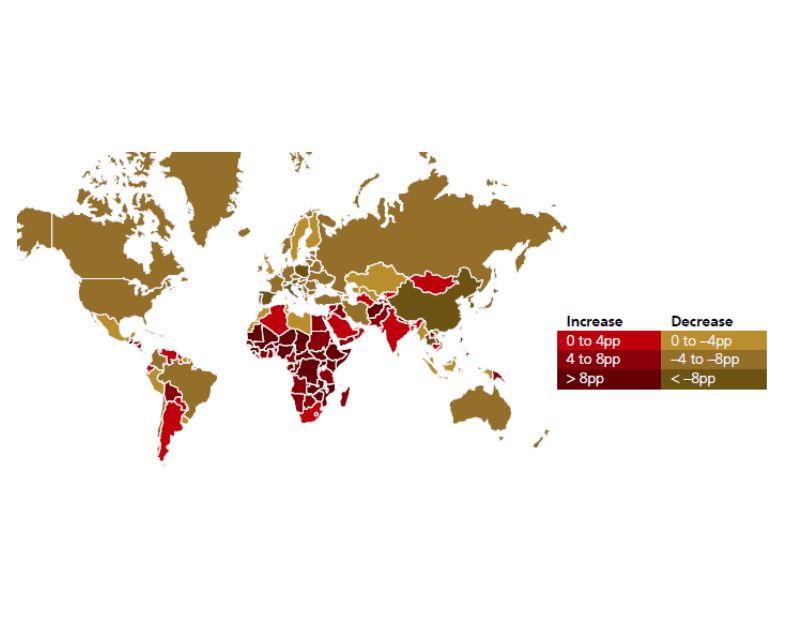
UBS Optimus Foundation and co-funders commit USD 29 million to Chancen International’s Future of Work Fund
Chancen International has announced it has secured USD 29 million for its Future of Work Fund (the FWF). The FWF is a cutting-edge funding model that uses Income Share Agreements (ISAs) and will enable more than 15,000 young people to access quality education, offering an alternative to traditional debt-based student loans and reducing financing risks.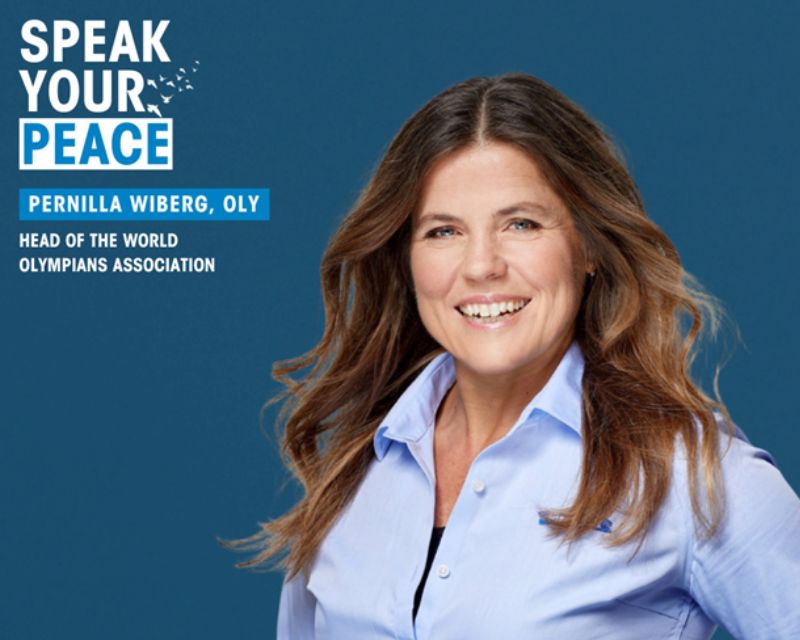
Pernilla Wiberg: “Sport is a tool for peace, and we need Olympians in society”
Elected to lead the World Olympians Association (WOA), former alpine skiing champion Pernilla Wiberg takes on a mission that goes far beyond the sporting arena.