Paddington Street Gardens: What is going on with Marylebone’s Beloved Park?
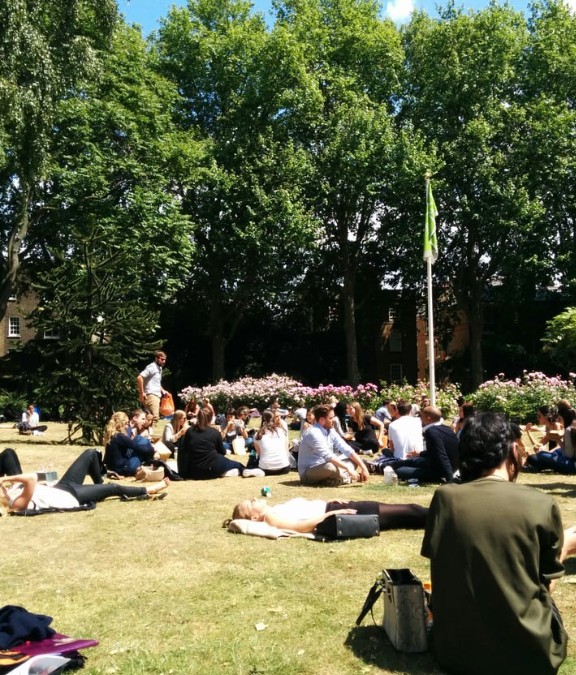
Let’s Protect Marylebone’s Historic Park
Tucked in the heart of Marylebone, Paddington Street Gardens has been a peaceful haven for local residents, families, dog walkers, and schoolchildren for generations. It’s more than green space — it’s part of our shared daily rhythm.
But while the gardens remain cherished, decision-making about their future is happening quietly — with residents often the last to know.
A Unique Heritage at Risk
Paddington Street Gardens is consecrated church land, still under the care of St Marylebone Parish Church, but managed day-to-day by Westminster City Council.
Its history is remarkable: once 18th-century burial grounds for St Marylebone Church, the land was transformed into public gardens in 1885 by the Metropolitan Public Gardens Association and designed by Fanny Wilkinson, Britain’s first professional female landscape gardener. Many of the original lime and London plane trees remain, alongside the Fitzpatrick Mausoleum, a Grade II-listed monument.
This heritage deserves careful stewardship, not opaque “masterplanning.”
The North and South Parks
- South Garden: Westminster Council already has funding to refurbish the children’s play area. Sensible ideas are on the table — like updating equipment and adding a small kickabout space to replace the one lost at Luxborough Street.
- North Garden: Widely seen as underused and “miserable,” with potential to be a tranquil green retreat. Proposals have included more and better seating, especially as local workers need places to eat lunch outdoors.
Both improvements would meet Neighbourhood CIL (Community Infrastructure Levy) funding criteria, and the church has signalled support for sympathetic changes.
Where It Went Cold
In 2023, Harley Street BID appointed landscape architects J&L Gibbons to consult on improvement plans. Walkthroughs with stakeholders were held in spring 2024.
But since then, progress has stalled. Westminster City Council has money to refurbish the south garden, but nothing moves without community consultation — which Harley Street BID promised to deliver but hasn’t.
This has left a vacuum: the budget exists, sensible schemes exist, even church approval exists — but residents remain uninformed and excluded.
Why Residents Are Worried
The local BIDs (Business Improvement Districts) represent commercial interests — medical, hospitality and property companies — not residents. Their priorities risk reshaping the park around business needs, not community ones.
Residents’ concerns include:
- Loss of tranquillity: Turning gardens into a “destination” space will bring noise and commercial activity.
- Displacement: Families, dog walkers, and children risk losing calm areas they rely on.
- Commercialisation creep: “Public realm” language often signals kiosks, events, or semi-private control.
- Exclusion: Consultations are business-led, not resident-led.
A Call for Transparency
This isn’t about resisting all change. It’s about ensuring improvements protect the historic layout, monuments, and daily use of the gardens.
Local voices are calling on Westminster City Council and Harley Street BID to:
- Guarantee no loss of green space or free public access.
- Include residents’ groups in all consultation and planning.
- Pause design work until transparent engagement takes place.
How You Can Help
- Share this article with neighbours, schools, and local groups.
- Contact:
- Marylebone Association → michael.bolt@marylebone.org
- Harley Street BID → nicki@harleystreetbid.com
- Email your councillors:
- Karen Scarborough (Conservative, Marylebone Ward)
Email: kscarborough@westminster.gov.uk | Phone: 020 7641 5377
Westminster City Hall, 64 Victoria Street, London SW1E 6QP
- Karen Scarborough (Conservative, Marylebone Ward)
- Post your photos and stories about why the gardens matter to you. Use hashtags #PaddingtonStreetGardens #Marylebone #MaryleboneVillage.
Marylebone’s Future
This is not just about one park. It’s about who Marylebone is for — residents or businesses.
With almost 300 years of heritage and a vital role in community life, Paddington Street Gardens deserves protection, not commercialisation.
Where is Paddington Street Gardens?
Paddington Street Gardens are two small public gardens in the heart of Marylebone, Central London. They sit on either side of Paddington Street and are surrounded by residential streets, shops, and local schools.
What is the history of Paddington Street Gardens?
The gardens have a remarkable history dating back nearly 300 years:
Originally created as burial grounds for St Marylebone Parish Church in the 18th century.
The south garden was donated in 1730 by Edward Harley, 2nd Earl of Oxford and Earl Mortimer.
The north garden was purchased by the parish in 1771.
Closed to new burials in 1814.
In 1885, the Metropolitan Public Gardens Association converted the land into public gardens, designed by Fanny Wilkinson, Britain’s first professional female landscape gardener.
Opened to the public in 1886 by Princess Louise, Duchess of Argyll.
The Fitzpatrick Mausoleum (1759) remains in the south garden and is Grade II listed.
This makes Paddington Street Gardens not only a green space but also a heritage site of historic and cultural significance.
Who owns Paddington Street Gardens?
The land is historically churchyard land originally owned by St Marylebone Parish Church and therefore the Church of England still retains an interest as the original freeholder.
It is legally classed as consecrated land and subject to ecclesiastical law and heritage protections.
It is managed and maintained by Westminster City Council as public gardens, but the underlying title is ecclesiastical.
This means any major changes, especially disturbing the soil or historic monuments, may require consent from the Diocese of London (faculty approval) and heritage authorities.
What is Harley Street BID?
Harley Street BID is a Business Improvement District — a not-for-profit company funded by local businesses (mainly medical, hospitality and property sectors) in the Harley Street area.
It aims to improve the area’s public realm, promote medical tourism, support business safety and marketing, and boost local economic activity.
It’s members are businesses and property owners.
What are Harley Street BID’s plans for the gardens?
In early 2024, Harley Street BID secured a Neighbourhood Community Infrastructure Levy (NCIL) grant from Westminster City Council to fund research into “future improvements” for the northern section of Paddington Street Gardens.
They have commissioned urban designers Publica and traffic consultants NRP to develop a strategic masterplan for the wider Harley Street area, including the gardens.
Their language refers to “public realm interventions,” “wayfinding,” “futureproofing,” and “enhancing air quality.”
Local residents worry this means physically altering the gardens, introducing new infrastructure, increasing commercial use and footfall, and eroding their quiet community character.
Why are local residents concerned?
Residents are concerned that:
Plans could gentrify and commercialise a peaceful residential park.
RESIDENTS ARE THE LAST TO KNOW about any of the upcoming proposals
The park could be reframed as a “destination space” to support medical tourism, which may displace local daily users like families, schoolchildren and dog owners.
Any works could disturb historic churchyard soil, monuments, or trees without proper ecclesiastical and heritage oversight.
The heritage and sacred nature of the site could be ignored or sidelined.
Does anyone have to approve changes to the gardens?
Yes. Because the gardens are former consecrated burial grounds:
Major works would require faculty consent from the Diocese of London (Church of England).
Disturbing human remains or altering memorials requires special licences and heritage consent.
Any permanent physical changes also require planning permission from Westminster City Council, with heritage officers consulted due to the Grade II listed Fitzpatrick Mausoleum.
What is at risk if the plans go ahead?
Loss of green space and tranquillity
Increased noise, crowding and event activity
Possible removal of mature trees or alteration of historic layout
Reduced accessibility for children, elderly residents and dog walkers
Erosion of the gardens’ 300-year cultural heritage and identity as sacred space
How can I help protect Paddington Street Gardens?
Share articles and posts using:
#PaddingtonStreetGardens #Marylebone #MaryleboneVillage
Contact your local councillors such as Karen Scarborough at kscarborough@westminster.gov.uk to demand full public consultation.
Attend public Westminster City Council and Marylebone Association meetings and raise the issue.
Post your own photos and stories showing how you and your family use the gardens.
For further information or to join or help spread the message about the garden concerns contact Karen Jones, kjones@citywealthmag.com
020 7487 5858
#PaddingtonStreetGardens – get residents input into any ‘Masterplan’ before it reaches consultation stage.