£11.5 Million Paddington Street Gardens Plan Raises Questions Over Communication and Transparency in Marylebone
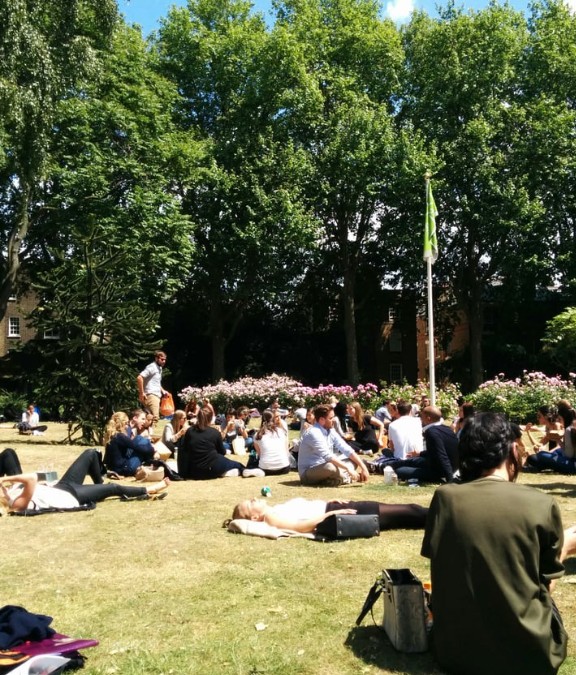
Marylebone residents are calling for greater communication and transparency after learning of an apparent £11.5 million plan by the Harley Street Business Improvement District (BID) to redevelop Paddington Street Gardens as part of a wider public-realm strategy.
The masterplan — discussed in community meetings and referenced by local sources — is understood to outline ambitions to make the area “more welcoming, accessible and greener,” including a vision to “celebrate the area’s healthcare connections” through public spaces designed around health, accessibility and well-being.
Councillors Deny Gentrification Plans
The debate intensified after Westminster City Councillors Barbara Arzymanow, Ian Rowley, and Karen Scarborough emailed residents today via the Two Cities Conservatives database — the local Conservative Party organisation representing Westminster and the City of London.
In their message, the councillors insisted there were “no plans for gentrification or alteration of the Gardens’ use.”
They added that any future improvements would require consultation and permission from the Church of England, which owns the consecrated land.
However, the Harley Street BID Masterplan, circulated internally among stakeholders earlier this year, sets out a long-term design and investment strategy for Paddington Street Gardens, Cavendish Square, and the surrounding Harley Street and Marylebone High Street area. The plan positions the BID not merely as a funding body but as a curator of public spaces, branding the district around themes of well-being, health, and accessibility.
A Plan for Health and “Well-Being”
The masterplan describes ambitions to “celebrate healthcare connections” by creating public spaces centred on health, accessibility, and well-being.
While the phrasing appears positive, urban planners note that such language often signals a branding approach — one that reframes civic areas like Paddington Street Gardens as “wellness environments” aligned with the Harley Street medical identity.
A former Marylebone Forum commentator, who participated in early discussions, said that the Harley Street BID appointed a landscape design team in 2023 to lead the project and organised stakeholder walk-throughs in spring 2024, but progress “went cold.” Westminster City Council, he said, had funding set aside for park improvements but required clear evidence of community support before any plans could advance.
A Community in the Dark
Despite official reassurances, many residents remain unaware of any formal consultation process. Signs frequently appear in Paddington Street Gardens without explanation, adding to local frustration and suspicion about unannounced changes.
“There is constant confusion,” said one resident. “Signs go up and no one knows who’s in charge — or why they are going up.” The Garden Voices have to assume its part of the undisclosed Masterplan.
Locals say the north side of the gardens has become the focal point of competing visions: whether it should be upgraded as a tranquil reflective area, redesigned for children, or designated as a dog-friendly space.
Dogs, Tenants and Tensions
The debate has also stirred renewed tension around dog ownership in the gardens. Some locals say that an earlier proposal to permit off-lead exercise in the north section was rejected by the Council and Church — a decision that frustrated many dog owners. At the same time, it frustrated non-dog-owning residents voiced concern about shared use, citing issues such as space, noise, and maintenance. To clarify the gardens are owned by Westminster Council and gifted to them by the church but with use restrictions from the Church.
In cities such as New York, small fenced-off dog runs are common features of public parks, offering safe off-lead areas for pets while keeping wider green spaces open to everyone. Some residents believe that a similar approach could be worth exploring as part of any future upgrade of Paddington Street Gardens, particularly as a family-friendly amenity welcomed by local parents’ groups.
While the current debate is largely between residents and councillors, the area is also shaped by visitors — from market-goers and nearby office workers to tourists and dog walkers passing through. Many enjoy the park but may be unaware of signage or rules that are primarily directed at residents, leading to a sense that restrictions are applied unevenly or disproportionately.
The issue, residents say, reflects a broader challenge: how to balance the needs of a community that lives beside the park with those who use it as a public destination.
£11.5 Million and Counting
The Harley Street BID’s plan refers to a network of “future public-realm projects” across the district, with Paddington Street Gardens named as a key site. The draft masterplan describes both “basic upgrades and repairs” and more “ambitious opportunities” to transform the northern section, including new layouts, planting schemes, and pavilion upgrades.
During a recent discussion at the Marylebone Association, a local Reverend familiar with the history of the gardens said that the cost of proposed works is considered to be around £11.5 million — a figure far higher than what might be expected for routine maintenance. The Church of England, Westminster City Council, and the Harley Street BID are all understood to have been involved in feasibility discussions dating back to 2023.
So far, no detailed public breakdown of the £11.5 million budget has been published, and a review of Westminster Council’s public materials has not revealed any obvious listing or scope document for the project.
A Cautionary Tale from Westminster
Residents have also pointed to the Marble Arch Mound as a warning of how large-scale public-realm projects can go wrong. The temporary hill, built by Westminster City Council in 2021 to attract visitors to Oxford Street, spiralled from a £3.3 million estimate to around £6 million before closing within months.
The fiasco led to the resignation of the then Deputy Leader of the Council who had overseen the scheme.
Many see the Mound as a reminder that ambitious design projects must be matched with strong oversight, transparency, and fiscal responsibility — qualities residents say they hope to see guaranteed in any future works at Paddington Street Gardens.
A Positive Example: St Marylebone Church Garden Revitalisation
Just a few minutes’ walk from Paddington Street Gardens, St Marylebone Parish Church has launched the Central Church Garden Fundraising Campaign — an effort to restore and reimagine the historic church garden, first created in 1810.
The project aims to transform the long-neglected space into a sustainable, inclusive sanctuary while honouring its Regency-era heritage. The plan includes new benches, improved accessibility, enhanced biodiversity, and areas for quiet reflection, learning, and small cultural events.
The restoration will be delivered in three phases, with a projected cost of around £750,000, and fundraising is now underway. The initiative, led by The Revd Canon Dr Stephen Evans, represents a collaborative, transparent model of how green-space improvements can be achieved with clear community involvement and accountability. All is published on the Church website.
About The Revd Canon Dr Stephen Evans:
Canon Evans has served as Rector of St Marylebone Parish Church since 2010, following a career that began as a Royal Navy seaman officer before his ordination in 1986. He holds an honorary doctorate from the University of Aberdeen and plays an active role in community life, including as Vice-Chair of The St Marylebone School and Trustee of several local charities.
Those wishing to support the campaign can learn more or donate via the church’s website: stmarylebone.org/support-us/campaigns or directly through its fundraising form form.jotform.com/251494829512362.
A Call for Communication: The Garden Voices (TGV)
Residents say they are not calling for yet another formal consultation, which many describe as opaque and impossible to interpret.
Instead, they want regular, open communication — clear updates about concepts, changes, and ideas before decisions are made, and a chance to contribute meaningfully to the park’s future.
“Consultations feel like they happen after everything’s already been decided,” said one resident. “We don’t want another form to fill in — we want an honest conversation.”
To reflect that sentiment, locals have begun informally organising as The Garden Voices (TGV) — a community initiative of Marylebone residents and park users who want constructive, transparent dialogue about the future of Paddington Street Gardens and neighbouring green spaces.
TGV’s message is simple: no more opaque consultations — just communication, collaboration, and care.
A Shared Space in Need of Shared Dialogue
For now, the only unifying sentiment among councillors, church representatives, and citizens seems to be fatigue. Many say they are exhausted by the lack of clarity over what is happening in Paddington Street Gardens, and by the broader communication gap between decision-makers and those who use the park daily.
“It’s not just about trees and benches,” said one resident. “It’s about trust — and no one feels they’re being told the full story.”
After months of uncertainty, the common sentiment across Marylebone is now exhaustion and frustration — not just with the fate of Paddington Street Gardens, but with the wider sense that decisions are being made about residents rather than with them.
Get Involved: Ask Questions and Stay Informed
Local campaigners are encouraging residents to stay engaged and press for answers about the Paddington Street Gardens proposals.
Contact points for further information and questions:
- Westminster City Councillors: Barbara Arzymanow, Ian Rowley and Karen Scarborough – via westminster.gov.uk
- Marylebone Association: marylebone.org
- Harley Street BID: harleystreetbid.com/contact
- Marylebone Forum: maryleboneforum.org
- Westminster Council Magazine (City for All): media@westminster.gov.uk
Residents are urged to request publication of:
- The full feasibility study for Paddington Street Gardens
- The Harley Street BID masterplan budget breakdown
- Details of consultation processes and governance responsibilities
Key Takeaways
- Marylebone residents demand greater communication and transparency regarding the £11.5 million plan by the Harley Street BID to redevelop Paddington Street Gardens.
- Councillors assure there are no plans for gentrification, yet a masterplan aims to enhance public spaces centered on health and well-being.
- Local community concerns include lack of formal consultation and frustration with signs appearing without context in Paddington Street Gardens.
- Residents propose improvements that balance the needs of dog owners and non-dog owners, addressing shared use of public space.
- The Garden Voices (TGV) initiative seeks open dialogue and clear updates about changes to Paddington Street Gardens, moving away from opaque discussions.
You can also contact the author and local resident to join The Garden Voices
Karen Jones
kjones@citywealthmag.com
+44 (0) 20 7487 5858
Search Tags / SEO Keywords:
Paddington Street Gardens, Marylebone, Westminster City Council, Harley Street BID, Harley Street Masterplan, Marylebone Association, Marylebone Forum, St Marylebone Parish Church, Central Church Garden Project, The Revd Canon Dr Stephen Evans, Westminster public spaces, Renters’ Rights Bill, dog walking rules London, community consultation, Church of England, £11.5 million project, public realm redevelopment, Marble Arch Mound, Melvyn Caplan, Two Cities Conservatives, Westminster Council communication, The Garden Voices, TGV, community fatigue Marylebone, open communication not consultation.