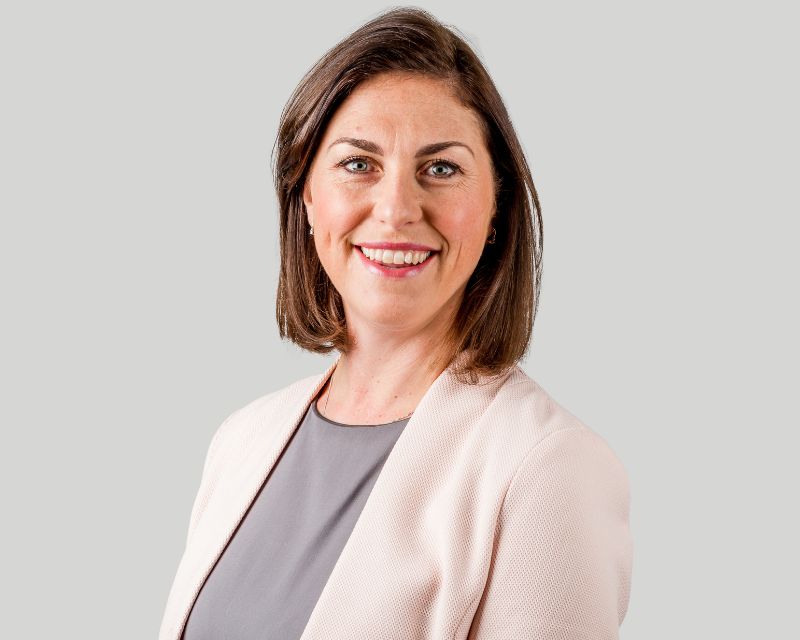
Citywealth Quick Insight Series on Tax Trends – Liz Cuthbertson, Mercer & Hole
This week’s Citywealth Quick Insight Series on Tax Trends is dedicated to Liz Cuthbertson, Private Client Tax Partner, Mercer & Hole.

How would you summarize the current global tax environment for UHNW individuals and families? Are there particular jurisdictions that are becoming more (or less) attractive?
Across the globe there is increased transparency of data with exchange of financial information agreements, increased tax rates in many jurisdictions and aggressive enforcement.
While tax remains important, it is no longer the sole driver behind relocation decisions for many UHNW families. Political stability, stable financial governance, personal security, education, lifestyle and succession planning are increasingly shaping jurisdiction choices.
This is evidenced from some recent client enquiries of relocation back to the UK from Dubai and wider Middle East region. Whilst many have chosen to remain in UAE, the regional disruption has made some families rethink their immediate priorities. London is viewed as a safe haven in many respects.
The new Foreign Income and Gains UK tax regime offers potential tax breaks for many arrivers across key direct taxes who haven’t previously been resident in the UK for tax for 10 years.
At the same time the new UK tax regime has resulted in an overall increased UK tax burden, and this has caused many to reconsider where they choose to live.
For those for whom tax is a key driver, Italy and Portugal and Switzerland are also still high
What recent tax policy changes in key regions—such as the U.S., UK, EU, or Asia—do you believe have the most significant implications for global wealth structuring?
The UK’s overhaul of its non – domicile regime is seismic. Other countries are also tightening existing tax regimes and looking at ways to tax wealth, for example through exit taxes when capital leaves or other measures.
There is ongoing global transparency with sharing of financial data through the CRS including also now many Asian countries. Many individual countries have introduced additional reporting on controlled transactions. The UK and US have very generous lifetime giving regimes on the value of gifts to individuals. (The OBBA in the US has changed the US landscape). With transition of wealth to the next generations, there are opportunities to explore the transfer of wealth to trusts or corporates where appropriate with a view to enabling value to leave an estate or offer flexibility to do so over time with careful planning.
Jurisdictions are still competing for UHNW’s through their targeted tax regimes, and this leads to movement of HNW and UHNW and their wealth, but tax rules come and go.
More recently here in the UK there has been some ‘noise’ around further changes to CGT which is being watched closely.
With ever increasing complexity and uncertainty, wealth holding structures need to be regularly reviewed to ensure they are rigorously tax compliant across multiple jurisdictions and meeting client objectives and purpose.
What are the emerging cross-border tax challenges facing wealthy international families today?
The challenge is no longer simply tax efficiency. It is managing increasingly complex reporting, compliance and governance obligations across multiple jurisdictions with some inconsistencies, whilst ensuring these structures remain fit for purpose for future generations.
Wealth preservation is a key objective along with keeping the family together. Wealth holding arrangements therefore serve multiple purposes.
IHT remains a concern for many which is why some are still looking to leave the UK. There are jurisdictions they can move to that offer a more favourable outcome for those who wish to leave.
Globally there is a great wealth transfer taking place so the younger generations will have more wealth. They will invest it based on their goals and purpose so education and strategic long-term wealth holding arrangements are vital for these clients.
How are advisors helping clients prepare for increased transparency, disclosure rules (like CRS and FATCA), and information-sharing regimes?
International information-sharing regimes such as CRS and FATCA have fundamentally changed the landscape for global wealth structuring. Transparency is essential, and tax authorities have unprecedented visibility over international assets and income flows.
As a result, families are placing greater emphasis on governance, documentation and ensuring structures have genuine commercial and succession-planning rationale, rather than purely tax-driven objectives. Failure comes with increased punitive outcomes, presenting significant reputational risk.
In what ways are philanthropic structures and charitable giving being shaped by evolving tax legislation and public policy?
Philanthropy is becoming increasingly strategic and internationally focused among UHNW families. Rather than ad hoc giving, many families are establishing formal charitable structures designed to support long-term objectives and involve multiple generations.
Younger family members are often influential in shaping philanthropic priorities, particularly around sustainability, education and social impact. In some instances, this can be across many different countries. As a result, families are increasingly seeking governance structures that align charitable activity with broader family values and legacy planning, and which is also measurable in its impact.
What role do tax-efficient investments (e.g., private placement life insurance, real estate, etc.) play in your clients’ strategies, and are these evolving?
Clients are increasingly prioritising the purpose of their wealth, flexibility, portability and governance alongside tax efficiency. Structures that can adapt to changing residency positions and evolving family circumstances are particularly attractive.
We continue to see interest in real estate, family investment companies and insurance-based wealth planning solutions where appropriate, particularly where they support succession planning and long-term wealth preservation objectives. Simplicity and transparency are becoming more important considerations than purely tax-driven outcomes.
How is succession and estate planning being impacted by new inheritance, wealth, or exit tax proposals globally?
International mobility is becoming a long-term feature of wealth planning rather than a one-off relocation exercise. Families increasingly have members living, studying and working across multiple jurisdictions, creating far more complex residency and succession considerations.
The interaction between residence rules, local tax regimes and cross-border reporting obligations is becoming important. As jurisdictions continue to evolve their tax policies, flexibility within wealth structures will be critical. UHNW’s will continue to seek optionality.
Are you seeing increased interest in alternative jurisdictions, citizenship or residency-by-investment programs due to tax considerations?
This doesn’t come without risks. In an increasingly uncertain geopolitical environment, many internationally mobile families continue to value the UK’s long-established legal framework, independent judiciary and strong governance standards when considering how and where wealth should be held and administered.
While some jurisdictions may offer attractive tax regimes, families are also weighing wider considerations around long-term political stability, rule of law and asset protection. Concerns around sudden policy shifts, capital restrictions or even the risk of assets being frozen or seized are becoming part of the conversation for some internationally connected families.
As a result, wealth structures are increasingly designed not purely for tax efficiency, but to balance protection, governance, flexibility and long-term family succession objectives.
Many UHNW individuals can relocate with a degree of ease to multiple homes and so the idea of being rooted solely in one place is not necessarily their norm.
How are tax authorities using digital tools, AI, and data analytics to enhance enforcement—and how should advisors respond?
Increasingly, authorities are able to analyse large volumes of financial, corporate and property data alongside international information-sharing regimes. AI-driven systems can identify inconsistencies, unusual transaction patterns and discrepancies between reported income, asset ownership and lifestyle indicators far more quickly than traditional manual reviews.
We also expect continued investment in technology that enables tax authorities to share and interrogate data across jurisdictions in real time, including information relating to crypto assets, offshore structures and international property holdings.
As a result, internationally mobile families are placing greater emphasis on transparency, governance and ensuring wealth structures are robust, well-documented and capable of withstanding increased regulatory scrutiny.
Looking forward, what are your top predictions or concerns about the future direction of global tax policy for UHNW clients over the next 12–24 months?
Over the next 12–24 months, we expect global tax policy to continue moving towards greater transparency, increased international cooperation and closer scrutiny of cross-border wealth structures. Governments remain under fiscal pressure and there is growing political focus internationally on how UHNW individuals and globally mobile wealth are taxed.
There is increasing international debate (amongst the G20) around minimum taxation for the ultra-wealthy and whether existing tax systems adequately capture globally mobile capital.
As a result, internationally mobile families are likely to place even greater emphasis on compliant, well-governed and flexible structures that can adapt to evolving international tax rules.
Subscribe to the Citywealth Weekly Newsletter to learn more about Private Wealth Management.
Read more:
Accountants Mercer & Hole have announced the appointment of Jo Bateson
Top 75 Family Lawyers 2025 | Citywealth Top List
Navigating cross-border family law in an increasingly borderless world | Citywealth News
Citywealth Quick Insight Series on Wealth Trends – Rachel Roberts, Stowe Law
Future Leaders Awards 2020 | Citywealth Awards Results
Navigating cross-border family law in an increasingly borderless world | Citywealth News
Citywealth Weekly: 11th March 2026
60 seconds: Shivi Rajput, Stowe Family Law


Citywealth Quick Insight Series on Divorce Trends – Shivi Rajput, Stowe Family Law
This week's Citywealth Quick Insight Series on Divorce Trends is dedicated to Shivi Rajput, Partner at Stowe Family Law
Citywealth Quick Insight Series on Sustainability Trends in Wealth Management – Jeanne Collins, KBI Global Investors
This week's Citywealth Quick Insight Series on Sustainability Trends in Wealth Management is dedicated to Jeanne Collins, Head of Responsible Investing Policy & Stewardship at KBI Global Investors.