Citywealth Quick Insight Series on Jurisdictions – Greta Penda, Collas Crill and Kerrie Le Tissier, Guernsey Association of Trustees
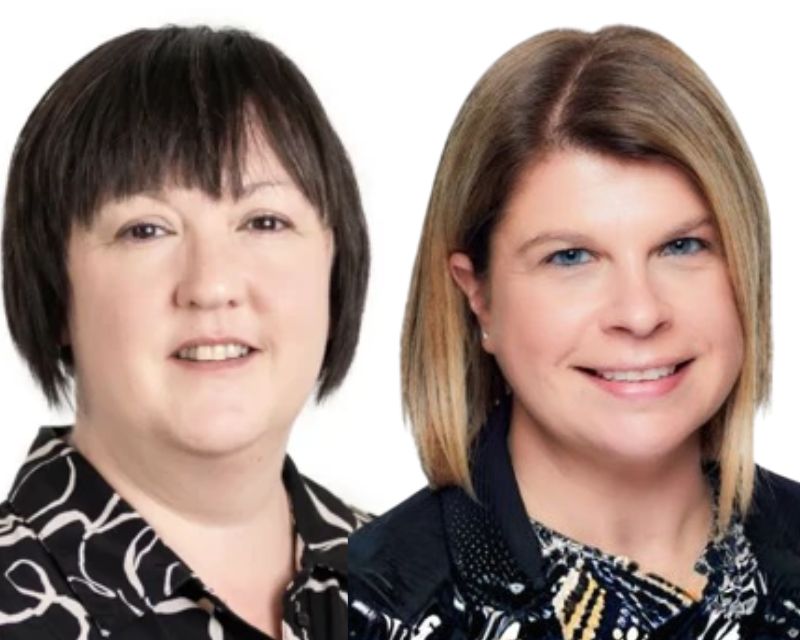
This week’s Quick Insight Series on Jurisdictions – Greta Penda, Managing Director at Collas Crill and Kerrie Le Tissier, Chair of Guernsey Association of Trustees.
Jurisdiction change and family offices
What has changed most in how international families, including single and multi-family offices, use your jurisdiction today compared with two or three years ago?
- Consolidation and efficiency
- Increasingly, families are using Guernsey as a wider operating ‘hub’ for governance, administrative and structuring purposes.
- Increased interest in using a single jurisdiction such as Guernsey as a ‘one stop shop’, as it is more operationally efficient and also provides a more holistic view from service providers, rather than spreading structures over various jurisdictions.
- Greater emphasis on governance and professionalisation
- International families are increasingly treating their structures like institutional enterprises, so they expect their trustees and other service providers to deliver board‑level governance, independent oversight, and documented decision‑making frameworks, rather than principally administrative support.
- Families are also engaging more with their trustees and board directors – they are asking more questions and expecting greater visibility on activity within their structures. They expect strategic input, scenario planning, and proactive risk identification from their Guernsey fiduciaries — a shift from “service provider” to “strategic partner”.
- Drivers for choice of jurisdiction
- The decision to use Guernsey structures is less tax driven, particularly following UK tax changes in the past couple of budgets – international families and their advisers are more focused on their asset protection and succession planning needs.
- They are also more likely to base their choice of jurisdiction on other factors, such as the quality and experience of the jurisdiction’s service providers, compliance with international standards, mature regulatory environment, track record of stability and reputation.
- We are also seeing increased relocation and substance‑driven activity. Some families and family office executives are spending more time in Guernsey or establishing on‑island presence to benefit from economic substance, lifestyle, and proximity to trusted advisers.
- Shift away from traditional trust structures
- Over the last few years, we have seen an increase in the use of alternative private wealth structures, including Guernsey foundations, private trust companies (PTCs), private investment companies, private investment funds and bespoke governance vehicles to reflect modern family dynamics, philanthropic aims, and succession planning.
- That trend is set to continue as awareness of these alternative structures increases – a traditional trust structure is not always the best solution for international families, particularly where they demand greater control over their structures and want to be actively involved in decision-making.
Legal and regulatory developments
Which specific legal or regulatory changes have been most significant in your jurisdiction over the past two to three years?
- Strengthening of the family office ecosystem
- Guernsey’s Private Investment Fund (PIF) regime was streamlined and simplified in May 2025 with some changes to the private fund regime for Qualifying Private Investors (QPIs), which is designed for investors who are able to evaluate the risks and strategy of investing in the PIF, and to bear the consequences of investment in the PIF. The list of types of investors who may be QPIs includes Experienced Investors, or Knowledgeable Employees, and High-Net-Worth Investors, so will be available to many family offices. The changes include removal of the compulsory audit requirement and the upper limit on the number of investors).
- The changes also saw the retention of the Family PIF as a separate route to market, tailored to high-net-worth individuals. To qualify as a Family PIF, all investors must share a family relationship, or be an eligible employee of the family, and the PIF cannot be marketed outside the family group.
- The Guernsey Financial Services Commission (GFSC) also launched a new limited protection of investors (POI) licence for Guernsey fiduciaries in October 2025. A family wanting to set up a Family PIF can now appoint a fiduciary (with the appropriate licence), who has experience of administering a variety of private wealth structures, to administer their PIF.
- Guernsey PIFs, and particularly Family PIFs, are often used by family offices to consolidate family wealth and implement long-term, shared investment strategies across generations. It is expected that these changes will see more opportunities for family offices to set up investment vehicles in Guernsey.
- Updates to licensing guidance and the GFSC’s pragmatic approach to PTC oversight have further supported the growth of high‑quality, well‑governed family office structures, with clearer expectations around governance, risk management, and outsourcing.
- Digital finance
- Guernsey introduced a new regime to regulate virtual asset service providers (VASPs) in 2023. Under the Lending, Credit and Finance (Bailiwick of Guernsey) Law, 2022 (the LCF Law) persons providing a range of services, including those relating to virtual assets and cryptocurrencies, need to obtain a licence from the GFSC. The regulation of VASPs ensures that anyone carrying out activities in this sector is properly regulated for the purposes of anti-money laundering and countering the financing of terrorism and proliferation financing (AML/CFT/CPF),and so meets the same high standards as other Guernsey financial services businesses.
- In September 2025 the GFSC launched its Digital Finance Initiative (DFI), “a programme to support the positioning of the Bailiwick of Guernsey as a trusted, agile, and forward-thinking jurisdiction for digital financial innovation”. As part of the DFI, the GFSC launched a consultation paper in December 2025 to develop its Digital Finance Regulatory Strategy. This is likely to lead to further legal and regulatory changes in this sector – see below responses to Q8. (The consultation is open for responses until 6 March 2026.)
- Recognition of compliance with international standards
- Guernsey’s recent MoneyVal evaluation has been an important regulatory milestone, reaffirming the island’s strong alignment with global AML/CFT/CPF standards.
- While not a legislative change in itself, the assessment has validated the effectiveness of Guernsey’s supervisory model and the maturity of its financial crime controls.
- This external recognition has strengthened the jurisdiction’s credibility at a time when international families and family offices are increasingly sensitive to reputational and regulatory risk.
- Increased engagement and collaboration between the regulator and industry
- The past couple of years have seen increased engagement and collaboration between the GFSC and industry. The regulator has moved towards a more open, consultative style — using thematic reviews, discussion papers, industry roundtables and meetings with industry associations to test ideas and gather real‑world insight before making policy decisions. This has supported innovation — from the evolution of the PIF regime to the development of digital finance frameworks — while simultaneously raising governance and compliance standards.
- The GFSC’s engagement with fiduciaries and other interested parties (including the Guernsey Association of Trustees, which is the industry association representing the regulated fiduciary sector in Guernsey, means that new rules are informed by how structures operate in practice. This has led to frameworks that are both robust and workable from a practical perspective, reducing friction for international families and their advisers.
Cross jurisdiction structuring
Are families and family offices increasingly structuring across multiple jurisdictions for strategic or business reasons, and if so, which jurisdictions are most commonly being combined with yours?
- In some cases, where there is for example, a need for a local business to remain within jurisdiction e.g. specific foreign ownership rules in Saudi Arabia, where operating businesses may only receive a specific commercial contract if they are locally owned; then you may see a combination of jurisdictions being involved.
- Similarly, with international families there may be a need, as an example, for structuring internationally and domestically e.g. if there are family members who are US persons, there may be a need for a US domestic structure, which can then be combined with a Guernsey structure for the non-US persons, if needed.
- However we are more generally seeing a trend toward consolidation with a desire from clients – driven by efficiency but also service; one central point for their structuring means there can be deeper relationships and also knowledge of the family and the assets: this may mean the structuring is undertaken in one jurisdiction, or where there is need to combine with other locations, a ‘lead’ party may be informally agreed upon.
- Guernsey maintains a flexible and collaborative approach when needed and the key consideration is ensuring that any structure, either purely in Guernsey or combined with other jurisdictions, is the best possible fit for the family’s long-term goals.
Family breakdown and asset protection
How are divorce, relocation and blended families changing trust, foundation or asset protection planning in your jurisdiction?
- The practical shift is toward planning for conflict and complexity as a baseline — not an exception. Divorce risk, second marriages, and multi-household dynamics are leading families to adopt clearer governance documents (letters of wishes that are actually maintained, family charters, and decision protocols), segregation of assets (ring-fenced sub-trusts, separate compartments, or distinct foundation purposes), and stronger “control architecture” (thoughtful protector/guardian roles, reserved powers used carefully, and documented conflict-management processes).
- Relocation also matters: families increasingly want structures that can adapt if beneficiaries move (or if a family member becomes tax resident somewhere unexpected). That’s pushing more emphasis on flexible trustee powers, robust distribution mechanics, and evidence of proper decision-making.
Next generation influence
Where are younger family members most influencing succession planning, investment decisions or jurisdiction choice?
- Governance and transparency around succession planning; wanting to be part of the conversation and having their views considered especially where the underlying assets may be a family run business.
- Also looking for support with entrepreneurial ventures and want to understand how that can factor into either existing or new structures.
- Investment decisions – sensitive to reputational and sustainability considerations, as well as moving towards greater transparency – pushes demand towards well-regulated, co-operative IFCs.
- Younger family members tend to ask more questions around purpose, governance, fiduciary powers etc. – holding fiduciaries to account, which drives even higher governance standards.
Women and control of wealth
How has the growing role of women as wealth holders or decision makers changed structuring or governance choices?
- Movement from informal influence to more formal decision rights for women within the family.
- Structuring that recognises women’s wealth ownership in its own right rather than assuming it is a result of marriage.
- Seeing a shift particularly with Midde Eastern families with:
- Women creating and protecting their wealth and becoming more involved in financial matters, compared to previously primarily being inheritors.
- Move within families towards a more meritocratic approach; not just the first-born son automatically involved in the family business and / or long-term structuring decisions around succession planning and asset protection. This is bringing women into governance and asset allocation conversations earlier, even where legacy structures where historically patriarch-led.
- Vision-linked reforms are expanding financial sophistication at the point of liquidity. Under Saudi Vision 2030, more Saudi women reach liquidity events with prior exposure to governance, capital markets and complex financial matters — changing the starting point for offshore structuring discussions from “education” to “optimisation.
- Women frequently act as the internal “risk moderators” between first-generation founders and next-gen heirs; this can result in a shift so that offshore structures are focused on matters such as clearer constitutions and formal dispute-resolution mechanisms.
- Saudi women wealth generators often expect offshore structures to accommodate Sharia principles while still enabling access to global alternatives, private markets, and co-investment opportunities — raising demand for hybrid structuring expertise rather than off-the-shelf solutions.
Sustainability in practice
What practical steps are families and family offices taking in your jurisdiction to embed sustainability, philanthropy or purpose into their structures?
- Some practical examples are:
- Creating ring-fenced philanthropic pools (often with an investment policy distinct from the main family portfolio).
- Adding mission-aligned investment mandates (e.g. exclusions, impact allocations, or stewardship policies).
- Putting ESG reporting into the regular governance cadence (quarterly dashboards, manager scorecards).
- Using foundations or trust structures to formalise multi-generational charitable intent with measurable objectives.
- Generally, more of a purpose to the giving rather than ad hoc donations.
- Digital assets and modern wealth
How are laws and regulation in your jurisdiction supporting digital assets, technology businesses or new forms of wealth?
- Virtual asset service providers (VASPs)
- As noted above, Guernsey’s VASP regime (effective 1 July 2023) created a clear licensing framework for virtual asset service providers. This supports properly governed digital asset businesses – especially those prioritising institutional standards around AML/CFT/CPF, governance, and operational substance.
- The regime gives institutional families and family offices confidence that digital‑asset activity is subject to:
- robust AML/CFT/CPF controls;
- governance and fitness‑and‑propriety standards;
- operational substance requirements;
- This framework is deliberately designed to attract well‑governed, institutional‑quality digital finance businesses, rather than speculative or lightly regulated operators.
- Tokenised assets, stablecoin and custody of digital assets
- As noted above, as part of its Digital Finance Initiative, the GFSC launched a consultation paper in December 2025 to develop its Digital Finance Regulatory Strategy. In the consultation paper, the GFSC has made proposals for amendments to the regulatory framework to support digital finance growth in key areas including tokenisation, stablecoins, digital custody, and insurance as well as the use of technology more broadly within the Bailiwick’s finance sector.
- Specific proposals include:
- revision to guidance under the LCF framework;
- introduction of a new framework for Stablecoin Issuers;
- clarification of the applicable regulatory law in respect of tokenised securities;
- greater clarity on the regulation of digital asset custody services;
- guidance supporting the use of blockchain technology for insurance contracts; and
- enhancing anti-financial crime compliance through technology.
- There is considerable support within Guernsey’s finance industry for developing and enhancing Guernsey’s blockchain and digital asset ecosystem so it is likely that the GFSC’s consultation will lead to positive legislative and regulatory changes in these areas. It is hoped that these changes will create a predictable and secure environment for families exploring digital assets, tokenisation, or fintech‑enabled private wealth and investment structures.
- Technology positive regulatory framework
- Guernsey trustees and corporate service providers are increasingly using:
• digital onboarding tools;
• automated risk‑assessment frameworks;
• secure digital communication channels.
- The regulatory environment supports this shift by focusing on effectiveness, not prescriptive processes — allowing firms to adopt new technologies (following appropriate risk assessments) while maintaining high compliance standards.
- As part of its digital finance consultation, the GFSC is also consulting with industry on proposed changes to the AML/CFT/CPF regulations to confirm its “technology positive” approach to regulation.
- Support for technology businesses beyond digital assets
- Guernsey’s company law, economic substance regime and licensing frameworks are well‑suited to:
• IP‑rich technology companies;
• fintech platforms;
• digital‑infrastructure businesses.
- The jurisdiction’s stability and governance culture appeal to founders and families seeking a safe base for long‑term value creation across a range of businesses and new forms of wealth.
Residency, visas and property
How are residency routes, visa programmes and property ownership options influencing who moves to or invests in your jurisdiction?
- Locate Guernsey is absolutely key in helping streamline family or business moves to the island, can point to professionals in Population Management, tax, immigration, TCSPs etc as well as ‘life admin’ aspects of a move.
- 2025 saw a surge in property activity – every month in 2025 has outperformed its 2024 counterpart, with total property sale values reaching £604 million by the end of October, up more than £137 million year-on-year. Falling interest rates and renewed buyer confidence have played a key role in this momentum, making Guernsey’s Open Market more accessible and attractive than ever (taken from Locate Guernsey website).
- Residency rules and tax cap frameworks are recurring discussion points for HNWIs looking to move to the island, making it an attractive prospect, however much of the reason for the move is more lifestyle related, with concerns about the political and social landscape in the UK often being a greater driver.
Future client demand
Which types of families, family offices, businesses or demographics do you expect to drive growth for your jurisdiction over the next five years?
- Growth from 3 overlapping segments:
- Families professionalising from informal wealth holding into institutional-style family offices — especially those wanting structuring options for governance, co-investment, and succession planning.
- International entrepreneurial wealth (technology, digital assets, and founder liquidity) seeking jurisdictions with clear regulation, credible providers, and practical structuring tools.
- Multi-generational families dealing with complexity (multiple residencies, blended families, values-based investing), who need robust governance and adaptable structures rather than “set and forget” planning.
Subscribe to the Citywealth Weekly Newsletter to learn more about Private Wealth Management.
Read more:
The new divorce battleground is not the courtroom
Citywealth Magic Circle Awards 2026 Shortlist Announced
60 seconds interview – Manish Singh, CIO, Crossbridge Capital
Top 75 Family Lawyers 2025 | Citywealth Top List

Citywealth Quick Insight Series on Family Office Dynamics Trends – Rachel Roberts, Stowe Family Law
This week’s Quick Insight Series on Wealth Trends – Rachel Roberts, UK Managing Director of Stowe Family Law.
Citywealth Quick Insight Series on Wealth Trends – Stuart Bates, Mirabaud Wealth Management
This week’s Quick Insight Series on Wealth Trends – Stuart Bates, UK CEO of Mirabaud Wealth Management.