Cayman Asset Protection Trusts: Structuring for U.S. Grantors
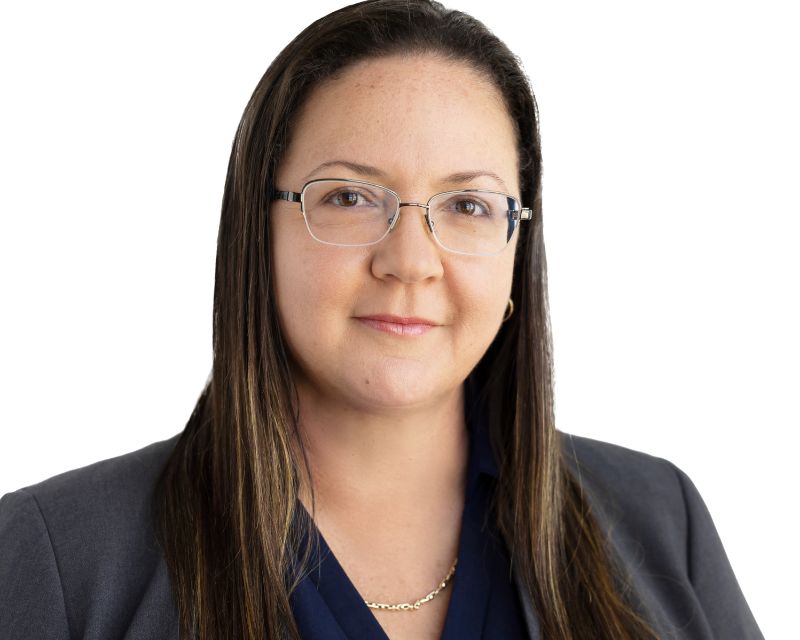
By Maxine Bodden Robinson, Founder, IMG Trust Company.
With litigation risk, political turbulence, and regulatory shifts on the rise, high-net-worth individuals are thinking beyond portfolios – they’re rethinking jurisdictions. Wealth protection today isn’t just about where assets are invested, but where they’re legally anchored.
These shifts are accelerating the move toward more sophisticated, personalised, and forward-thinking asset protection strategies. Individuals are increasingly seeking to safeguard their wealth through a combination of legal structures, proactive planning, and technological tools.
One of the most effective and increasingly popular vehicles for asset protection is the Cayman Asset Protection Trust (CAPT) – an irrevocable discretionary trust governed by Cayman law. CAPTs allow assets to be held by a trustee for the benefit of clearly defined beneficiaries, which may include the grantor. Crucially, this means the grantor can still benefit from the trust during their lifetime, without retaining legal ownership.
We are seeing a resurgence of interest in CAPTs from U.S. families because, for U.S. grantors, the Cayman Islands offer a unique blend of legal strength, financial confidentiality, and international credibility.
Why the Cayman Islands?
In the Cayman Islands, trusts are strategic tools for managing and securing assets for the future. They provide a reliable means for estate planning, ensuring that wealth is preserved and smoothly transitioned in accordance with a grantor’s wishes, outside the often complex and restrictive heirship laws and probate processes.
The preservation of wealth through a Cayman Islands trust ensures a legacy for future generations. CAPTs are valued for their versatility and confidentiality, which are paramount for long-term asset management and protection. These instruments are designed to shield your wealth from adverse events – of which there are many in today’s world – thereby offering stability to your family’s financial future.
The Cayman Islands are recognised globally as a leading jurisdiction for trusts due to:
- Strong asset protection laws: The Cayman Islands has favorable trust legislation, including provisions that make it difficult for creditors to access trust assets, especially after the expiration of the limitation period for fraudulent conveyance claims.
Trusts benefit from Cayman’s Fraudulent Dispositions Act (1996) (FDA). The effect of the FDA is to render voidable (at the instance of a creditor prejudiced thereby) any disposition made with an intent to defraud and at an undervalue (subject to the six year limitation mentioned below). The test for setting aside such a disposition is two-fold: it must be with intent to defraud and also at an undervalue.
As a result, a disposition made at an undervalue (such as a transfer of assets to trustees) is protected from claims by creditors unless they can show an intent willfully to defraud creditors then existing. Even if such a claim succeeds, the disposition is only set aside to the extent necessary to satisfy the creditors prejudiced by the disposition. It should be noted that the FDA specifically provides that the burden of proof of the transferor’s intent to defraud is placed clearly on the creditor seeking to set aside the disposition.
The possibility of setting aside a disposition only applies to creditors who existed at the time of the transfer into trust. The FDA stipulates that such a claim must be brought within six years of the date of the relevant disposition of property and prevents any action being taken to set aside the disposition after that time. Some jurisdictions have a shorter limitation period, but this is not always viewed favourably, depending on the potential claim or the jurisdiction. Cayman Islands law allows planning for the future, ahead of time, but will not assist those who seek to evade existing claims.
- Claims must generally be brought in the Cayman Islands, which increases the cost and difficulty for potential litigants, who will usually also have to post a bond to cover the trust’s legal costs in the event their claims are unsuccessful.
- Non-recognition of foreign judgments: U.S. judgments are not automatically enforceable in the Cayman Islands.
- Reputable legal and financial infrastructure: The Cayman Islands is home to top professionals in the legal, accountancy, advisory, management, investment, administration, fiduciary, and corporate service sectors, and the jurisdiction has a stable, pro-business legal framework.
Benefits for U.S. Grantors
CAPTs offer the following benefits for U.S. grantors:
- Enhanced asset protection: Once assets are transferred into a properly structured CAPT, they are no longer considered part of the grantor’s estate. CAPTs are typically discretionary trusts, meaning the trustee has full discretion over distributions, which makes it harder for creditors to claim an interest in the trust or to argue that a beneficiary has a claimable interest.
- Estate planning and succession: CAPTs can be used to transfer wealth to future generations, potentially with tax minimisation strategies if properly structured and avoiding probate.
- Jurisdictional diversification: Having assets governed by a foreign jurisdiction can be a useful hedge against political or legal instability in the U.S. Also, being outside the U.S. court system, CAPTs are less susceptible to U.S. judgments, especially if assets are held outside the U.S. and the trustee is in the Cayman Islands.
- Tax compliant investment options: With so many international investment managers now having an SEC licence and offering investment schemes that avoid the PFIC/CFC rules, it is easy to place investment management outside of the U.S.
When Might a CAPT Be Suitable
Utilising a trust in the Cayman Islands provides a discrete and sophisticated means of managing wealth, enabling a solid foundation for succession planning that aligns with the grantor’s vision.
A CAPT is suitable for U.S. individuals and families
- wishing to protect their assets from future unjust claims and creditors;
- who have substantial assets and want jurisdictional diversification and confidentiality (within the scope of legal transparency requirements);
- with a long-term estate planning horizon for wealth preservation; and
- who are not currently in financial or legal trouble.
A CAPT can be a powerful tool for U.S. grantors seeking to safeguard their assets from litigation, taxation, and probate delays. However, the complexity of U.S. tax laws means that CAPTs must be implemented with care, foresight, and professional guidance. When done correctly, they offer a robust layer of legal protection while preserving compliance with U.S. obligations, a combination that makes them an increasingly relevant strategy in today’s ever-changing world. Consulting with estate planning professionals and legal advisors is essential to tailor solutions to individual needs and circumstances.
When I began my legal career, asset protection trusts often raised eyebrows – seen primarily as tools to fend off creditors or contentious claims. But times have changed. Today, CAPTs are part of a broader, more thoughtful approach to dynastic wealth planning – one that embraces stewardship, inclusion, and resilience across generations. At IMG Trust, we believe that legitimate asset protection is central to responsible wealth planning and we are happy to accept well-planned CAPT structures. We are also happy to defend those structures when challenged. We believe in building relationships with our clients to help them establish structures that can stand the test of time. We are a family’s long-term partner and view all our trustee relationships through this lens.
Author Bio:
Maxine Bodden Robinson is a Founder of IMG Trust Company Limited in the Cayman Islands. As a lawyer with a deep understanding of family governance, she specialises in advising UHNW families on cross-border wealth structures, succession planning, and next-generation engagement. Maxine brings a modern, independent perspective to trustee services, with a particular focus on family dynamics, conflict resolution and inclusive wealth planning.
Subscribe to the Citywealth Weekly Newsletter to learn more about Private Wealth Management.
You can also read about Dubai
Read more about trustees
Citywealth Leaders List — Trustees
- Citywealth Top 75 Trustees 2025
- Citywealth Future Leaders Top 100 Trustees 2024
- Stella Mitchell-Voisin — CEO, Summit Group (Switzerland)
- Ariane Slinger — CEO, ACE International SA (Switzerland)
- Peter Moorhouse — Director, ACE International SA (Switzerland)
- Rachel Fowler Pedotti — Partner, Carey SA (Trustee of the Year – Switzerland 2025)
- Phil Lenz — Trustee of the Year – Switzerland (2025), Butterfield Trust
- Peter Goddard — Head of Private Client Services, IMG Trust (Cayman & Crown Dependencies)
- Lee Hart — Director, Saffery Trust (Cayman)
- Hannah Roynon-Jones — Director, Alex Picot Trust (Jersey)
- Jack Barlow — Senior Trust Manager, Highvern (Jersey)
- Ian Rumens — Head of Private Client Jersey, Ocorian (Jersey); Trustee of the Year – Switzerland
- Steve Gully — Director, Alex Picot Trust (Jersey)



The new era of sports investment
How private equity is fuelling a sports industry revolution: from legacy clubs to women’s leagues.
From Family Offices to Crypto: Why Bermuda is the smart choice in uncertain times
Bermuda’s Vision: Stability meets smart regulation.