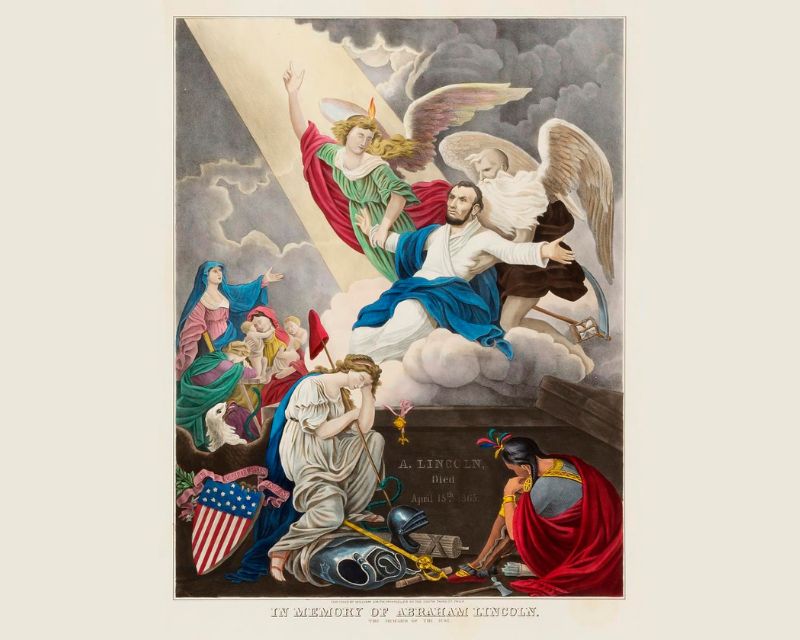
Sudden client death: when the plan meets reality
Byline: Karen Jones, founder of Citywealth, has more than 20 years’ experience in global private wealth.
Two years after the Bayesian disaster prompted Citywealth to examine sudden client death, separate civil proceedings involving Mike Lynch have resulted in a judgment of more than £900m against his estate. As wealthy families become more internationally mobile, Citywealth returns to what happens to their estates, businesses, foundations, disputes and reputations when death intervenes without warning.

In brief
Mike Lynch’s estate, estimated at about £500m, has been ordered to pay more than £900m including compensation, interest and costs in the separate English civil proceedings arising from Hewlett-Packard’s acquisition of Autonomy. The estate has since secured permission to appeal against parts of the ruling.
Turning Point USA did not contract after the death of its founder Charlie Kirk. The US non-profit reported revenue of $115.5m in its final full financial year before his death, while its student network subsequently expanded. Its high-school clubs include grassroots activism and voter-registration activity, making the succession of the movement particularly interesting as the US approaches the 2026 midterm elections.
Sudden death increasingly tests more than the will. Litigation survives the client; internationally held assets create succession and reporting obligations; founders leave businesses and philanthropic organisations without their central figure; and unresolved investigations, allegations or public controversies can leave relatives and institutions managing questions about the deceased’s reputation.
Insurance remains part of the picture. Citywealth’s previous reporting has examined life and key-person cover, while current estate disputes illustrate what can happen when insurance arrangements are incomplete or the circumstances surrounding a death require investigation.
Reputation is emerging as a succession issue in its own right. Where the individual dies during litigation, an investigation or public controversy, responsibility for managing the narrative can pass overnight to relatives, executors, trustees, businesses and professional advisers.
When sudden death brings a second crisis
Sudden death rarely arrives at a convenient moment. For wealthy and high-profile individuals, it can also leave unfinished business extending well beyond the administration of an estate. Litigation may continue, the future of a founder-led organisation can suddenly be uncertain and, where an individual dies amid an investigation, allegations or public controversy, questions about their reputation do not necessarily die with them.
The cases Citywealth has followed over the past two years are very different. Mike Lynch’s death left substantial civil litigation to be dealt with by his estate. Charlie Kirk’s death removed the founder and public face of a large US non-profit and political movement. Other recent deaths have left families and institutions dealing with ongoing investigations, allegations or public controversy at the same time as bereavement.
For advisers, that is the connection. A family may be dealing with grief and succession at the same time as litigation, police or regulatory investigations, inquests, insurance questions, press scrutiny or uncertainty inside a business or philanthropic organisation. The person best able to explain their actions, respond to an allegation, reassure investors or donors, or settle an argument within a family is no longer there.
Reputation therefore becomes one of the less tangible assets exposed by sudden death. Decisions about what to say, and sometimes whether to say anything, can pass overnight to relatives, executors, trustees, directors, lawyers and communications advisers who may never have expected to speak for the deceased. In some cases the consequences move further still, affecting the reputation of the business, foundation, university or other organisation with which the individual was closely associated.
Insurance sits within this wider picture. Citywealth’s earlier reporting examined life and key-person insurance as sources of liquidity and business continuity, and the potential for insurance payments to be delayed where there is uncertainty about the circumstances of death. But the main issue is wider. What begins as a personal tragedy can become, almost immediately, a legal, financial and reputational event.
Two years after Bayesian
When Citywealth first examined sudden client death in 2024, the Bayesian had sunk off Sicily. British technology entrepreneur Mike Lynch, his daughter Hannah and five others died in the disaster.
It came only weeks after Lynch had been acquitted on all charges in a US criminal trial arising from Hewlett-Packard’s acquisition of Autonomy. That acquittal concerned the US criminal prosecution. It did not overturn separate English civil proceedings, in which HPE had substantially succeeded on liability in 2022.
Lynch’s death interrupted but did not end that litigation. The English proceedings were put on hold while representation of his estate was resolved, before Jeremy Vaughan Sandelson was appointed as administrator for the purposes of the proceedings. In March this year the High Court ordered the estate to pay more than £900m, including compensation, interest and costs.
The numbers make the case particularly striking. Lynch’s estate has been estimated at about £500m, substantially below the judgment. That figure is an estimate rather than a published account of the estate’s realised assets and liabilities, so it would be premature to describe the estate as insolvent. But the comparison shows how a liability surviving the client can potentially overwhelm even very substantial wealth.
The litigation is not over. The High Court initially refused the estate permission to appeal, but the Court of Appeal has since allowed four of its 14 proposed grounds of appeal to proceed. The estate therefore remains a particularly vivid example of the point Citywealth raised after Bayesian in 2024: death can change who conducts a dispute without ending the dispute itself.
Jessica Medus, private wealth disputes partner at Mishcon de Reya, puts it plainly: “Who takes on the dispute: Death does not end all litigation risk; it often just changes who is in the room. Personal representatives can inherit years of contested litigation across multiple courts, and estate plans, particularly where there is ongoing litigation or the risk of litigation in the future, need to anticipate that possibility. To protect your loved ones, careful thought needs to be given to your choice of executors (who will likely step into your shoes in the dispute), how litigation costs and potential liabilities will be funded and what protections may be available to limit the impact on your beneficiaries and business interests.”
For UHNW families, that takes contingency planning beyond deciding who receives the assets. An executor can inherit the deceased’s position in substantial litigation while its costs and eventual liabilities bear directly on beneficiaries and business interests.
When several people disappear from the plan
Bayesian also brought back into focus an issue Joshua S. Rubenstein, partner and global chair of the Private Wealth Department at Katten in New York, raised when Citywealth first spoke to him about sudden death in 2024: what happens when several of the people on whom a succession structure depends die together?
“This time last year, the tragic and unanticipatable death of Mike Lynch and some of his family and advisors was top of everyone’s mind. This year, it was the tragic early deaths of Chadwick Boseman and Malcom-Jamal Warner, and the avoidable, high-profile disputes that followed. All serve as poignant reminders of why it is so important to have contingency planning in place, particularly for the UHNW client. Sudden death and simultaneous death, while statistically rare, happen in larger numbers than you would think, and can be cataclysmic if not planned for and included in one’s regularly updated dispositive documents – particularly if one leads a risky life style. Just look at the bitter disputes that befell the estates of Jimi Hendrix, Kurt Cobain, Amy Winehouse, Prince, Bob Marley, Sonny Bono, James Dean, Aretha Franklin, Barry White, and Heath Leger – to name but a few well-known examples.
“Wills and trusts should always be in place to assure the orderly disposition of assets upon death, even if actuarily the client is not likely to die for many decades. And there should always be contingency, or ‘wipeout,’ bequests and designations of successor executors and trustees in place in case immediate family members and trusted advisors all die at the same time, or have predeceased the client if the client should then die before he or she gets around to updating his or her planning.”
Rubenstein’s references to Chadwick Boseman and Malcolm-Jamal Warner are particularly current. Boseman, the Black Panther actor who died from colon cancer aged 43 in 2020 without a will, is back before the California courts six years later. His brothers, acting on behalf of their parents, are seeking to remove his widow, Taylor Simone Ledward, as administrator of his multimillion-dollar estate, alleging delays and problems with its distribution. The estate includes continuing royalties, image and intellectual-property rights, investments and insurance. Ledward disputes the allegations and has asked the court to reject the petition, maintaining that she has complied with her obligations in administering the estate.
Warner’s death was more sudden. The Cosby Show actor drowned aged 54 while on a family holiday in Costa Rica in 2025. A year later, his widow brought proceedings seeking more than $1.2m under their premarital arrangements. Her complaint alleges, among other matters, that Warner had agreed to purchase and maintain a $1m life insurance policy naming her as beneficiary and that the policy was not put in place. She has also said Warner had intended to replace an estate plan dating from 1996 but died before completing it.
Together, the cases underline Rubenstein’s point: an early or unexpected death can leave relatives managing not only grief and an estate, but outdated arrangements, valuable intellectual property, insurance questions and disputes that play out in public.
For private wealth advisers, the simultaneous-death issue is wider than spouses dying together. UHNW families routinely travel with children and other generations, while principals may travel with senior colleagues and professional advisers. A single accident can therefore remove the wealth creator alongside beneficiaries, trustees, executors, advisers or intended successors on whom the existing plan relies.
The question is not simply whether a succession plan exists, but who that plan assumes will still be alive and available when it is needed.
Wealth has become more mobile
The international dimension has become more significant since Citywealth first examined the subject. Wealthy families increasingly divide their lives between the UK, US, Europe and other financial centres as changes in government and tax policy, alongside geopolitical uncertainty, influence decisions over residence, investment and the location of family wealth.
Sudden death is one of the moments when the complexity accumulated through that mobility becomes immediately apparent.
Lady Joan Branson’s death provides a recent illustration. She died in London after a fall weeks earlier on Necker Island in the British Virgin Islands. A Westminster inquest subsequently examined her treatment following the accident.
Medus says: “Why is sudden death inherently cross-border? The lives of wealthy families today are rarely tied to one jurisdiction. Using your example, Lady Joan Branson’s unexpected death followed a fall on the family’s private island in the British Virgin Islands, treatment in London, and an inquest before a UK coroner. A life lived internationally can often mean that someone’s death can engage multiple legal systems, and that may be before estate administration even begins.”
“Inheritance and cross-border estates – the need for coordination: A wealthy individual’s life, business affairs, assets and even advisers are very rarely tied to one jurisdiction. Conflicting succession and forced-heirship rules, differing tax treatments, and the existence of multiple wills and/or complex trust structures can create inconsistency and uncertainty if the approach in each jurisdiction is not coordinated. Careful estate and contingency planning with input from advisers in each relevant jurisdiction is essential to avoid or reduce complications for your loved ones. Estate administration can seem a thankless task for your executors at the best of times, let alone when dealing with the shock and grief of sudden death, and what they really don’t need on top of that is the added complications and inevitable delays caused by a lack of joined up planning.”
When jurisdictions collide
Gareth Ledsham, partner in the trust and estate disputes team of law firm Russell-Cooke takes the international issue into the courts, where an estate with connections to several countries can face arguments over jurisdiction before the substantive dispute has even begun.
“The greatest challenges often arise not from the death itself, but from the international dimensions of a modern wealthy family’s affairs. Many individuals are globally mobile, may hold assets in several countries, and frequently have connections with jurisdictions whose legal traditions differ fundamentally. Where such multiple ties exist, determining which country’s courts have jurisdiction, which law governs succession, and how foreign decisions will be recognised or enforced can become highly complex.”
Proceedings in different countries at the same time
“It is increasingly common for family members, trustees or business stakeholders to commence proceedings in different countries at the same time. This can result in concurrent litigation, competing claims to jurisdiction and, in some circumstances, conflicting judgments. Early specialist advice is therefore critical to identify the appropriate forum, preserve assets and avoid costly procedural disputes before the substantive issues can even be addressed.”
“In addition to creating tensions between family members, unexpected deaths can also expose tensions between common law and civil law systems. A succession plan that appears perfectly effective in one jurisdiction may produce very different outcomes elsewhere because of forced heirship rules, differing approaches to trusts, tax, matrimonial property regimes or the recognition of personal representatives. The result can be uncertainty, delay and significant additional cost at precisely the moment a family is coping with bereavement.”
“For internationally mobile families, succession planning is no longer simply about drafting a will. It requires careful consideration of how assets, business interests and succession structures will operate across multiple legal systems, and whether those arrangements will remain effective if death occurs unexpectedly overseas. Planning for how a business will operate if a key individual is suddenly unable to perform their role is important in any succession plan; it becomes even more vital where those business interests span different countries and continents.”
The transatlantic inheritance
The cross-border issue is particularly pertinent to the transatlantic movement of wealth Citywealth has been watching with interest. Political and tax changes on both sides of the Atlantic, alongside wider geopolitical considerations, have prompted internationally mobile families to reconsider where they live, invest and hold businesses.
The consequences of that movement do not disappear on death. They pass to the next generation.
Michael Duffy, managing director and private wealth strategist at Merrill Private Wealth in Atlanta, Georgia, identifies a practical consequence for US heirs receiving interests in businesses outside America: they inherit reporting obligations alongside the asset.
“When a business owner dies with interests in foreign businesses, the heirs receiving such interests are generally subject to enhanced reporting in their country of citizenship as well as in the foreign country in which the foreign businesses are located. Failure to comply with such reporting can result in stiff penalties and interest. For example, there is an initial $10,000 penalty if a US person fails to file IRS Form 5471 when they have 10% ownership or control of a foreign corporation. If the IRS sends a notice of the failure and the taxpayer does not file within 90 days, there is an additional $10,000 penalty for each 30-day period (of fraction thereof) that can be imposed. The contribution penalties are capped at $50,000, making the potential fine for not filing IRS Form 5471 $60,000 per foreign corporation per year.”
For private banks and advisers dealing with families moving capital, businesses and family members between the US and Europe, the point is significant. Cross-border succession transfers obligations as well as ownership, and the next generation can find itself responsible for structures created in jurisdictions with which it has previously had little involvement.
When the founder disappears
Citywealth returned to sudden death in 2025 following the death of Charlie Kirk, the conservative activist and Christian campaigner who founded Turning Point USA. His death presented a different succession question from the one raised by Lynch: what happens when a substantial non-profit unexpectedly loses the charismatic founder whose public identity, personal relationships, fundraising appeal and beliefs have become closely associated with its own?
The scale is significant. In its final full financial year before Kirk’s death, Turning Point USA reported revenue of $115.5m, up from about $85m a year earlier. Of the 2025 total, $114.5m came from contributions. It reported assets of $37.8m and net assets of $29.4m.
What happened afterwards is equally interesting from a succession perspective. Turning Point reported a sharp rise in interest in new student chapters following Kirk’s death, while its network of high-school and college groups has continued to expand.
The student network is not simply a collection of social clubs. Turning Point’s programmes are organised around conservative ideas including limited government, free markets and individual freedom, and include grassroots activism and voter-registration activity. As the US approaches the 2026 midterm elections, the network is entering its first major national election cycle without the individual who created it and became its most recognisable public figure.
For private wealth advisers, the interest is not the politics but the concentration of an organisation’s relationships, authority, fundraising power and identity in one individual. The legal entity survives and a successor can be appointed, but neither automatically replicates the personal capital accumulated by its founder. The issue has parallels in foundations, philanthropic structures and founder-led family businesses, even though their legal structures and purposes differ.
Rubenstein sees the same dependency in commercial enterprises: “Even a young to middle aged owner of a large family business should have contingency management and leadership designations in place. This is particularly hard for the business creator who never wants to turn over control and therefore does not like thinking about death. But the cemeteries are filled with indispensable people.”
Passing ownership to the next generation is one problem. Replacing the individual who held the relationships, knowledge and authority on which an enterprise depended is another.
Who really holds the power?
Stephen Richards, partner in the Trust Estates and Inheritance Disputes team, Withers, says founder dependence can obscure a further problem: families may not have tested their assumptions about where control actually sits.
“Family businesses and philanthropic interests are often built around the success and extraordinary ability of a founding figure. If families fail to plan for the death or incapacity of this individual then there can be significant fall-out. I see an increasing number of disputes post and pre-death as family members grapple for control, and it is critical to have a comprehensive plan in place for the latter or autumn years of the family leader and business head, and to have thought through succession planning for both their personal and business interests. At its most basic this involves understanding where and how decisions are made and where assets sit. There are often working assumptions that have never been challenged, such as that a trustee holds the power, while in reality it may be the directors of a company owned by the trust who are making the decisions.”
“The genesis of disputes after death can often be traced back years or even decades, even if they only come to the fore after a tragic event.”
The distinction is particularly important in sophisticated family structures. Legal ownership does not necessarily reveal where information, influence and practical decision-making have accumulated. Sudden death tests those assumptions against the trust powers, constitutional documents and corporate authorities that actually govern the structure.
Richards’s final point is important to the wider argument. Sudden death does not necessarily create the weakness, liability or family disagreement. It can remove the individual who had been containing it.
What Citywealth’s earlier reporting found
The recurrence of these issues is striking. When Citywealth first examined sudden death after Bayesian in 2024, Camilla Wallace of Wedlake Bell considered the succession of business interests, shareholder arrangements and the use of trusts to hold family business assets. Stewart Gibson of Brodies addressed liquidity, key-person insurance and cross-option agreements.
When Citywealth returned to the issue in 2025, Simon Malkiel of Howard Kennedy and Brent Berselli of Holland & Knight examined access to funds, closely held businesses, management succession and cash flow after death. Kavit Nathwani of EY connected cases including Kirk, Lynch and Matthew Perry to wider questions of governance, litigation, reputation and complex assets.
The cases have changed, but the concentration risk has not. Sophisticated families may have trusts, holding companies, shareholder agreements and carefully drafted wills while operational knowledge, banking relationships or decision-making authority remain concentrated in a single person. The vulnerability is not necessarily an absence of planning; it may be a mismatch between the legal succession structure and the way the family or business actually operates.
Liquidity when death changes the timetable
The value of an estate and its ability to produce cash at short notice are different things, particularly where substantial wealth remains concentrated in an operating family business.
Lynch provides an extreme illustration because the reported value of his estate is below the judgment currently made against it. More commonly, the difficulty is timing: death brings forward tax, legal and family requirements without making the underlying assets any easier to realise.
Rubenstein says: “Certainly in the absence of proper planning, at least in the United States, there are some default statutory relief provisions that can enable one to pay estate taxes over a 15-year period, if certain kinds of assets exceed a certain percentage of one’s estate. Provided that one’s estate qualifies for it, this can mean that even in the absence of planning, one might be able to avoid the need to sell business and certain other assets at a fire sale in order to pay estate and inheritance taxes upon death. But it is critical that one’s assets be always organized in a fashion to qualify for those relief provisions, so there is no substitute for planning.”
Liquidity has run through Citywealth’s reporting on sudden death since 2024 because the problem can be most acute where an estate looks exceptionally wealthy on paper. A family inheriting an operating company, substantial property or other illiquid interests can simultaneously face tax, litigation and administrative costs requiring cash.
Insurance has an obvious place here. Citywealth’s earlier reporting considered life insurance to meet tax liabilities and key-person cover to protect a business, while its 2025 article also considered what happens where the circumstances surrounding death complicate a claim.
Warner’s estate provides a contemporary example of why the detail matters. His widow’s complaint alleges that his premarital agreement required him to purchase and maintain a $1m life insurance policy naming her as beneficiary and that the policy was not put in place. More broadly, sudden or unexplained deaths can put policy wording and evidence about the circumstances of death under scrutiny just when a family or business is most dependent on liquidity.
Insurance is therefore part of the answer rather than the central story. The wider issue is whether the family has sufficient liquidity and authority to continue functioning while an insurer, court, coroner or other authority establishes what happened.
Who clears your name when you are gone?
Sudden death can leave another form of unfinished business which neither a will nor a succession plan readily resolves: a contested reputation.
Two recent high-profile deaths illustrate the problem particularly clearly. In both cases, the individual died while allegations, investigations or other questions remained in the public domain, leaving relatives and institutions to deal not only with the death but with a public narrative that continued afterwards.
Nicholas Brandram, a banker and former Army officer, had been arrested in connection with the unresolved 2017 Putney Bridge incident and released under investigation. He had not been charged when he was found dead at his London home this month. His family maintains that he was innocent, and his sisters, Sophie Voelcker and Alexia Hicks, are publicly seeking to clear his name.
The coroner has said Brandram’s death was not considered suspicious and there was no evidence of third-party involvement. The Metropolitan Police investigation into the original Putney Bridge incident remained open following his death, while the IOPC has directed an investigation into aspects of the Met’s handling of Brandram’s arrest. His inquest has been suspended while that process continues.
The merits of the original case remain a matter for the relevant authorities. But the position in which Brandram’s family finds itself is clear: it is dealing with bereavement while simultaneously trying to defend the reputation of someone who can no longer speak for himself.
Professor Jason Arday’s death presents a different and unusually complicated version of the reputational problem. He died in August, days after resigning from Cambridge following intense scrutiny of aspects of his academic record and personal account. He had disputed allegations of plagiarism.
Cambridge has since begun an independent review. Its first part, led by former chief crown prosecutor Nazir Afzal, is examining the support, interventions and protections available to Arday before his death and the university’s actions immediately afterwards. A second part is intended to examine the wider context of his time at Cambridge, including senior academic recruitment, mentoring, responses to allegations of research misconduct and support for academics facing exceptional public and media scrutiny.
The review has been explicit about its limits. It will not determine the allegations concerning Arday, while questions about his appointment belong to the second part of the process.
Arday’s family chose to proceed with publication of his memoir, Great And Unfortunate Things, after his death, saying that he had been clear that he wanted it published. Cambridge, meanwhile, has had to examine its own processes and response.
For private wealth advisers, the broader point is not to adjudicate either Brandram’s or Arday’s case. It is what happens when a person suddenly dies while their reputation is actively contested.
The person with the greatest knowledge of the facts and the greatest personal interest in answering what has been said is gone. Police investigations, institutional reviews, litigation, press coverage and online material continue. Decisions about whether and how to respond pass abruptly to relatives, executors, lawyers, trustees, directors and communications advisers.
Where the deceased was closely identified with a business, university, charity or foundation, reputational consequences can also migrate from the individual to the institution.
Reputation as an estate issue
That gives additional force to Rubenstein’s argument that reputation should form part of UHNW contingency planning rather than being considered only once a crisis is under way.
“Finally, most UHNW and celebrity clients should always have a media advisor or crisis manager on retainer. They should have their obituaries pre-written, so that positive obituaries are ready to be released on a moment’s notice, avoiding media written notices that may contain content that might prove damaging or embarrassing, thereby harming the value of their estates. Estate planning is like playing chess. You must plan multiple moves ahead, as you cannot control, and must be prepared for, whatever the next move may be.”
At the Citywealth Forum in 2026, Ryan McSharry, Director and Head of Professional Services, Crisis and Litigation (UK) at Infinite Global, said: “When a central figure is no longer present, multiple voices can emerge, each with different perspectives and agendas. This fragmentation can create inconsistency, making it harder to manage how a story is told and increasing reputational exposure. Preparation is probably the most important thing that people can do.”
Citywealth’s 2025 examination of sudden death approached the same subject through Matthew Perry, where image rights, creative assets, privacy and legacy formed part of the wider discussion around high-profile estates.
Brandram and Arday take the question further. For advisers, it is no longer simply who writes the obituary. It is who has the authority, information and judgement to respond when a client dies while their reputation is being challenged, and how the consequences are contained when they spread to relatives who are grieving, businesses, foundations or other institutions associated with them.
Managing what survives the client
The cases Citywealth has followed since the Bayesian disaster suggest that some of the most difficult consequences of sudden death arise from things that do not die with the client.
In Lynch’s case, it is litigation: an estate estimated at about £500m facing a judgment of more than £900m, parts of which are now heading to the Court of Appeal. In Kirk’s case, it is an organisation, donor network and political movement continuing without the founder most closely identified with it. Boseman’s estate shows how valuable image and intellectual-property rights can remain part of a family dispute years after death, while Warner’s brings disputed financial obligations, insurance and an allegedly outdated estate plan into the picture. Brandram’s family is seeking to defend the reputation of someone who can no longer defend himself. With Arday, the repercussions have extended beyond the individual to the institution that employed him.
Richards’s observation is worth returning to: “The genesis of disputes after death can often be traced back years or even decades, even if they only come to the fore after a tragic event.”
The sudden event is not necessarily where the problem began. Death can expose litigation already under way, tensions already present within a family, assumptions about who controls a company or trust, excessive dependence on a founder, insufficient liquidity or a reputational problem that had previously been managed by the individual themselves.
Insurance remains part of the answer. So do wills, trusts, shareholder agreements, successor trustees and directors, cross-border coordination and adequate liquidity. But for UHNW families and high-profile individuals, the advisory team increasingly needs another capability alongside the legal and financial architecture: a plan for what happens publicly when the principal is no longer there to control the story.
That means knowing who speaks for the family, estate or organisation; who has access to the facts and documents; how lawyers and communications advisers work together; and how the interests of relatives, beneficiaries, businesses and philanthropic organisations are balanced when they are not identical. In a digital environment, waiting for the legal process to establish the full facts may leave an information vacuum that others rapidly fill.
Rubenstein’s recommendation that prominent clients retain crisis advisers and prepare their obituaries in advance can sound unusual until viewed against the cases that have followed Citywealth’s first sudden-death article. Reputation after death is not simply a matter of vanity or legacy. It can affect family relationships, donor confidence, businesses, litigation, philanthropy and the value attached to a name.
Sudden death cannot be planned. What survives it can be.
Article summary
Sudden death among wealthy and high-profile individuals can leave far more than an estate to administer. Citywealth revisits the subject two years after the Bayesian disaster, examining the continuing litigation against Mike Lynch’s estate, cross-border succession, founder dependence at organisations including Turning Point USA, insurance and liquidity, and the reputational problems left to families and institutions after deaths involving unresolved litigation, investigations, allegations or public controversy.
Key themes
Sudden client death; UHNW succession; estate litigation; cross-border inheritance; founder succession; family businesses; philanthropic organisations; simultaneous death; insurance and liquidity; crisis communications; post-death reputation.
People and organisations
Mike Lynch; Lady Joan Branson; Charlie Kirk; Chadwick Boseman; Malcolm-Jamal Warner; Nicholas Brandram; Jason Arday; Turning Point USA; Hewlett-Packard Enterprise; University of Cambridge; Jessica Medus; Joshua S. Rubenstein; Gareth Ledsham; Michael Duffy; Stephen Richards.
Why it matters
Modern UHNW succession planning increasingly has to anticipate not simply who receives wealth, but who manages litigation, international structures, businesses, organisations, insurance claims and public reputation when the individual at the centre of them disappears unexpectedly.
Key Takeaways
- Sudden client death can lead to complex issues such as ongoing litigation, cross-border succession, and reputational challenges for families and institutions.
- Mike Lynch’s estate faces a judgment exceeding £900m, highlighting the risks sudden death poses to wealth management and estate planning.
- Founder dependence in organisations, like Turning Point USA after Charlie Kirk’s death, reveals vulnerabilities in leadership and continuity planning.
- Advisers must prepare for unexpected death by addressing insurance, liquidity, and communication strategies to manage crises effectively.
- Overall, modern succession planning must consider who will handle legal, financial, and reputational matters following the sudden loss of a central figure.
Karen Jones is the founder of Citywealth and a wealth management commentator with more than 20 years’ experience across global private wealth, family offices and succession. Before founding Citywealth in 2005, she held publishing roles at The Times and The Sunday Times, London; Legal Business magazine and worked on the Asia Pacific Legal 500.
Subscribe to the Citywealth Weekly Newsletter to learn more about Private Wealth Management.
Read more:
IFC insights: Indian wealth management
The Global Migration Shake-Up: Why the Wealthy Are Moving
Citywealth Leaders List: Top 30 Immigration Advisors 2026
Citywealth Forum 2026 – Speaker: Matthew Briggs, Boyes Turner
60 seconds with Matthew Briggs, Boyes Turner

AI in Horse Racing 2026: Billionaires, Racehorse Investment and Bloodstock
Artificial intelligence is moving into the horse business, from helping trainers sift through thousands of pedigrees at auction to identifying changes in a horse's movement which could signal injury.
Sanctions 2026: enforcement moves up the agenda for private wealth
Sanctions enforcement is accelerating. From the Amadea superyacht dispute to Citi's £4.73 million OFSI penalty, Citywealth looks at what tougher enforcement means for trustees, private banks, family offices and internationally mobile wealth.