AI in Horse Racing 2026: Billionaires, Racehorse Investment and Bloodstock
Byline: Karen Jones, founder of Citywealth, has more than 20 years’ experience in global private wealth.
Artificial intelligence is moving into horse racing and the global bloodstock market, changing how racehorses are bought, valued, trained and monitored for injury, ultimately saving horses lives. It is also appearing at the other end of racing, with spectators using AI to analyse betting decisions while television, streaming and digital wagering make it possible to watch and bet on races from almost anywhere. It is also appearing at the other end of racing, with spectators using AI to analyse betting decisions while television, streaming and digital wagering make it possible to watch and bet on races from almost anywhere.
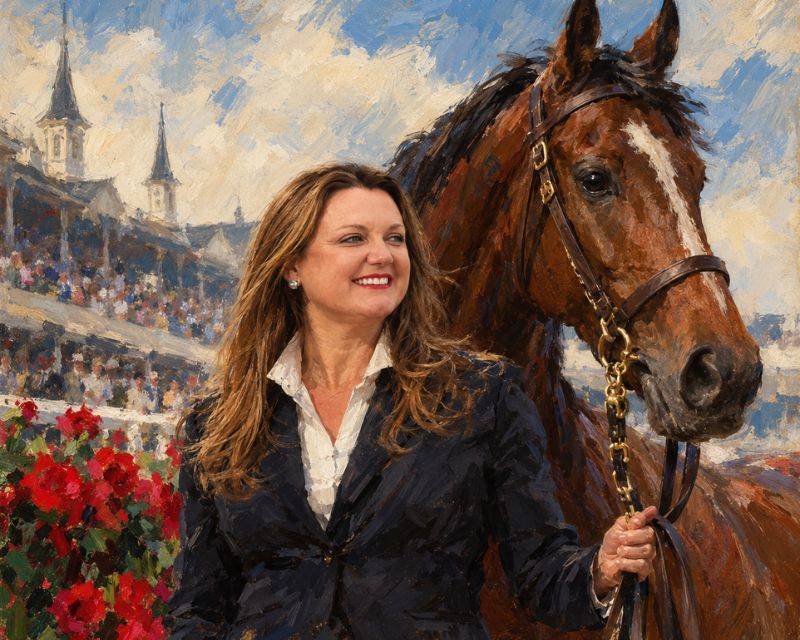
The technology arrives as extraordinary sums are changing hands for bloodstock. Japanese technology billionaire Susumu Fujita owns international champion Forever Young, while financier and Florida Panthers owner Vincent Viola is behind St. Elias Stable, co-owner of Kentucky Derby and Belmont Stakes winner Golden Tempo. In America, favourable tax depreciation is providing another incentive for qualifying commercial buyers, while Golden Tempo’s trainer Cherie DeVaux has become the first woman in 152 years to train a Kentucky Derby winner, going on to make further history as the first female trainer to win two of America’s Triple Crown races.
In brief
Why is the racehorse market so strong in 2026?
Record and near-record bloodstock prices are being supported by competition for elite pedigrees, international wealth and breeding potential. In America, the restoration of 100 per cent bonus depreciation for qualifying commercial buyers may be adding further impetus.
How is AI being used in horse racing?
Trainers and bloodstock buyers are using AI to analyse pedigrees, sales data, biomechanics and valuations. Biometric technology is also being used to identify subtle changes in a horse’s movement which may indicate injury risk and save a horses life.
Who are the people to watch?
Cherie DeVaux made history with Kentucky Derby and Belmont Stakes winner Golden Tempo. Japanese technology billionaire Susumu Fujita owns Forever Young, while billionaire financier Vincent Viola is associated with Golden Tempo’s co-owner St. Elias Stable.
What is happening with online horse betting in Britain?
From April 2027, most remote betting will face a 25 per cent General Betting Duty rate, but remote bets on UK horseracing will remain at 15 per cent because bookmakers also contribute through the statutory Horserace Betting Levy.
Is Britain still a major centre for horse racing and bloodstock?
Britain remains one of the centres of international thoroughbred racing and breeding, with Royal Ascot, Goodwood, York, the five British Classics and the Cheltenham and Aintree Festivals attracting international owners, horses and investment. Private bankers say wealthy owners are also looking beyond prize money towards breeding, bloodstock and rural property.
Is investing in racehorses profitable?
Racehorse ownership is generally driven as much by passion as financial return, and prize money alone does not guarantee a profit. The economics can be different in breeding and bloodstock, where an exceptional racehorse may subsequently become highly valuable at stud. Wealthy owners are increasingly combining racing with breeding, bloodstock and rural property interests.
Is the racehorse market becoming overbought?
Dr Ariel Sergio Davidoff, founding partner of Davidoff Law in Zurich, Switzerland, whose analysis featured in our previous report, sees a parallel between bloodstock and financial markets. According to Davidoff’s research, the international market for racehorses and bloodstock continues to be very attractive in 2026, with buyers from the United States, Middle East, UK and Ireland, Japan and other parts of Asia continuing to play a prominent role.
He points to Keeneland’s September Yearling Sale in 2025, which became the highest grossing Thoroughbred auction in history, generating more than $531.7 million, around £395 million, with 56 yearlings selling for $1 million or more. In stock market terminology, Davidoff says that could point to an “overbought market”.
The momentum has continued into 2026. Davidoff notes that early sessions of this year’s September Sale again produced exceptionally strong figures, including 14 seven figure yearlings in a single session, while Tattersalls has reported record prices at its 2026 Somerville Yearling Sale.
Other advisers identify some of the forces behind those numbers. Rachel Flynn, Partner at Keystone Law, told Citywealth last year that new capital was already changing the market. She highlighted businessman Kia Joorabchian’s Amo Racing, which had become an aggressive buyer of yearlings, broodmares and horses in training, including spending 11.045 million guineas on ten yearlings at Tattersalls October Book 1 in 2024. Flynn said competition at the top was also having a trickle down effect elsewhere in the market.
America also has a tax incentive which has become considerably more attractive. Laura D’Angelo, Partner at Jones Walker, described the US Thoroughbred market to Citywealth last year as “particularly strong” and the market around Keeneland as “frothy”. Significantly, she identified the restoration of 100 per cent bonus depreciation for Thoroughbred bloodstock as a substantial driver.
For qualifying commercial horse operations, eligible horses can potentially be deducted immediately rather than depreciated gradually over several years. The provision does not turn a wealthy owner’s racing hobby into a deductible business, but it can materially affect the timing and economics of a genuine commercial purchase.
Kayla Pragid, Partner and Chair of the Equine Industry Team at Holland & Knight, has previously explained the other side of that equation. US owners seeking business tax treatment need to demonstrate a genuine profit motive, with appropriate records and commercial behaviour. The distinction between an equine business and an expensive hobby matters particularly when substantial losses are involved.
Tax therefore offers one explanation for the current US market, but not the only one. Flynn’s evidence shows increased competition for elite bloodlines, while international wealth and the potential value of a successful horse at stud add further reasons for buyers to compete.
Godolphin, Golden Tempo and a woman making history
Davidoff also draws a comparison between the leading horses of the past two seasons. Godolphin remained one of the dominant international operations in 2025, finishing the year as the leading North American owner by earnings with a record of more than $22 million. Its star Sovereignty, winner of the Kentucky Derby and Belmont Stakes, was subsequently crowned the 2025 US Horse of the Year. As Davidoff puts it, however, “in racing, like financial markets, there is no standing still”.
The American Classic story of 2026 belongs to Golden Tempo, owned by Phipps Stable and St. Elias Stable. He won both the Kentucky Derby and Belmont Stakes, making his trainer Cherie DeVaux the first woman to train a Kentucky Derby winner and then the first woman to train the winner of two US Triple Crown races. DeVaux was born in Saratoga Springs into a family involved in harness racing and originally pursued pre medicine before moving into Thoroughbred racing. She spent six years working for trainer Chuck Simon and another eight with Chad Brown before establishing her own operation in 2018 with just eight horses.
Golden Tempo went into the Kentucky Derby at odds of 23 to 1 and came from last in a field of 20 to win the $5 million race by a neck. Five weeks later he won the Belmont Stakes in DeVaux’s home town.
The ownership is also interesting from a wealth perspective. Golden Tempo is a Phipps Stable homebred rather than a multimillion dollar auction purchase. The Phipps family represents one of America’s longstanding racing and breeding dynasties, while co-owner St. Elias Stable is associated with Vincent Viola, founder of electronic market maker Virtu Financial and owner of the Florida Panthers ice hockey team.
The partnership therefore combines a family with generations of racing and breeding history and wealth created in modern financial markets, with DeVaux providing one of the most significant sporting achievements of the season.
How AI is changing horse racing and bloodstock sales
Davidoff has been following another important change in the market: the arrival of artificial intelligence.
At the Keeneland September Yearling Sale in 2026, Dale Romans, the Kentucky based Thoroughbred trainer who has trained multiple Grade 1 winners and competed extensively in America’s leading races, described feeding pedigrees and effectively the catalogue into AI to produce an initial shortlist of horses with what the system regards as the strongest Triple Crown pedigrees. Romans calls it the “first draft”, with technology narrowing the field before traditional human assessment begins.
Davidoff points to BloodstockAI, which uses computer vision to analyse biomechanical consistency, movement and athletic efficiency frame by frame before combining those observations with pedigree, performance and market data. Other platforms now offer AI derived biomechanical and pedigree scores for individual yearlings at sales including Keeneland, Goffs and Tattersalls.
Machine learning is also being applied to valuation. Academic researchers have used historical Keeneland sales data to predict yearling auction prices, while commercial platforms provide valuation ranges using comparable sales and pedigree information.
For Davidoff, there is an increasingly literal connection with his stock market comparison. AI can process pedigrees, previous sales and video data across thousands of horses, potentially identifying yearlings which appear undervalued. But, as he points out, “a yearling is not a share certificate”. Temperament, mood, health and training remain uncertain, while the quality of the answer depends on the quality of the underlying data: garbage in, garbage out.
The technology is also being used for something potentially more important than finding an undervalued horse. Romans has championed StrideSAFE, a biometric sensor system which analyses subtle variations in a horse’s movement and looks for warning signs of potential injury. In 2025 he described a stakes level horse whose right front leg produced a severe warning despite there being no obvious external lameness. Subsequent PET imaging identified changes in a sesamoid bone and the horse was rested rather than raced. AI is therefore beginning to appear at both ends of the decision, helping a buyer decide which horse is worth examining at a sale and helping a trainer and veterinary team decide whether a horse should be racing.
Davidoff has spotted another application in Switzerland. At races in Zurich, he says many VIP guests now use AI to help place their bets and apparently even win sometimes. His conclusion remains reassuringly sceptical: “Nevertheless, I suspect, the house always wins.”
A Japanese technology billionaire and an American bloodline
Technology is also represented among the owners. One of the world’s most successful current racehorses, Forever Young, belongs to Susumu Fujita, the billionaire founder of Japanese technology and digital media group CyberAgent. Forever Young was bred by Northern Farm in Hokkaido and is trained by Yoshito Yahagi. Fujita bought him as a yearling at the 2022 JRHA Select Sale for ¥98 million, then roughly $720,000 or £600,000. The horse has subsequently earned more than $30 million racing internationally.
His pedigree crosses continents. Forever Young is by Real Steel, whose sire Deep Impact was a son of Sunday Silence, the American bred winner of the Kentucky Derby and Breeders’ Cup Classic who was exported to Japan and became one of the country’s most influential stallions. Forever Young’s dam, Forever Darling, was bred in America.
The financial interest in an exceptional colt does not necessarily end when its racing career finishes. Deep Impact demonstrated the scale of the breeding business at its highest level. After retiring from racing he became Japan’s leading stallion, covering large numbers of mares at Shadai Stallion Station at fees which eventually reached tens of millions of yen for a single covering.
That distinction between racing and breeding has featured repeatedly in Citywealth’s discussions with private wealth advisers. Joshua S. Rubenstein, Partner and Global Chair of Private Wealth at Katten, New York previously told us and reconfirms this year: “Notwithstanding the havoc being wreaked on the global economy by tariff wars and unpredictable markets, there seems to be no sign of slowing of interest in horse investment, racing, breeding and purchasing among ultrahigh net worth families, whose wealth only continues to grow exponentially. Whether as a hobby or as a profit-motivated endeavor, investing in horses requires a passion, as it is both expensive and labor intensive. For global families, it is an area where advice must be taken in multiple jurisdictions, as governing rules can vary widely from jurisdiction to jurisdiction, particularly in respect of topics such as artificial insemination. It is also an area – assuming there is a strong profit motive behind the passion – where there can be very interesting opportunities for wealth transfer.”
The multigenerational nature of racing can be seen in families and businesses including the Phipps family, Claiborne Farm and Spendthrift. The Phipps family’s involvement in Golden Tempo illustrates the long family connections with racing and breeding that Rubenstein was discussing.
Britain also has an unusual tax treatment where racing and breeding meet. HMRC provides that where a home bred horse leaves a stud for racing and subsequently returns to stud at a higher market value, the uplift in market value while it was in training can be tax free.
Racehorse ownership and investment in Britain
The spectacular successes can obscure how expensive racehorse ownership normally is. Tom Jonason, Principal Private Banker of Weatherbys, London who spent much of his twenties working in racing before moving into private banking, previously explained to Citywealth that ownership now stretches from micro shares costing around £50 to wealthy buyers spending millions on an untested yearling. At the top end, the owner can spend seven figures on a one year old which has never had a saddle on its back, followed by training and veterinary costs before discovering whether it has sufficient ability to race successfully. Jonason said that for many of his private clients ownership remains “a hobby, albeit a very serious one”.
He also pointed to increasing collaboration among wealthy owners, allowing them to buy better horses or spread their exposure across several. The attraction is not confined to prize money: an exceptional colt which succeeds on the track can subsequently command substantial stud fees.
Harry Herbert, Chairman of Highclere Thoroughbred Racing, has offered a useful warning to anyone tempted to treat a racehorse as a conventional investment: “No one comes into a syndicate to make money.” Highclere’s successes nevertheless demonstrate why people are attracted to the possibility. Classic winner Cachet was bought for £60,000 before eventually being sold for £2.2 million, while Believing, acquired for 70,000 guineas, became a Group 1 winner and was later sold to Coolmore for 3 million guineas.
That distinction between passion and investment is also apparent among private banking clients. Henry Taylor, Head of Racing at Arbuthnot Latham, says ownership is increasingly being considered as part of a broader lifestyle and long term investment strategy rather than purely as a financial proposition.
“Few owners expect to generate significant returns from prize money alone, particularly in Britain where prize money remains under pressure relative to some international jurisdictions. Breeding and bloodstock can offer a different economic model, however, with successful breeders, pinhookers and breeze up consignors able to create significant value through the production, development and sale of bloodstock.”
Taylor says this is encouraging some investors to look beyond the racehorse itself, combining ownership with breeding, bloodstock and rural property interests.
Britain nevertheless remains central to the international racing economy. Taylor points to Royal Ascot, Glorious Goodwood, York’s Ebor Festival, the five British Classics and the major National Hunt meetings at Cheltenham and Aintree. British racing generates an estimated £4.1 billion annually for the UK economy and supports more than 85,000 jobs directly and indirectly, many of them in rural communities.
The relationship with betting remains particularly important. Taylor says changes in taxation and regulation have the potential to affect sponsorship, media rights revenues and ultimately the funding available to British racing.
Sean Taylor, Director of Intermediary Sales at private bank Arbuthnot Latham has described how the ownership model itself is widening. Syndicates and fractional ownership have lowered the entry point, while at the other end serious capital is chasing the “blue-blooded yearlings”. Taylor also identified data analytics, AI and global capital as increasingly important to the equine investment market.
Television, streaming and betting
The audience around racing is changing as well. Television has long taken major meetings beyond the racecourse, but streaming and digital betting increasingly allow somebody watching at home to move directly from viewing a race to placing a bet on it. In America, platforms such as FanDuel combine access to live horse racing with digital wagering, while major meetings are also distributed through national television networks. The commercial value of a race therefore extends beyond the people buying tickets and hospitality at the course.
Britain provides an interesting example of how closely racing and betting remain connected. From April 2027, the tax rate on most remote betting will rise from 15 to 25 per cent, but online bets on UK horseracing are excluded and will remain at 15 per cent. The reason is that qualifying bookmakers already contribute a further 10 per cent through the statutory Horserace Betting Levy, giving horseracing what the Government describes as an effective 25 per cent rate. The Treasury describes horseracing as “uniquely dependent on gambling” and estimates that betting operators provide up to a quarter of racing’s revenues through the levy, sponsorship and media rights.
This relationship becomes more important as racing is watched away from the course. Television and streaming enlarge the potential audience, while digital betting gives that audience an immediate way of participating financially. Media rights, betting revenues, sponsorship and hospitality therefore sit alongside the money owners themselves spend buying and training horses.
Davidoff also points to the tougher regulatory environment. The Gambling Commission has moved ahead with financial risk assessments, usually referred to as affordability checks, prompting strong criticism from the British Horseracing Authority. The BHA argues that intrusive checks risk pushing some customers away from regulated operators.
Digital betting and sophisticated data analysis are therefore making wagering more technologically advanced at the same time as regulators increase controls in response to gambling harm and illegal operators. Davidoff describes the result as “something of a regulatory race of its own”, with bookmakers, bettors, algorithms and regulators trying to stay one step ahead of each other.
Racing and court cases
Davidoff also highlights a less glamorous development in 2026. In April, a court in Naples ordered eight owners, trainers and drivers to stand trial in connection with alleged doping at the Agnano racecourse. Italian prosecutors allege animal mistreatment and fraud in sporting competitions, claiming that horses were subjected to doping practices intended to alter their performance and produce illicit results.
Post race urine tests had detected prohibited substances including benzoylecgonine, a principal metabolite of cocaine, nandrolone and caffeine. The defendants have not been convicted and the allegations remain to be determined at trial.
The case has moved beyond racing’s own disciplinary system and into the criminal courts. Davidoff links it back to Hillsin, featured in our previous report, and contrasts the alleged conduct with racing’s rapid technological development. While data analytics and AI are being used to predict which horse will run fastest, some participants are still alleged to prefer what he calls “old-fashioned chemistry”.
As Davidoff puts it: “AI may be getting better. Human ingenuity, unfortunately, remains competitive.”
Fraud, contracts and welfare
There are more conventional risks behind increasingly expensive horses. Rachel Flynn advises on racing and bloodstock contracts and disputes, while Kayla Pragid has highlighted the risks of fraud and undisclosed commissions in high value horse transactions. With seven figure purchases increasingly common at the top of the market, due diligence over ownership, agency arrangements, commissions and contracts becomes correspondingly important.
Other equestrian sports face their own economic and welfare pressures. Harry Stirk, Director of Stirk Law, previously took Citywealth into the world of polo, where wealthy players may require substantial strings of ponies and techniques including artificial insemination, embryo transfer and cloning are established parts of elite breeding.
This year, however, Stirk points to a more immediate problem for British polo: the weather. “The main development is that this summer’s prolonged heatwave and drought caused many polo clubs not to be able to operate. That is because the ground became too hard and so became a welfare issue for the horses.”
The economics are significant because not every club has the infrastructure to respond. Stirk says high profile clubs such as Guards Polo Club and Cowdray Park Polo Club have greater resources and existing irrigation systems. “If England continues to experience such hot and dry summers, clubs across the country may need to invest in wells and irrigation systems to ensure that they are able to continue to operate.”
It introduces another type of investment into the horse economy. Alongside the millions spent on bloodstock, training and breeding, climate and welfare pressures may increasingly require owners, clubs and rural estates to invest in the land and infrastructure on which equestrian sport depends.
That difference helps explain Rubenstein’s warning about taking advice in multiple jurisdictions. Thoroughbred racing does not simply adopt all the reproductive technologies available elsewhere in the horse world, while ownership, breeding and tax rules vary considerably between countries and disciplines.
There is also an important cost after the prize money stops. Helen Yeadon MBE, Co-Founder of Greatwood, has previously highlighted the responsibility involved in retraining and caring for former racehorses. Higher auction prices, AI valuations and sophisticated ownership structures do not change the fact that the underlying asset is a living animal which may require years of care after leaving the track.
And what are the well-dressed riders wearing?
Davidoff describes the luxury equestrian market in 2026 as an intriguing mixture of haute couture and sports engineering. Hermès riding helmets now reach approximately £1,800, while KASK high tech helmets offer more than a thousand possible combinations for riders wishing to customise their head protection. Samshield combines Italian technical fabrics, compression zones and UPF 50+ protection with Swarovski crystals on competition breeches.
Even the shiny riding boot is becoming increasingly technologically sophisticated. Parlanti’s new Malibu combines buffalo leather with technical mesh, perforated microfibre and a Michelin rubber sole. Davidoff says. “Hermès is also available for the discerning equestrian, at around £940 for a pair of jump riding breeches and £2,260 for The Grooming Bag.”
“All of these items can, of course, be worn or carried on and off the horse. Whether any of them will improve your chances of winning a race is another matter entirely,” says Davidoff.
Horses, wealth and AI
The strength of the bloodstock market is clear from the sales figures, although several forces appear to be operating simultaneously. D’Angelo points to favourable US depreciation, Flynn to increased competition from major buyers, while breeding economics provide another incentive to find the exceptional horse. Television and streaming are extending racing’s reach and digital betting makes the audience watching away from the racecourse commercially important.
AI now cuts across several parts of that business. It can analyse thousands of pedigrees, examine biomechanics, estimate valuations and identify subtle changes which could signal injury and save a horses life. Its growing use in betting adds another dimension as racing, technology and digital wagering become increasingly intertwined.
The two horses which have defined much of 2026 reached the top by very different routes. Forever Young was bought as a yearling by Japanese technology billionaire Susumu Fujita and has gone on to earn tens of millions of dollars internationally. Golden Tempo was bred rather than bought by the Phipps operation and has taken Cherie DeVaux into the history books.
For all the technology and capital now surrounding the sport, producing the next champion remains considerably easier to model than to guarantee.
Key Takeaways
- Artificial intelligence is transforming the horse business, aiding trainers and spectators in decision-making.
- Record bloodstock prices highlight the strength of the racehorse market, supported by competition and wealth.
- Cherie DeVaux makes history as the first female trainer of a Kentucky Derby winner, symbolizing change in the industry.
- Favourable tax incentives and increased competition drive the growth of the Thoroughbred market in the US.
- AI applications extend from assessing horses to enhancing betting experiences, making it a pivotal component of the racing landscape.
Karen Jones is the founder of Citywealth and a wealth management commentator with more than 20 years’ experience across global private wealth, family offices and succession. Before founding Citywealth in 2005, she held publishing roles at The Times and The Sunday Times, London; Legal Business magazine and worked on the Asia Pacific Legal 500.
Subscribe to the Citywealth Weekly Newsletter to learn more about Private Wealth Management.
Read more:
IFC insights: Indian wealth management
The Global Migration Shake-Up: Why the Wealthy Are Moving
Citywealth Leaders List: Top 30 Immigration Advisors 2026
Citywealth Forum 2026 – Speaker: Matthew Briggs, Boyes Turner
60 seconds with Matthew Briggs, Boyes Turner


Sanctions 2026: enforcement moves up the agenda for private wealth
Sanctions enforcement is accelerating. From the Amadea superyacht dispute to Citi's £4.73 million OFSI penalty, Citywealth looks at what tougher enforcement means for trustees, private banks, family offices and internationally mobile wealth.
American Summer at Citywealth: Washington DC, where wealth, power and technology meet
The US capital has always been shaped by proximity to government. Under Donald Trump, Washington’s power over technology, trade and capital has become even more visible, just as a new generation of crypto, AI and defence entrepreneurs moves closer to the machinery of the state.