Top Trends in Wealth Management – William Morris CFA, Head of Investments, Weatherbys Bank
This week’s Top Trends in Wealth Management is dedicated to William Morris CFA, Head of Investments, Weatherbys Bank.
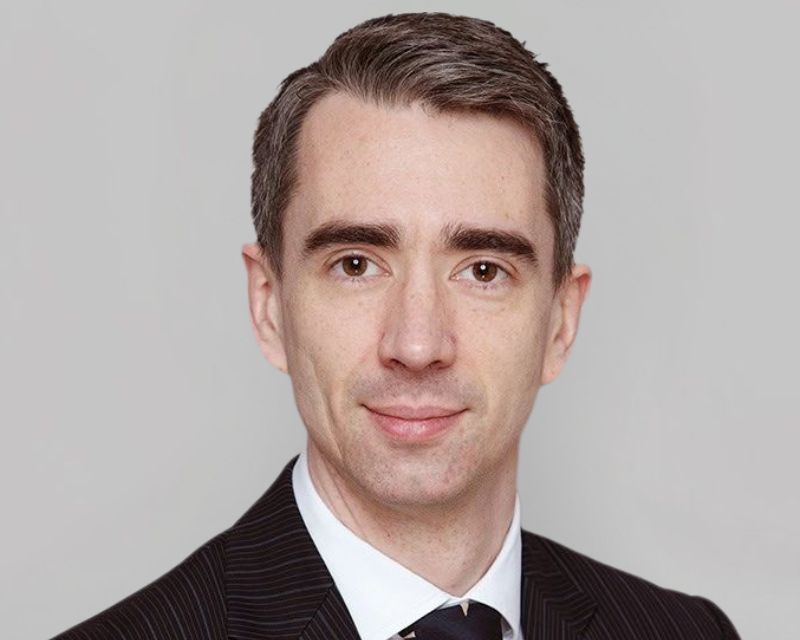
What is your assessment of the current global political landscape and its impact on wealth management strategies?
Geopolitical news grabs attention but is a bad way to decide how to allocate wealth. It is highly unpredictable, as not even the central protagonists can know what they might do in future.
That said, long-term investment success is conditional on the continued growth of knowledge – which requires freedom and a tradition of criticism. A challenge for investors is when to rely on free markets for allocation decisions (i.e. index tracking), and when to question how effective certain markets are at error correction.
In your opinion, how have recent policy shifts in major economies like the US, EU, China affected the long-term stability of private wealth?
As for economic policies, recent changes have been a mixed bag. Trade tariffs are almost universally thought to be hazardous to wealth, at a national level as much as when it comes to long-term investments – though thankfully it seems that President Trump is paring them back. Meanwhile, restrictions on the electrification of the US will probably suck some juice out of prospective returns.
On the plus side, there has been something of a nuclear renaissance, which bodes will for energy supply, which is upstream of almost everything productive.
The conventional view is that investors ought to focus on economic policies, rather than anything ‘cultural’. However, I think the importance of the latter is under-appreciated – in the long term, what really matters is whether societies are static (authoritarian, regulated, anti-progress) or dynamic (democratic, free, optimistic).
As we continue to navigate uncertainty in global markets, how are wealth managers adjusting their strategies to preserve and grow clients’ wealth?
Counter-intuitively, investors should welcome uncertainty. Without it, the world would be staid and predictable – implying a total absence of creativity, which is what grows wealth in the first place.
From a wealth manager’s perspective, what matters is whether the Enlightenment’s engine of prosperity is still intact. If so, the investment strategy is pretty straightforward: it is usually in a client’s best interests to allocate as much as they are willing and able to in global equities.
The hard part is formulating a sound financial plan: structuring, tax wrappers, and so on. And if risk tolerance does not permit a full allocation to equities, then what should constitute the remainder? Cash? Gilts? There are a wide range of options in fixed income now which weren’t viable a few years ago.
How important is diversification in a post-pandemic world, and which asset classes are your clients focusing on?
I think that diversification is less about imperfect correlations and more about improving worst-case outcomes on a relative basis. In other words, how can I avoid picking the short straw?
Thinking of it in this way helps me identify asset classes that will truly add value to a portfolio in a way that is valued by clients. For instance, what asset classes will do relatively well when equity sentiment sours? US treasuries have performed well in the past, but what if it is the Federal debt burden which is the cause of market jitters?
When thinking about portfolio diversification, it is crucial not to dwell on correlations, nor rely on past performance as a guide to the future.
Sustainability investing has gained traction over the past few years. How are you seeing it affect the portfolios of high-net-worth individuals, and is this trend sustainable?
It seems as though the sustainable investing trend has faded lately. There are still some who want their portfolios to reflect their values, although it is now subject to more scrutiny: not just of things like ‘greenwashing’, but also of the concept itself: if environmentalism demands stasis or even ‘de-growth’, is ‘sustainable investing’ an oxymoron?
What are the emerging risks and opportunities that wealth managers should be most aware of?
As ever, the worst risks are the unknown unknowns. The best way to guard against them is to ensure that a client’s financial plan is sound in the first place, so that they are never forced to liquidate at a time which does not suit them.
Investors ought to be wary of opportunities which seem too good to be true, and in particular back-tested strategies boasting astonishing returns.
Instead, it’s worth considering assets such as inflation-linked gilts, now that real yields are in positive territory.
How have the needs and expectations of private clients evolved in recent months? Are there any new priorities or concerns they are expressing?
There has been some interest in private assets lately, although it is questionable whether this has been whipped up by wealth managers themselves. There is certainly a case for private equity inasmuch as there is one for public equity – but one should tread carefully in a space that is not only illiquid but has become awfully competitive and crowded out.
In what ways are clients seeking more personalized wealth management services, and how are you meeting those needs?
I think clients rightly value the traditional, responsive, personal service associated with private banks – which has been diminished in some areas.
This encompasses not only day-to-day banking needs, but also the ability to solve broader financial quandaries on tap. Where wealth advice really comes into its own is when it is personalised at the structure / wrapper level, rather than hyper-personalised within the portfolio. This is how Weatherbys has served its clients for some years now.
With the rise of digital, how are private clients responding to this?
Our philosophy is that private banking should be 100% human and 100% digital. By this we mean that clients should always have the option to self-serve online or via apps, but never be coerced into it. And by extension, our staff should be empowered to use technology to their best advantage – but the crucial element is always personal, human, authentic. I think that our clients value this approach very highly.
Are there any new technologies or platforms that are making a significant impact on how private wealth is managed or delivered?
Arguably the index tracking fund has been the investing technology that has had the most wide-reaching effect over the past few decades.
More recently, I think there is a great deal of progress being made on making investment platforms more digital-first, lowering costs and making it easier to get data from one place to another. But these are still painfully early days in this regard.
While I am a sceptic of cryptocurrencies, I think that tokenisation represents a potentially exciting new way of tracking asset ownership.
Lastly, I think that AI will not so much turn wealth management on its head – things like private banking relationships are very important – but will turbo-charge so much of what we do. I can now write the code to bring portfolio management or asset allocation ideas to life within seconds. I’m sure there will be an astounding number of advances in the industry that will owe their speed of implementation to Large Language Models taking away the toil.
Subscribe to the Citywealth Weekly Newsletter to learn more about Private Wealth Management.
Read more:
OBBBA and the Global Wealth Shift: What Private Client Advisors Must Know Now
Turning Passion into Legacy: The Smart Way to Donate and Invest in Art
Unlocking the World of Passion Investing: Where Heart Meets Asset Value

Citywealth Leaders List, 60 seconds interview – James Sturla, Head of Private Client Business Development at Hampden Capital
This week's 60-second Citywealth Leaders List interview is dedicated to James Sturla, Head of Private Client Business Development at Hampden Capital.
Citywealth Leaders List, 60 seconds interview – Ameeta Panessar, Founder and Financial Adviser, Orelle Private Wealth
This week's 60-second Citywealth Leaders List interview is dedicated to Ameeta Panessar, Founder and Financial Adviser, Orelle Private Wealth.