


Horse racing and investing: Carrots, carats and cool mints
A polo mint, it turns out, is a good way to a horses heart but horse racing, often dubbed the “Sport of Kings,” has long been associated with prestige, wealth, and high stakes.

The industry generates billions of dollars worldwide and serves as a significant economic engine in many countries. Beyond the competition, horse racing is deeply intertwined with the wealthy, wealth creation, investment, and breeding strategies that contribute to a thriving equine economy.
Horse racing is not just a sport of course; it is a complex business ecosystem that includes breeding, training, betting, and the trading of thoroughbreds. Major races like the Kentucky Derby, Dubai World Cup, and Royal Ascot attract international attention and serve as platforms for massive financial transactions, as well as billionaire owners and hospitality.
Polo ponies – a Royal sport
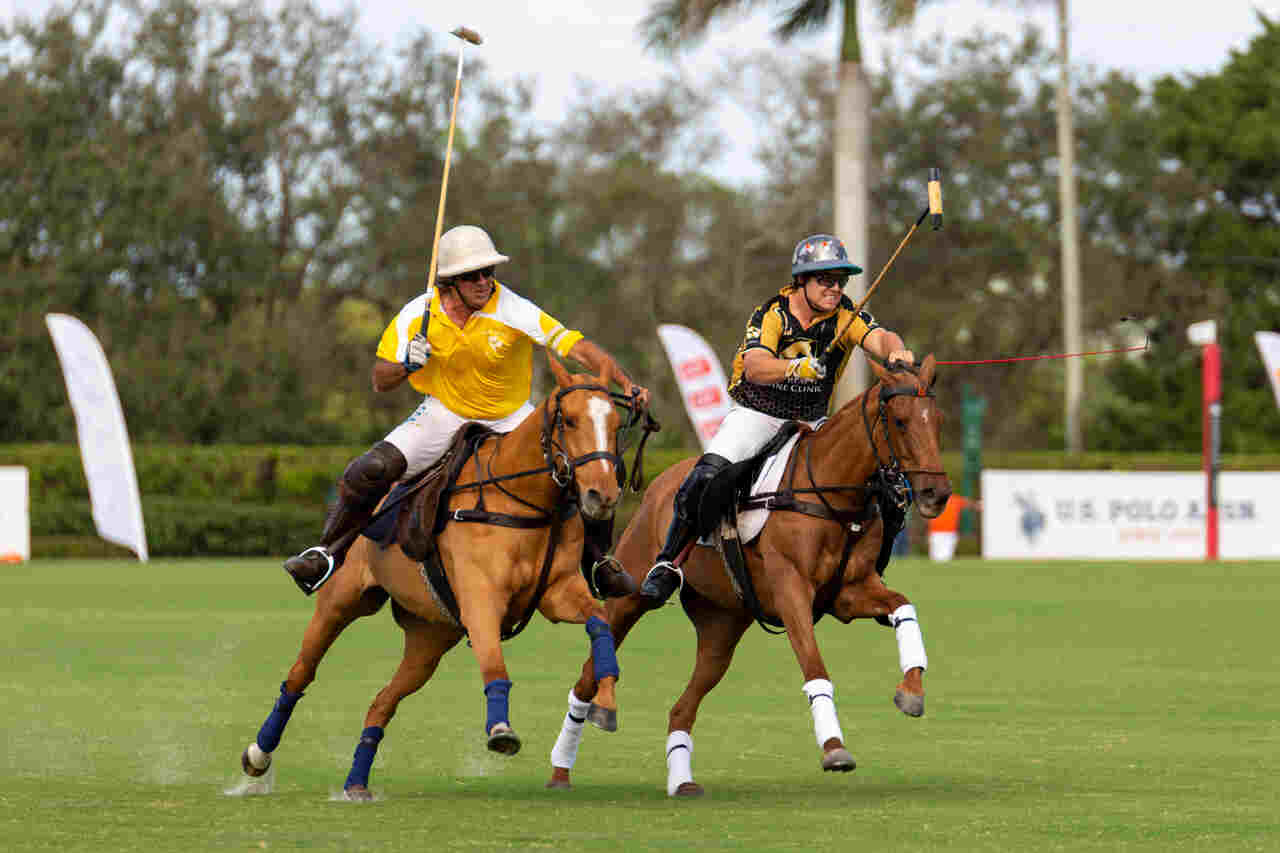
It also includes Polo. Harry Stirk, Director at Stirk Law based in Cavendish Square, who advises UHNW clients including professional sports teams, says “Polo, can count King Charles as a particularly active player as a younger man. It is a truly global sport which follows the sun around the world throughout the year and over the past generation, the sport has become increasingly professionalised.”
Premium sponsorships
He says, “Horses in polo sell for lower values than in racing with the top of the market generally being in the low six figures rather than in the millions. A polo player, however, needs not less than one horse per chukka (being a unit of play) so will need more horses. Most players will have from four to ten horses in work with large organisations having very many more. Polo is filmed and broadcast by professional media organisations. Whilst there is a limited global audience of viewers compared to other sports, polo is big business which attracts sponsorship from premium brands. Cartier is a notable and longstanding example.”
From breeding and training to racing and retirement, the financial ecosystem around racehorses remains one of the most fascinating and potentially lucrative sectors of the equine world. Certain racehorses have become legends not just for their racing prowess but for the wealth they generated.
The most visible part of the financial allure in horse racing is prize money. Prestigious races offer large purses, often in the millions of dollars. Owners, trainers, and jockeys share the winnings, but it’s the potential for a horse to win repeatedly, or even become a champion, that creates significant financial incentives.
The business of breeding
The equine industry, according to Swiss law firm Lindemannlaw, in the EU is a hub for sporting excellence but also a major economic driver, generating over €100 billion annually and providing more than 400,000 jobs across various sectors. This includes horse breeding, training, competition, and sales, with countries such as Germany, France, and the Netherlands.
In the world of horse racing, the value of a racehorse is often decided by its pedigree, which traces its bloodlines to proven champions. Stud Fees or the right to breed from an animal like Stallions that have won prestigious races or come from a strong bloodline can command extraordinary stud fees. Owners of successful male horses can earn millions through breeding rights. For instance, top stallions in thoroughbred racing can have fees upwards of $100,000 per cover (a single mating). Galileo, an Irish thoroughbred racehorse and a champion on the track, became one of the most successful sires in thoroughbred racing history, with his offspring winning countless prestigious races. His stud fees were among the highest in the world. The fee is said to be between €400,000 -€600,000. At the height of his stud career, Galileo generated an estimated €40 million per year in stud fees for Coolmore. Coolmore Stud, in Fethard, County Tipperary, Ireland, is headquarters of the world’s largest breeding operation of thoroughbred racehorses.
Horse embryo transfer and cloning
A relatively new type of breeding (2003) comes in the form of cloning. Although cloning is not legal in the thoroughbred world. Racing authorities still forbid the use of artificial insemination (AI) and any other such interference in breeding.
Stirk says, “In Polo. large teams have significant operations in terms of infrastructure, staff and horse breeding programmes. Horses are the key to success and building up winning strings of horses requires patience together with significant investment. The rule of thumb is that 80% of polo is the horse and 20% is the player. In England, there are specialist centres which provide artificial insemination to ensure that a mare is successfully covered and embryo transfer to allow that mare to be bred from whilst continuing to play. Outside of the UK, some of the most successful horses have been cloned many times, with those clones going on to play and win for teams in the most prestigious tournaments. There is limited prize money offered for winning tournaments. Besides enjoyment, value is to be found in the buying and selling of horses and the making of connections.”
Horse cloning has emerged as a significant scientific breakthrough in equine reproduction, with implications across fields such as sports, breeding, and conservation. It is a process that involves producing a genetically identical copy of a horse through a technique known as somatic cell nuclear transfer (SCNT) originally developed for Dolly the sheep. This method has been refined over the past few decades, offering potential advantages in breeding and competitive sports, though it has also sparked ethical and regulatory debates.
Adolfo Cambiaso, an Argentinian, is reported to have a thousand horses and who is one of the greatest polo players in history, has cloned several of his best polo horses through his company La Dolfina, jointly owned Bartolomé Castagnola. This includes Dolfina Cuartetera and world-famous stallion, Aiken Cura who was seriously injured during the final of the 2006 Argentine Open, forcing early retirement from the field. Aiken Cura had to be euthanized in January 2007, but not before live skin cells were harvested at Cambiaso’s request in the event mainstream cloning became possible.
Cambiaso who has played for the Dubai Polo Team with wealthy Arab businessman Ali Albwardy as patron of the Dubai Polo Team one of the world’s top polo estates, later pioneered the horse cloning business. He was approached by polo enthusiast Texan Alan Meeker of Crestview Genetics. Meeker teamed up with Cambiaso, and in 2010 produced the first clone. Together with Argentine, Molecular biologist Dr. Adrian Mutto he also proceeded to clone his favourite 17-year-old mare Cuartetera, multiple times, clones of which he rode to win the 2017 Argentine Open.
Horse litigation – cloning and breeding
However, a dispute over the cloning and breeding of polo horses arose this year. The dispute involves Cuartetera, regarded as the greatest animal in polo history. Her clones have dominated the sport. The suit claimed that Cambiaso’s business partner, Alan Meeker, sold clones of Cuartetera to a competitor polo team without Cambiaso’s knowledge after a decade-long business relationship. The claims included breach of contract and trade secret violations. Cambiaso’s lawyers, based in Denver a Wheeler Trigg O’Donnelo (WTO) showed that he secretly sold the cloned horses by striking a deal with a Russian businessman on his yacht in the Bahamas. Three clones were sold for $800,000 each, with more to be sold later. The WTO team was led by Partner a former Assistant U.S. Attorney, Habib Nasrullah.
Some critics worry that widespread cloning of elite horses may reduce genetic diversity within certain breeds. In highly specialized sports like polo or racing, over-reliance on cloning could lead to a genetic bottleneck, where horses become too similar, potentially leading to health problems in the future.
Horse racing auctions
Horse auctions are a focal point for investors looking to buy future champions. Prices at these auctions can be astronomical, with some yearlings (young horses) selling for millions. Successful bids often come from syndicates, where multiple investors pool their resources to buy top-tier racehorses. Syndicates allow multiple investors to buy shares in a racehorse. This structure reduces the financial burden on any single owner, as costs like training, vet bills, and entry fees are shared. Syndicates also allow for diversification, enabling investors to own a stake in several horses, increasing their chances of owning a winner.
One of those is a syndicate is run by Harry Herbert, Chair of Highclere Thoroughbred Racing. He says, “We buy at all the major auctions which start the week after next at Goffs in Ireland (September). From there we head to Newmarket for the Tattersalls Book 1 and Book 2 sales. The best yearlings of any sale on Europe are in Book 1 where the average would be around 225,000 guineas (£1.05 in decimal currency). The Book 2 average is around 70,000 guineas. One of our top horses with cost and sales was Lake Coniston who was a European Champion Sprinter, in fact regarded as one of the best British sprinters of modern times. His purchase was 22,000 gns at the Tattersalls Book 2 sale. Sold for £2,400,000.” Lake Coniston was a bay horse with a small white star bred in Ireland by J. P. McManus.
The business of syndication
“I was the first to get involved with syndication, Says Herbert, “having worked in Kentucky for four years and my company Highclere Thoroughbred Racing has been the leader ever since having raced seven European Champions, three Classic winners in Petrushka (Irish Oaks), Motivator (The Derby) and Cachet (The 1,000 Guineas). The syndicate market has increased hugely over the past fifteen years or so and company’s such as My Racehorse introduced micro shares of only £50 or so per share in the US. My business model involves having 5% share interests so mainly 20 share syndicates and we buy horses averaging around the £100,000 mark. We act as personal racing manager to each owner and provide a level of personal service that treats each individual as if they owned the horses outright. There are many different levels of syndicate ownership from ours down to companies such as My Racehorse which has thousands of shares per horse from around £50 per share. My Racehorse has been hugely successful in the US and now has an operation in Australia which has also done very well.”
Highclere Thoroughbred Racing: A family business
Herbert continues, “We have bought many good horses for little money but also spend up to 250,000 gns on the right horse as some of our owners are happy to pay more for a horse with a very good pedigree to go with faultless confirmation.”, He adds, “Our yearling parades at Highclere Stud take place on Sunday 20th October and Monday 21st.”
“Jake Warren my nephew buys all of our horses. He took over from my brother-in-law John Warren who took over from my father (Lord Carnarvon) as the late Queen’s bloodstock advisor and who now advised the King and Queen. Jake has inherited his father’s brilliant eye and so this is very much a family business. Highclere continues to lead the field, and this year are prizemoney earnings stand at over £1,000,000. No one comes into a syndicate to make money, but good horses are very valuable, and we have had many huge sales at the end of our horse’s careers. Most recently our Classic winner Cachet who we bought for £60,000 sold for £2,200,000. We send our star sprinter, Believing, who we bought for £110,000, to the sales in early December at Tattersalls in Newmarket and she too is likely to make over £1,000,000. For those considering coming into racehorse ownership never expect to make money but at least with Highclere we have a track record that clearly shows that you have an excellent chance of racing at the highest level with entry level costs around the £10,000 mark which covers all costs for a year and gets you a 5% share in a £100,000 yearling with all costs paid for a year with a smaller anoint due in a years’ time to pay for the next years training. At the end of the life of the syndicate all sales proceeds of the horse and all prizemoney come back to the twenty owners.”
Does the Jockey or horse win the race?
Herbert gives his view on jockeys, “Jockeys play a key role in getting the horse to win. The best jockeys judge pace well and make those split decisions on where to place their horse and when to press the button. We use all the top jockeys at Highclere when we can. Yes, some horses want to win – our brilliant filly Believing is one of those. Our best horses have tended to have the best pedigrees but at the end of the day they must have that will to win. We always re home and retrain our horses that we don’t feel have a future in racing. There are some wonderful charities that do this that we support, Greatwood and HEROS.”
Activism on the race course
On this topic, there has been growing rhetoric against horse racing from organisations such as Animal Aid. Whether because of this or not, the Grand National racecourse have made safety changes which include alterations to the running rail on the inside of the course to help with early capture of loose horses and reducing notoriousfence 11 by two inches.
A racehorse’s career typically lasts only a few years, making early success critical. After retiring from racing, many horses transition to careers as breeding stallions or broodmares. Some are sold for other disciplines such as show jumping or dressage, while others may find second careers in equine therapy or riding schools.
Life after racing – horse retirement
Post-racing care is a significant concern in the industry, as not all retired horses will become breeding champions. Many organizations are dedicated to retraining and rehoming racehorses, ensuring they have a productive life after their racing days are over. One of those, as mentioned, is Greatwood Charity run by Helen Yeadon MBE who is Co-Founder & Managing Director.Yeadon says “We started in 1993 and there wasn’t anything in place for racehorses then. So, we lobbied the British Horseracing Authority about retraining and in 2000 we partnered with them.”
“There are 6000 horses leaving racing each year and about 4,500 require charity intervention. We provide that safety net. The British Horseracing Authority pick up the horses using the Vulnerable Horse Scheme (VHS) so if a horse ends up in trouble for whatever reason like divorce or owners running out of money, the charity makes sure horses are amply cared for when at its most vulnerable.”
“As to charity funding, Yeadon says they are self-funded with costs currently them c£500,000 a year but that The British Horseracing Authority provide cash for a certain amount of time usually around three months when they bring a horse in.” She adds, “We are the only charity that doesn’t request a donation to take a horse or put a limit on their age – we take all horses.”
She says some horses may still have a value of say £2-15k but Greatwood does not take these as it is not in the charities’ interest to be involved with sales.
“We also take horses that cannot be rehomed. We have a training program – giving a horse a job. We are Wiltshire council accredited to work with children and young people from 4-18 who are struggling with education. We employ teachers to increase confidence and run the usual curriculum to help them get back into school which is now fifty percent of our work. Children are referred from Wiltshire and Berkshire councils.”
I ask about the idea that horseracing is cruel. “I love racing and have owned and bred them and the reason I started this was because we just didn’t know what happened to racehorses at the end of their career.” She continues, “As to the racing I would invite people to come to Greatwood on a summer night and hear the racehorses running around at 100 miles an hour. Horses are very competitive and intelligent, and they love running and racing with each other.”
Stubborn as a mule – Deanos Beeno
“Deanos Beeno was a famous racehorse in the Hall of fame at Cheltenham as a hurdler. He was stubborn and gifted in equal measure. When he retired it was all over the Racing Post. We got him because he was demanding and quirky. We tried to ride him, but he would not have it.” It seems record breaking jockey AP McCoy experienced that recalcitrance first-hand and received a suspension from Cheltenham stewards on New Year’s Day in 2004 when Deano’s Beeno proved difficult at the start and so he gave him a slap on the shoulder. Yeadon continues, “Deanos Beeno loved Ascot but wouldn’t run at Cheltenham, so I thought of a new career for him. He became our ambassador. He loved showing off and came in the horse van with us but always had to be at the front.”
“People say racing is cruel, but if you have half a ton of horse underneath you it will not jump or run unless it wants to. Jockeys cannot make them run against their will.”
Herbert agrees, saying, “Horse racing is not for every horse, but some horses are born to race and love to win. It is a careful balance, and much will depend on the trainers. And as to whether a polo mint might be the winning formula. Herbert says for sure, but a carrot also goes a long way.”
Donations welcome https://www.greatwoodcharity.org/
Subscribe to the Citywealth Weekly Newsletter to learn more about Private Wealth Management.


Monaco Yacht Show 2024 – September 25–28
The ocean covers seventy percent of the Earth's surface, which is an area of 361 million square kilometres, so it is not surprising that man has elevated its vehicles and craft to enjoy and cruise its waters at leisure.