When Things Go Wrong in Sport: Big Money, LIV Golf and the Risks of Private Capital
The LIV Golf saga demonstrated how disruptive new capital can be when it enters an established sport. Backed by Saudi Arabia’s Public Investment Fund, LIV challenged golf’s traditional structures, offered guaranteed contracts to leading players and led to years of legal disputes, governance tensions and uncertainty that continue to shape the sport today.
As private equity firms, sovereign wealth funds and institutional investors increase their involvement across football, rugby, cricket, motorsport and women’s sport, many are asking whether similar tensions could emerge elsewhere. While investment can provide growth capital, improve infrastructure and accelerate professionalisation, it can also bring competing objectives, governance challenges and financial pressures when expectations are not met.
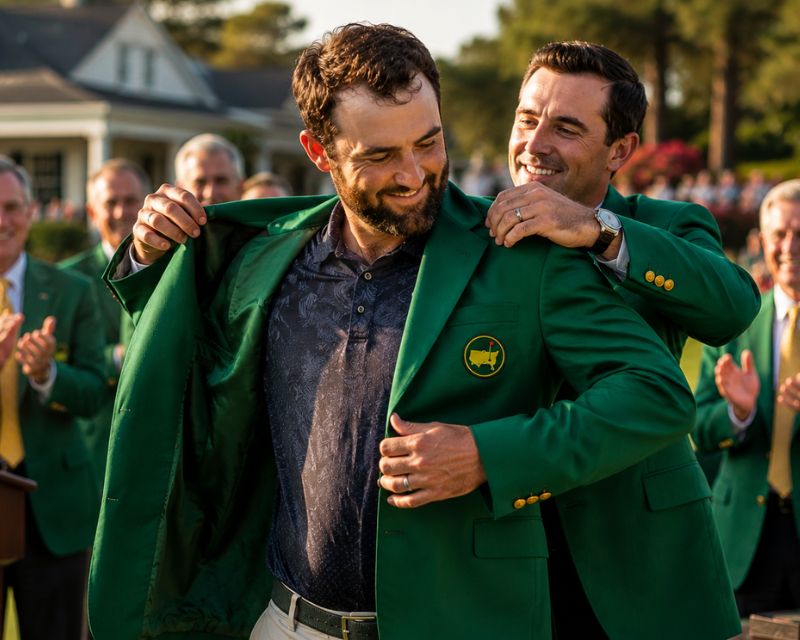
The famous Green Jacket is the most iconic trophy in professional golf, awarded annually to the winner of the Masters Tournament at Augusta National Golf Club
Experts from across law, finance and sport explain where the risks lie, why women’s sport may face unique challenges and what can be done to avoid future conflict.
The LIV Golf Lesson: What Happens When New Capital Arrives?
Andrew Haywood, Partner, Employment, Head of Sports, Media & Creative Industries, Penningtons Manches Cooper, a law firm,said of the recent LIV golf situation. “Organisations and governing bodies should no longer assume the status quo will suffice and each respective sport must continue to innovate and evolve. This is in part influenced by technology but, fundamentally, and from a commercial perspective, it’s also about the way in which fans now want to consume sports. Sporting organisations should ensure there is alignment across the ecosystem with greater engagement from stakeholders through to the players. What LIV Golf demonstrated is where there is demand to reinvent a format, an evolving fan basis, significant capital and a willingness for an athlete to seek guarantees over performance led pay, then a challenger sport is viable.”
The disruption caused by LIV Golf is unlikely to be an isolated case. As private capital continues to reshape sport globally, attention is increasingly turning to the opportunities and risks that accompany new investment, particularly when stakeholders enter a sport with different objectives, time horizons and expectations of success.
Capital, Growth and Disruption
Laura Uberoi, Partner, Head of Private Wealth Finance and a specialist in sport at Addleshaw Goddard said. “The experience of LIV Golf demonstrates that whenever significant new capital enters an established sport, there is potential for disruption. However, disruption should not automatically be viewed as a negative. In many cases, investment drives professionalisation, improves infrastructure, enhances athlete development pathways and expands commercial opportunities.”
“The key issue is less about the source of capital and more about alignment of interests. Institutional investors, private equity funds, sovereign investors, family offices, governing bodies, teams, athletes and fans often have different objectives, time horizons and measures of success. Where those interests are not properly aligned, tensions can emerge around governance, financial performance, commercial strategy and athlete participation.”
Governance, Due Diligence and Investor Expectations
“From a legal perspective, these transactions are becoming increasingly sophisticated. Investors are undertaking far greater diligence around governance structures, media rights, regulatory frameworks, athlete contracts, intellectual property and tax arrangements than was typical even five years ago. Specialist advisers play a critical role in helping investors understand both the opportunities and the risks before capital is deployed.”
“The broader trend of private capital entering sport is unlikely to reverse. We are seeing growing interest across football, motorsport, cricket, tennis, women’s sport and emerging sports properties. That capital can be transformative, particularly where leagues, teams or competitions require investment to accelerate growth. However, investors ultimately expect returns. If projected growth does not materialise, stakeholders may face pressure relating to valuations, operational expenditure, governance arrangements or ownership structures.”
Women’s Sport and Investor Value
“Women’s sport presents an especially interesting dynamic. Many women’s competitions are experiencing rapid audience growth, increasing sponsorship revenues and stronger media rights demand. At the same time, a number of properties remain closely associated with individual athletes or a relatively small number of star performers. Investors therefore need to understand whether value is being created through sustainable institutional growth or whether it remains concentrated around individual personalities. That distinction can have significant implications for valuation, investment strategy and risk allocation.”
“Tax should also not be overlooked. Cross-border ownership structures, athlete mobility, image rights arrangements and international investment vehicles can create complications, particularly as tax authorities globally continue to increase scrutiny of sports-related transactions.”
“Ultimately, sport remains an attractive asset class because of its unique ability to combine commercial returns with emotional engagement. The challenge for investors is ensuring that financial objectives, sporting integrity and long-term stakeholder interests remain aligned. Where that balance is achieved, private capital can be a powerful catalyst for growth rather than a source of conflict.”
When Investors and Sporting Reality Collide
Ebru Köksal, Business Development Director, J Stern & Co. who was the first woman elected to the Executive Board of the European Club Association and the first female General Secretary of the Turkish Football Federation said.
“There is no doubt that institutional capital has and continues to play an important role in sports. The real risk, however, is the misalignment of expectations between investors and the realities of building of long-term value in sport. Like any sector, sport is not immune to underperformance, valuation pressures or differing perspectives between stakeholders. This is why governance, transparency and alignment around investment horizons are so important from the outset.”
Governance as a Competitive Advantage
“Women’s sport presents a particularly compelling opportunity. As a relatively young and rapidly growing sector, it has the advantage of being able to build fit-for-purpose governance, management and commercial structures from the outset, rather than having to adapt legacy models that were not designed for them in the first place. From my experience, the most successful investments recognise sport as both a business and a social institution. Ultimately, sustainable value is created through the quality of stewardship behind it.”
Patient Capital
Mark Loosemore, Partner, Corporate, Commercial, Hugh James law firm, who acts for the Football Association of Wales, whom he recently advised on their successful UEFA EURO 2028 joint bid said. “I think there’s a general acceptance that investing in professional sport often requires a long term perspective and a willingness to generate return on investment via a subsequent sale, because it is difficult to generate short-term operating profits. That approach requires patient capital. Some investors might say that’s their approach but then turn the cash tap off when numbers aren’t being hit. That inevitably causes the business to suffer, and sometimes an early exit on unfavourable terms, or even an insolvency.”
As Mark Loosemore points out, the withdrawal of investor support can place significant strain on a sporting organisation and, in extreme cases, contribute to insolvency. Before matters reach that stage, however, disagreements over ownership rights, investment terms and governance structures can often lead to legal action.
Where Legal Disputes Begin
Kanika Corley, Partner, Team Lead, Sports & Entertainment Sector, Akerman said. “Any time there is an injection of revenue from an outside source, there is tremendous risk, especially where there is information asymmetry even after due diligence.”
Information asymmetry occurs when one party has access to better or more complete information than the other. For example, club owners may be aware that attendance figures are declining more quickly than publicly reported, a league may know that a broadcast contract is unlikely to be renewed, or management may have concerns about governance issues or regulatory approvals that are not immediately apparent from the documentation reviewed during due diligence. These information gaps can become a source of tension and potential disputes if an investment later fails to perform as expected.
When Transactions End Up in Court
Corley added. “Where formal disputes arise, the claims for relief may range from breach of contract pointing to certain reps and warranties and failure to meet condition precedent or condition subsequent, perhaps as to the need for league approval; breach of fiduciary duty between majority and minority investors; and claims citing fraud, based on the perception that a material term to the agreement was knowingly false when made but presented in order to ensure the other party would rely on the false statement, to their detriment.”
In legal terms, “representations and warranties” refer to the statements, assurances and promises made by parties during a transaction. Disputes can arise if investors later believe key information about a club, league or sporting asset was inaccurate, incomplete or misleading.
Ownership, Control and Asset Transfers
“Notably, claims for fraudulent transfer may also become viable where, for example, an investor who assumes a controlling position restructures obligations among affiliated entities without contractual authorization.” This means that if an investor takes control of a club, league or sports business and subsequently moves debts, assets or financial obligations between related companies in a way not permitted under the investment agreement, other stakeholders may argue that those transfers were improper and seek legal remedies.
The Risks of Expansion Driven Investment
“The issues can become even more complex, however, where the agreement to invest over time is tied to the goal of a development team pursuing a league expansion opportunity. Anticipated disputes are likely to arise from and relate to the fact that there can be no guarantees of entry of that development team into the league, despite the seemingly strong information suggesting the existence of the opportunity of advancing into a higher profile league. As to advice, I think diversification into more than one sport coupled with forward-thinking counsel are force multipliers.”
The dynamics become even more nuanced in women’s sport. Unlike many established men’s competitions, where institutional brands often dominate, the commercial value of women’s sport can still be closely tied to a relatively small number of high profile athletes. That creates both opportunities for rapid growth and unique challenges for investors.
Women’s Sport: Bigger Opportunities, Different Risks
Jess Alden, Partner, SLATEFORD who is advising England international and premier league footballers on privacy risks said. “Women’s sports often rely on individual star power to bring in the cash via grassroots cultivation. In the UK, women’s football often follows the players rather than institutionalised clubs. If you think about the last few decades, the female sports people that have really hit the mainstream are all individuals rather than teams. Today, it has been reported that Alexia Putellas has agreed personal terms with London City Lionesses. Their owner, Michele Kang will be aware of the large impact this will have on her team that’s only been in the top tier for one season. Signing one of the best and most loved players in the world will guarantee not just shirt sales, but allegiance to the first fully independent team to be promoted to the WSL.”
Putellas is widely regarded as one of the greatest players in women’s football history. The Spanish midfielder has won the Ballon d’Or Féminin twice and has been central to the success of both Barcelona and Spain. Kang, meanwhile, is one of the most influential investors in women’s sport globally. The American businesswoman owns the London City Lionesses and has invested heavily in women’s football through a multi club ownership model spanning Europe and the United States.
Alden said, “More widely, the psychology behind the support is different and therefore the psychology behind the decision making and investment needs to be too. This puts more pressure on teams to not only sign big attraction players but also to treat their players well than deal with a player led crisis. Women speak up about issues and have different needs. It is not one size fits all. Cost cutting, lack of funding, reduced pay or perceived inequality are all things that risk a club’s reputation. Some of these matters are rarely discussed in the men’s game. This will all have an impact on the bottom line. Keeping an eye on the risk indicators is imperative, but shifting the analysis to the factors that relate to women’s sport is the key to success and brand protection here.”
Andrew Haywood adds a further comment. “Both the women and men’s sports respectively will always have individual star athletes and, indeed, this can have positive and negative connotations for the sport. Ultimately, where there is a small concentration of superstar athletes, whilst this is great for profiling the sport, this can also leave the sport vulnerable to disrupters, talent bargaining power and lack of sponsorship diversification. That potential instability is less attractive for investors as there is greater risk.”
Ariel Sergio Davidoff, Founding Partner at Davidoff Law, Switzerland believes the risks extend beyond sponsorship concentration and bargaining power. In his view, the growing importance of individual athletes in women’s sport can create wider commercial and reputational vulnerabilities for investors, clubs and governing bodies.
Davidoff adds his thoughts. “In my perception, risks are more pronounced in women’s sport. Women’s sports often rely more heavily on the profile and influence of individual athletes than on long-established club brands. As a result, departure, injury or public controversy involving a high-profile athlete can have a disproportionate impact on commercial performance, fan engagement and brand value. Recent controversies involving prominent athletes (horse and Olympic games come to mind) have demonstrated how quickly public sentiment can affect both individual reputations and the wider organisations associated with them.”
Recent events in equestrian sport provide an example. British dressage star Charlotte Dujardin, one of the most recognisable figures in the sport, was suspended and subsequently received a one year ban after footage emerged showing her repeatedly striking a horse during a training session. The incident attracted global attention and highlighted how controversies involving high-profile athletes can quickly generate reputational challenges not only for the individual concerned but also for the wider sport and its commercial stakeholders.
Davidoff said. “Issues relating to equality, athlete welfare and working conditions are often subject to heightened public scrutiny in women’s sport. Consequently, cost-cutting measures, reductions in funding or perceived inequities can quickly translate into reputational damage. In my experience, this reputational dimension is sometimes underestimated during negotiations and strategic decision-making, despite its potential to create significant commercial consequences.”
“The lesson for investors is that success, particularly in women’s sport, requires more than capital alone. Above all, it requires recognition that the athlete is often not merely part of the brand but, in many cases, the brand itself.”
Laura Uberoi offers her thoughts. “Women’s sport presents an especially interesting dynamic. Many women’s competitions are experiencing rapid audience growth, increasing sponsorship revenues and stronger media rights demand. At the same time, a number of properties remain closely associated with individual athletes or a relatively small number of star performers. Investors therefore need to understand whether value is being created through sustainable institutional growth or whether it remains concentrated around individual personalities. That distinction can have significant implications for valuation, investment strategy and risk allocation.”
While much of the discussion around women’s sport focuses on growth potential, investors must also consider what happens when projected returns fail to materialise. Private equity firms and institutional investors ultimately invest with an exit in mind, and the reality is that not every sports investment will deliver the valuation uplift anticipated at the outset.
Dylan Doran Kennett, Partner, Co-Head of Venture and Growth Capital, Co-Head of Sports, Herbert Smith Freehills Kramer said: “Investment in the sports sector has been quite the journey for a number of investors. Sophisticated investors understand both the potential upside and how to mitigate risks, whereas some investors have been more focused on gaining exposure to an industry with scarcity value and have not always enjoyed the same success.”
“Where investments have not realised the ambitions set out at the outset, investors will typically sit down with management and fellow shareholders to determine a course correction. If that does not yield results, transaction documents often contain a range of negotiated rights that allow investors to increase their level of control, with varying degrees of intervention depending on the circumstances.”
“Such measures are usually a last resort. Investors will generally have board representation and should, ideally, have visibility of emerging issues well before they become critical. There are numerous tools available to private equity firms to manage investments throughout their lifecycle, and outcomes often depend on how effectively investors work with management teams and other shareholders to deploy those tools.”
The question, however, is whether investors fully appreciate how early many women’s sports still are in their development. While audience growth and commercial interest have accelerated rapidly, building sustainable value requires investment in far more than headline players and media rights.
Women’s Sport and Valuation Risk
What investors get wrong when they enter women’s sport
Ebru Köksal adds. “The most common misconception or misalignment is that investors may underestimate how early the growth cycle still is. There is enormous momentum, but patience and long-term vision are key elements of scaling sustainably. Simply extrapolating recent exponential growth rates in attendance, broadcast audience, sponsorship revenues and valuations and expecting the same trend to continue and hope for a quick exit, may be misleading. Many investors focus on unlocking the commercial upside, but investment is required in the whole ecosystem including talent pathways, coaching, officiating and facilities.”
How long should investors expect to wait?
“Women’s sport is still building many of the basic foundations that already exist in more mature sports: media visibility, commercial depth, audience growth and fan engagement, talent pathways, facilities and governance structures. For that reason, investors should think in terms of patient capital, investing for future growth. Meaningful returns are more likely to come over a longer horizon, through institutionalization, better commercial infrastructure and deeper fan engagement.”
Governance practices the sector should adopt
“Women’s sport has a rare opportunity to build fit-for-purpose structures from the outset for competitive advantage and value creation. Boards, including independent non-executive directors, and senior leadership teams with diverse experiences and perspectives, transparent decision-making, aligned stakeholder interests, independent oversight and meaningful stakeholder participation at critical junctions are all critical to creating sustainable growth and avoiding future conflict.”
Balancing investor returns against the interests of athletes, fans and the wider sporting community
“Sport is both a business and a social institution, built on local communities and heritage, which means underperformance cannot be addressed in the same way as it might be in other industries. Owners have a responsibility not only to their investors, but also to athletes, fans, communities and the long-term health of the sport. When performance falls short, the temptation can be to focus on short-term measures to protect returns. However, decisions that undermine trust, weaken the emotional bond with the community or damage fan engagement often destroy value rather than create it. The most effective owners take a longer-term view, recognising that sustainable financial returns are built on strong relationships with stakeholders and confidence in the sport itself. In my experience, the best investors understand that stewardship and value creation go hand in hand.”
Investment in women’s sport is not only reshaping clubs and competitions. It is also creating new opportunities and financial considerations for the athletes at the centre of that growth.
The Financial Reality for Female Athletes
Adam Osper, Managing Partner at Evelyn Partners, says, “the rapid professionalisation of women’s sport is creating significant opportunities, but also highlights ongoing challenges. While the earning potential of elite female athletes continues to rise, many still face a substantial gap compared with their male counterparts and often rely more heavily on sponsorship income. Like all professional sportspeople, female athletes must also navigate relatively short careers, making financial planning and post career preparation increasingly important.” Osper says there is growing demand for advice around wealth management, career planning and retirement, particularly as salaries and commercial opportunities continue to increase across women’s football and other sports.
As sport becomes increasingly global, investors, clubs and athletes are facing a growing web of tax, regulatory and contractual considerations. What may appear to be a straightforward investment or player arrangement can quickly become more complicated when multiple jurisdictions, ownership structures and revenue streams are involved.
Tax, Regulation and Governance Risks
Andrew Haywood said. “Challenges arise where there is a friction between traditional structures and the new global realties of sport involving multi country income and short-term movement. Questions of where the income will arise, where an athlete’s image rights are owned and indeed, whether an athlete can even participate in a respective jurisdiction are key questions for an individual. For an organisation, there are additional considerations such as establishing a permanent establishment or where it receives overseas investment. These issues, collectively or individually require pro-active financial planning, often multi-jurisdictional, to ensure local tax and regulatory compliance.”
The increasing complexity of modern sport is also being reflected in the contracts that govern relationships between athletes, clubs and governing bodies. As organisations seek to manage emerging risks, contractual protections are evolving to address everything from player welfare to unforeseen disruptions.
Mark Loosemore said. “After COVID, both the professional players and the clubs and governing body looked to negotiate changes to standard contracts, certainly in Wales. The players wanted better protections on issues such as serious injury, illness, welfare and image rights whilst the clubs wanted better protections on issues such as future force majeure events.”
Governance failures can have consequences far beyond the courtroom. For sports organisations, issues such as doping scandals can damage commercial relationships, undermine sponsor confidence and raise broader questions about the integrity of the sport.
Loosemore adds. “Proven doping cases can have a profound adverse effect on commercial programmes and confidence in sport. Most UK sport governing bodies are alive to this and are working hard on their education programmes, their governance frameworks, and their prosecution of cases to protect the integrity and commercial value of their sport.”
Protecting sporting integrity is increasingly important as sport attracts larger pools of institutional capital and international investment. At the same time, investors are looking beyond traditional European models and drawing comparisons with more commercialised approaches that have developed in the United States.
Looking Ahead: Global Investment and Different Models
What is different with US sport to European sport?
The debate around private capital in sport is also influenced by significant differences between the American and European sporting models, particularly in relation to ownership structures, revenue generation and investor participation.
Loosemore explains why.“The US generally operates a franchise model with no promotion or relegation, which is very different to the historic situation in Europe. However, we are seeing it happen in Europe now, for example The Hundred cricket league. In addition, the university sport system is huge in the US compared to Europe. The pathways in Europe are much more focused on clubs and federations and much less developed commercially. The US is generally ahead of the game with its broadcast, sponsorship and event staging business models. Finally, the US has a much larger private equity cash pile and a more sophisticated venture capital industry, both of which it has been more willing to deploy in sport. Europe is developing in these areas, but it is playing catch up.”
Balancing Capital and Sporting Integrity
If LIV Golf demonstrated anything, it is that the arrival of significant new capital can transform a sport almost overnight. It can accelerate growth, attract new audiences and create opportunities that may previously have seemed out of reach. Yet as the experts suggest, investment alone is rarely enough to guarantee long term success.
Women’s sport illustrates both the opportunity and the challenge. Growing audiences, stronger media rights and increasing sponsorship revenues have created considerable investor interest. However, many competitions remain closely linked to individual athletes and are still building the infrastructure, governance and commercial foundations that underpin more established sports.
The consensus among the experts is that patient capital, strong governance and realistic expectations will be critical. Investors who focus solely on short term returns risk overlooking the time and investment required to build sustainable value. Equally, decisions that undermine athlete welfare, fan engagement or public trust may ultimately weaken the very assets investors are seeking to grow.
As institutional capital continues to flow into sport, the most successful investments are likely to be those that recognise a simple reality: sport is not just a business. It is also a social institution built on athletes, supporters and communities. Balancing those interests may ultimately determine whether private capital becomes a catalyst for long term growth or a source of future conflict.
Key Takeaways
- The LIV Golf saga reveals the disruptive potential of new capital in traditional sports, bringing both growth and governance challenges.
- Investment from private equity and sovereign funds can enhance infrastructure but also lead to conflicts of interest and financial pressures.
- Women’s sport faces unique challenges due to reliance on individual athletes and requires effective governance to ensure sustainable growth.
- Stakeholders must align their interests to avoid tensions that can arise from differing objectives and expectations in sport.
- Long-term investments, patient capital, and strong governance are essential for harnessing the benefits of private capital while maintaining sporting integrity.
Subscribe to the Citywealth Weekly Newsletter to learn more about Private Wealth Management.
Read more:
Middle East: Top 30 Wealth Managers of 2025 – Citywealth
Harlequins Announce Exclusive Wealth Management Partnership with Titan Wealth
Titan Wealth acquires Ravenscroft investment management business in the UK
Titan Wealth acquires Ravenscroft Investments Limited

UBS Optimus Foundation and co-funders commit USD 29 million to Chancen International’s Future of Work Fund
Chancen International has announced it has secured USD 29 million for its Future of Work Fund (the FWF). The FWF is a cutting-edge funding model that uses Income Share Agreements (ISAs) and will enable more than 15,000 young people to access quality education, offering an alternative to traditional debt-based student loans and reducing financing risks.
Pernilla Wiberg: “Sport is a tool for peace, and we need Olympians in society”
Elected to lead the World Olympians Association (WOA), former alpine skiing champion Pernilla Wiberg takes on a mission that goes far beyond the sporting arena.