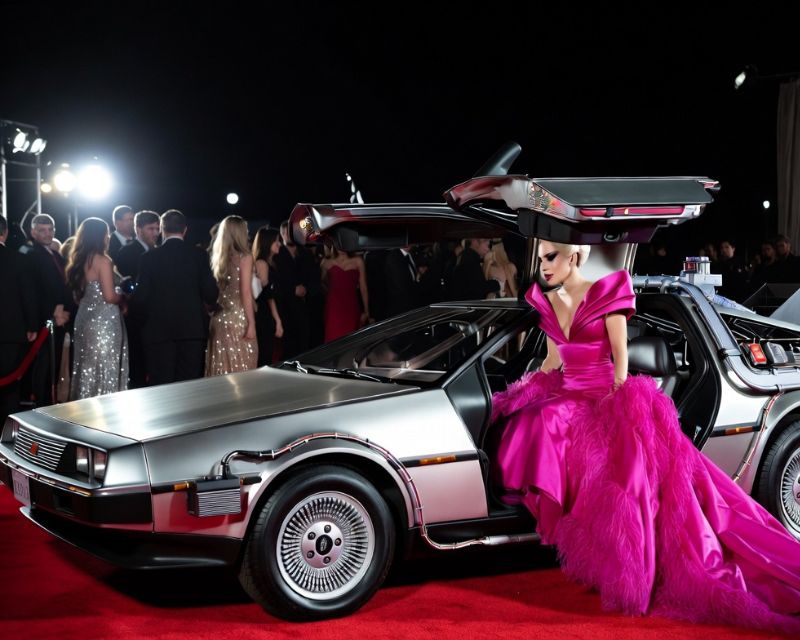
When a jewel becomes more than a jewel – Jewellery and Alternative Assets
The world’s most valuable jewellery is rarely valuable because of the gemstones alone. Royal ownership, celebrity provenance and historic significance can transform exceptional jewels into cultural icons worth many times their intrinsic value. Away from this rarefied market, however, advisers to wealthy families tell Citywealth that jewellery remains first and foremost a passion purchase. While craftsmanship, rarity and natural gemstones matter, most collections are built for enjoyment and legacy rather than investment return.

The provenance premium
When Prince William proposed to Catherine with the sapphire engagement ring that had belonged to Diana, Princess of Wales, demand for sapphire engagement rings rose around the world. Vintage sapphire cluster rings also enjoyed a resurgence, demonstrating that, in the jewellery market, provenance can sometimes be worth as much as the gemstones themselves.
The same principle applies at the very top of the market. The Al Thani Collection, regarded as one of the finest private jewellery collections ever assembled, includes Mughal jewels, Golconda diamonds, Cartier masterpieces and historic Indian royal jewellery. Meanwhile, the British Royal Collection, including the Cullinan diamonds and many of Queen Elizabeth II’s most celebrated jewels, illustrates how history and ownership can elevate exceptional gemstones beyond their intrinsic value.
Celebrity ownership has a similar effect. The engagement rings of Mariah Carey, Beyoncé, Jennifer Lopez and Kim Kardashian are recognised not simply because of their size or quality, but because their stories have become part of popular culture. In many cases, provenance has become an important part of the value itself.
For most wealthy families, however, the picture is very different. The advisers interviewed by Citywealth were remarkably consistent. Few see clients acquiring jewellery primarily as an investment. Instead, they describe collections built around personal taste, craftsmanship, family history and the pleasure of ownership. Where investment does feature, it is usually in the rarest natural gemstones or exceptional pieces with distinguished provenance.
Rarity remains fundamental
Arthur Byng Nelson, Partner at Sherrards law firm, says today’s market is being shaped by changing consumer demand. “The jewellery market today is shaped by shifting supply chains, rising gold prices, evolving consumer tastes and the growing tension between natural and laboratory-grown stones. Collectors are increasingly drawn to exceptional natural-coloured gemstones: their rarity is simply something that cannot be manufactured. As gold prices rise, so does the intrinsic value underpinning many antique and vintage jewels, providing a layer of security that most luxury purchases simply cannot offer.”
“I spoke recently to jewellery expert Zuleika Gerrish (a qualified gemmologist and jewellery historian) and she expressed her view to me that “the jewels that have stood the test of time are rarely the ones people bought simply to make money. They are the ones people treasured, wore, passed down and simply could not bear to part with.” It is this passion and this sort of approach in owners that I recognise in my clients. Long may it continue.”
His comments reinforce a theme that runs throughout today’s market. The strongest values are generally achieved where exceptional gemstones are combined with distinguished provenance and internationally recognised craftsmanship. Jewels by Cartier, Garrard, Van Cleef & Arpels and Harry Winston continue to attract collectors because they combine rarity with enduring desirability.
Buying what speaks to you
General Manager Ilias Kapsalis of Bentley & Skinner, a London jeweller specialising in antique & bespoke jewellery, says that while customers increasingly recognise provenance and rarity, personal appreciation remains the driving force behind most acquisitions. “At Bentley & Skinner, we’re seeing growing interest from customers who view fine jewellery as both something to be treasured and a tangible store of value. While exceptional craftsmanship and design remain the primary motivation for most acquisitions, provenance, rarity and quality have become increasingly important as collectors seek for pieces with lasting artistic and historical significance.”
“Natural coloured gemstones, antique and signed vintage jewellery, and high-quality natural diamonds continue to command the strongest interest, reflecting a rarity that cannot be recreated. While lab-grown diamonds have broadened consumer choice, they have also reinforced the appeal of exceptional natural stones from a long-term perspective. That said, jewellery should first and foremost be acquired because it speaks to you. The pieces that stand the test of time are those distinguished by outstanding craftsmanship, provenance and enduring desirability.”
Luxury brands have recognised this shift. Louis Vuitton has spent the past two decades establishing itself as a serious high jewellery house, producing collections featuring rare yellow diamonds, Colombian emeralds, Australian opals and bespoke cut gemstones. Across the wider luxury sector, LVMH continues to expand Tiffany & Co., Bulgari, Dior and Louis Vuitton, while Kering, a major French luxury conglomerate, has strengthened brands including Boucheron, Pomellato and Qeelin. Exceptional jewellery has become one of the luxury industry’s fastest-growing categories, reflecting growing demand for portable, tangible assets that can also become family heirlooms.
A changing market
While most advisers continue to view jewellery primarily as a passion asset, others believe market conditions have become increasingly supportive for those seeking long-term value. Growing demand for tangible assets, higher precious metal prices and greater transparency have all helped strengthen confidence in the sector.
Hetty Gleave, Partner at law firm Wedlake Bell who has significant experience with art and cultural property law, is one of those who believes market conditions have become increasingly supportive for long-term collectors. She says the past 12 months have seen a positive shift in jewellery purchasing, driven by global uncertainty, rising gold prices and growing interest in coloured gemstones.
“Tangible luxury assets are increasingly viewed as a safe haven and buyers are looking for pieces that combine aesthetic appeal with long-term value. Greater market transparency and digital platforms that allow collectors to compare quality, provenance and resale potential have also created a more informed market. Clients are becoming increasingly discerning, favouring well documented pieces by recognised makers with established secondary market demand.”
Gleave also believes the next generation is changing buying habits. “Luxury is increasingly associated with ethical sourcing, sustainability and traceability. Responsibly sourced materials and transparent supply chains have become important considerations. Lab-grown diamonds have broadened consumer choice and appeal to younger buyers because of their affordability, although their long-term value remains uncertain. At the same time, antique diamonds and exceptional natural coloured gemstones continue to command the strongest prices because of their rarity.”
Practicality is also influencing purchasing decisions. “Durability, portability and ease of storage and insurance have become increasingly important, benefiting both fine jewellery and luxury watches. Strong brands, limited production and established resale markets support liquidity, meaning buyers are paying closer attention than ever to resale channels and historical price performance.”
When provenance changes value
Joshua S. Rubenstein, Global Chair of the Private Wealth Department at law firm Katten, New York, draws an important distinction between jewellery as a collectible and jewellery as an investment. “Jewelry is not dissimilar to art in terms of the reasons for its collection by UHNW individuals. There is an investment component to it, but it also is highly dependent upon taste and individualized views of beauty. It is perhaps unique among collectibles in that it can be worn, and tends to be more frequently collected by women than by men. Its sale value and its replacement value is frequently not the same (the former frequently being significantly lower, given how much jewelry is available).”
“Note that jewelry is usually insured at replacement value, not what it could be sold for. An exception is jewelry that has an illustrious provenance associated with it (such Hollywood stars and nobility), where the sale value is highest, and there may be no replacement value. Security is also an issue with jewelry, since unlike paintings and sculptures, it fits in one’s pocket.”
“Contrast jewelry to gemstones, which are collected by both sexes and are collected much more exclusively for pure investment purposes. It can be sold by auction houses but is more frequently sold in private sales by brokers. The market for gemstones is thinner than that for jewelry, and prices are subject to demand from time to time. But the limited supply tends to sustain values over time.”
His observation explains why historic jewels associated with Elizabeth Taylor, the Duchess of Windsor and other internationally recognised collectors have repeatedly exceeded auction estimates. Buyers are often acquiring not simply an exceptional piece of jewellery, but an object with a unique place in history.
From collector to curator
While most contributors emphasise jewellery’s emotional and personal value, Thomas Reinshagen, Managing Partner at Reinshagen Art and Luxury Consulting, who previously served as the Senior Director and Head of the Zurich office for Sotheby’s, believes the market is becoming increasingly sophisticated. Drawing on his experience advising collectors of both art and luxury assets, he argues that the same investment discipline should apply to exceptional jewellery.
“Jewellery is not only an asset class, it is a market of identity, craftsmanship and scarcity. Emotional connection is a valid signal, but investor grade acquisition demands the same discipline I apply to art.”
For Reinshagen, quality always outweighs scale. “Coloured gemstones are the standout. Quality and provenance beat size or fame. An exceptional two carat unheated sapphire with documented origin will outperform a mediocre five carat heated stone. Collectors are increasingly recognising that rarity cannot be manufactured.”
He believes the market has also drawn a clear distinction between natural and laboratory grown diamonds. “Lab grown is a consumption purchase, not a store of value. Manufactured scarcity is not scarcity.”
Documentation, he argues, has become just as important as the object itself. “Provenance is non negotiable. No file, no investor grade acquisition. GIA or SSEF certification for stones and full documentation for watches are what separate a beautiful piece from a transferable asset.”
That philosophy extends beyond jewellery. Reinshagen points to exceptional watches as one of the most liquid segments of the luxury market, where complete provenance, including original boxes, papers and service histories, can significantly influence value.
Ultimately, however, he believes wealthy families rarely separate passion from investment entirely. “Few clients buy purely on a spreadsheet. Jewellery increasingly does both jobs. It is worn and loved, while functioning as wealth that moves across borders and generations with less friction than securities.”
His advice to advisers is to distinguish between pieces acquired simply to wear and those capable of functioning as long term stores of value. “Treat the collection like a portfolio. Assess it periodically, sell selectively and build succession planning in from day one, before emotion makes it harder.”
Passion before portfolio
Dr Ariel Sergio Davidoff, Founding Partner of Davidoff Law in Switzerland, offers his insight into how wealthy families currently view jewellery.”From our perspective as a Swiss law firm, we are not seeing a significant trend towards jewellery becoming a strategic investment asset for our clients. Wealthy families and entrepreneurs continue to diversify primarily into real estate, international residences and more traditional investment portfolios than into jewellery or gemstones.”
“There are, of course, individual exceptions. One client regularly expands her jewellery collection through auctions, while another commissions bespoke pieces from a trusted jeweller. In both cases, the motivation is not financial return but personal enjoyment, individuality, eccentricity and, to some extent, patronage of craftsmanship. There is also a small group of mostly male watch enthusiasts. I would simply call all of these clients “collectors”.
“We also see another group of clients, whom I refer to as the ‘preppers’. They prefer to hold internationally recognised gold coins at home as a form of crisis preparedness. Their focus is on liquidity and the ability to sell a universally recognised gold coin in exceptional circumstances rather than on investment performance. Typically, they keep these coins at home in a safe.”
“Finally, there are the ‘strategic diversifiers’. They typically gain exposure to gold through investment portfolios and increasingly combine this with Bitcoin and other traditional financial assets rather than storing physical valuables at home.”
“If I had to categorise our clientele, collectors are the smallest group. Roughly one fifth belong to the ‘prepper’ category, and another fifth are strategic investors who deliberately diversify into alternative assets.”
“Overall, we are not observing any meaningful change in investment behaviour that would suggest fine jewellery, coloured gemstones or luxury watches are becoming a mainstream wealth preservation strategy. In our experience, these assets remain primarily objects of passion rather than core investment holdings. Their value often lies as much in their emotional significance, craftsmanship and provenance as in their market price.”
His comments also reflect a broader distinction between collecting and wealth preservation. Families looking for portable stores of value may choose internationally recognised gold coins which come with tax exemptions or diversified exposure to precious metals, while jewellery continues to occupy a more personal place within family wealth.
Beyond jewellery
Many of the same themes apply to fine watches. Established collector favourites such as the Rolex Daytona, Rolex Submariner, Patek Philippe Nautilus, Richard Mille, Audemars Piguet Royal Oak and Vacheron Constantin Overseas continue to attract strong international demand. Increasingly, however, experienced collectors are pursuing independent watchmakers including F.P. Journe, Kari Voutilainen, Roger Smith, Philippe Dufour and Rexhep Rexhepi, where scarcity and craftsmanship are often regarded as important as the brand itself.
Collectors such as Jean-Claude Biver, president of LVMH’s watchmaking division, Eric Clapton and Sylvester Stallone have helped reinforce the appeal of exceptional watches, demonstrating once again that provenance and celebrity can enhance desirability alongside technical excellence and beauty.
Preserving the legacy
For Russell Prior OBE, Regional Head of Family Governance, Family Office Advisory and Philanthropy, EMEA, HSBC Private Bank, the most important questions arise not when a collection is acquired, but when it is eventually passed on.
“Building a collection is the easy part. Discussing what should happen to it at the point of succession and who gets to make those decisions is far harder. Collectors who pass on their passion to the next generation before they pass on themselves generally have a head start. The two generations are already likely to have implicitly or explicitly agreed that the collection will continue to exist since both are invested in it. But this is generally not the case. It is very common for families to delay discussing the topic until it is simply too late.”
“It’s also an emotional minefield. What if one child says they’d rather have the money and their sibling says they’d love to inherit the collection their parents have spent a lifetime amassing? Does this mean that one child loves the parents more or less than the other? Self-judgement or fear of being judged by other family members stops multiple conversations in their tracks before they have even begun. Fear of mortality is also a psychological barrier. The collector may not want to face up to the need to make provisions. Nor may their heirs. These aren’t easy conversations to bring up at the breakfast table. The next generation can’t suddenly just ask for the contact details of the dealer, or whether there’s secondary access provision for items in high-security storage. It can be uncomfortable and upsetting all round. Yet, the implications of not having discussions and formalising arrangements in time can be enormous on an emotional, operational and financial level.”
“Resolving the situation starts with removing passion from conversations about the inheritance of passion assets. It’s about finding an objective space to remove personal opinions from the equation. One fundamental principle is clear: it is crucial to articulate why a collection exists. Once this is done, it is easier to think through the long-term objectives for it, while avoiding short-term sensitivities about who will get what and when.”
Conclusion
There are, in reality, several jewellery markets.
At one end sit museum pieces, royal collections and jewels whose provenance has elevated them into cultural icons. At the other are the collections assembled quietly by families to celebrate milestones, preserve memories and pass from one generation to the next.
What has changed is the market itself. Today’s buyers are approaching jewellery with greater knowledge than ever before. Transparency, stronger resale markets, rising precious metal prices and increasing interest in rare natural gemstones have all reinforced jewellery’s appeal as a tangible asset. For a small but growing group of specialist collectors, investment-grade acquisitions are increasingly treated with the same discipline as fine art, where provenance, certification and careful curation underpin long-term value.
Yet the consensus among Citywealth’s contributors remains remarkably consistent. Exceptional craftsmanship, rarity and provenance underpin enduring value, but the pieces that become truly important are rarely those bought solely as investments. They are the jewels that are worn, enjoyed, shared with future generations and become part of a family’s own story.
Key Takeaways
- Jewellery often gains value through provenance, cultural significance, and celebrity ownership rather than just gemstones.
- While some see jewellery as an investment, most wealthy families acquire it for personal enjoyment and legacy.
- Rarity and craftsmanship are crucial, with a focus on natural gemstones and exceptional pieces in today’s market.
- A changing market includes growing awareness of ethical sourcing and transparency, influencing buying habits among younger collectors.
- Today’s market rewards rarity, provenance and craftsmanship, but for most wealthy families jewellery remains a passion asset first and an investment second.
Subscribe to the Citywealth Weekly Newsletter to learn more about Private Wealth Management.
Read more:
IFC insights: Indian wealth management
The Global Migration Shake-Up: Why the Wealthy Are Moving
Citywealth Leaders List: Top 30 Immigration Advisors 2026
Citywealth Forum 2026 – Speaker: Matthew Briggs, Boyes Turner
60 seconds with Matthew Briggs, Boyes Turner

Bermuda Update 2026: Trusts, Life Insurance and the Next Phase of Digital Assets
Bermuda's wealth and fintech sectors are evolving beyond traditional trust planning and cryptocurrency regulation. From trust flexibility and life insurance structures to artificial intelligence, digital identity and tokenisation, advisers say the next phase will be defined by how established financial institutions adopt and integrate emerging technologies.
Why Malta is becoming a magnet for family offices and internationally mobile wealth – Malta update 2026
From London advisers to Italian tax specialists, a growing number of wealth professionals are making the case for Malta. The question is: why now?