From risk management to legal certainty: what potential prenup reform means for HNWs
A survey by the Marriage Foundation revealed that 20% of couples marrying in the UK now sign a prenup, compared to just 8% in 1990. Their growing popularity reflects increasing numbers of younger HNW individuals, a greater focus on financial independence and estate planning for second and third marriages. Prenups are formal agreements drafted by family solicitors. However, they are not automatically legally binding, and the court can depart from them if doing so is necessary to achieve a fair outcome on divorce.
On 5th June 2026, the Government released a long-awaited consultation, ‘A fairer end to relationships’, looking to reform major aspects of the family law system. Family lawyers have been awaiting this consultation for years, specifically areas of discussion around rights for unmarried couples. The consultation and Government proposals go beyond this and into the treatment of finances in divorce. Part of this is the proposal that qualifying nuptial agreements (i.e. prenuptial and postnuptial agreements) should be made legally binding.

The source of the surge
In February 2026, a record number of UK taxpayers under 30 years old were registered as earning over £1m annually. 1000 young people, a rise of 54% since pre-pandemic, are now seeing the results of high compensation careers in sports, music, social media content creation and more. When taken in context with the average age of marriage increasing from 29.6yrs to 34.8yrs for men and 27.6yrs to 32.9yrs for women, and the rate of divorce in the UK, the popularity of nuptial agreements is eminently sensible. Greater access to financial information has also encouraged younger generations to think proactively about protecting wealth before marriage.
Global trends also play a role. As celebrity couples increasingly announce “ironclad prenups” alongside their engagements, more couples in the UK are considering what marriage means for their finances.
Nuptial agreements are not just for younger couples. They are increasingly used ahead of second or third marriages to protect assets for children from previous relationships. By ringfencing specified property, they can provide greater certainty should the marriage later end in divorce.
Government proposals for change
Nuptial agreements are not automatically binding in this country, in comparison to several foreign jurisdictions where, provided criteria are met, the separating couple are held to agreements made in the document. Unlike England and Wales, a number of jurisdictions, including the United States and Australia, already recognise nuptial agreements as legally binding, provided statutory safeguards such as full financial disclosure and voluntary agreement are satisfied.
Given that such countries have had legal frameworks in place for several decades, it is surprising it took the Law Commission until 2014 to recommend legally binding ‘qualifying nuptial agreements’ (QNAs), though this remains a recommendation only. Within their report, it was made clear that QNAs would mean the court did not have discretionary powers to redistribute assets, but that QNAs would need to provide adequately for the needs of each party in order for the court not to have jurisdiction over it. A scoping report in 2024 furthered the discussion, identifying the necessity of a clear definition of ‘needs’. 12 years on, the Government now broadly agrees with this within the consultation paper.
In HNW and UHNW divorces, the main area of dispute is often the principle of ‘sharing’ rather than ‘needs’. In a family law context, needs covers financial matters such as housing, lifestyle and children needs. A separation of wealthier couples rarely requires discussion of these as needs can easily be met by the contents of the matrimonial pot. The concept of ‘sharing’ however is where issues can arise.
In general, those assets from the matrimonial pot not required for needs will be split equally between the couple. What counts as ‘matrimonial property’ has recently been set as precedent in the case of Standish vs Standish, where the Supreme Court judged that:
- Non-matrimonial assets will be pre-marital assets or assets acquired by one or other party during the marriage via inheritance or gifts
- Matrimonial assets will be assets that are the product of the parties’ common endeavour
The Supreme Court also made reference to how assets can become ‘matrimonialised’ throughout a marriage, and therefore may be at risk of division in financial negotiations. The Government has proposed codifying matrimonial and non-matrimonial property as part of the consultation, in line with the Supreme Court’s decision on matrimonialisation.
This raises an important question: if needs, sharing and the distinction between matrimonial and non-matrimonial property are placed on a statutory footing, what role remains for a legally binding nuptial agreement?
Nuptial agreements would certainly not become redundant, more that their function would change. Separating couples and family law practitioners would have more predictability when it came to division of finances without the need for a nuptial agreement.
Nevertheless, a legally binding QNA would:
- Allow couples to contract out of the statutory default (subject to the relevant safeguards imposed by the Government;
- Give certainty beyond what legislation can give – even with a codification+ model there remains room for court discretion; and
- Support couples with relationship management with regards to financial disclosure, expectations around careers, children, inheritance and day-to-day finances.
What this means for HNWs
For now, prenups remain subject to judicial discretion. The consultation closes on 14 August 2026 and any reforms are likely to take time. Until then, HNW clients should continue to ensure any agreement is professionally drafted, supported by full financial disclosure and tailored to their long-term objectives.
For HNWs, making nuptial agreements legally binding would represent a significant shift from risk management to legal certainty. Rather than relying on the court to decide the weight to attach to a prenup, provided the statutory safeguards are met, parties could have confidence that their agreement will be upheld. This is particularly attractive where there are family businesses, inherited wealth, trusts or substantial pre-marital assets to protect.
Although the Government’s proposals to codify needs, sharing and the distinction between matrimonial and non-matrimonial property may reduce uncertainty in financial remedy claims, they are unlikely to remove the need for bespoke planning. A well-drafted QNA would remain an important tool for preserving family wealth, supporting succession planning and providing certainty for future generations.
For more information contact Shivi Rajput, Stove Family Law – a Citywealth member.
Key Takeaways
- A survey shows that 20% of UK couples now sign prenups, up from 8% in 1990, reflecting changing attitudes among younger high-net-worth individuals.
- The Government is proposing to make nuptial agreements legally binding, addressing financial disputes and rights in divorce cases.
- Young taxpayers under 30 are increasingly earning over £1m, prompting a rise in prenup popularity for asset protection.
- Nuptial agreements help protect assets for second or third marriages and offer certainty in case of divorce.
- Legally binding nuptial agreements could shift the focus from risk management to legal certainty, especially for high-net-worth clients.
Subscribe to the Citywealth Weekly Newsletter to learn more about Private Wealth Management.
Read more:
Insurance Can Be Used to Complement a Trust Strategy | Citywealth News
Digital Assets and PPLI Explained | Citywealth News
Private Placement Life Insurance | Citywealth News


Wimbledon Screen Returns to St Katharine Docks Bigger, Better, and Ready to Ace Wimbledon 2026
St. Katharine Docks returns with an upgraded outdoor screen for the Championships – now on Marble Quay with room for everyone!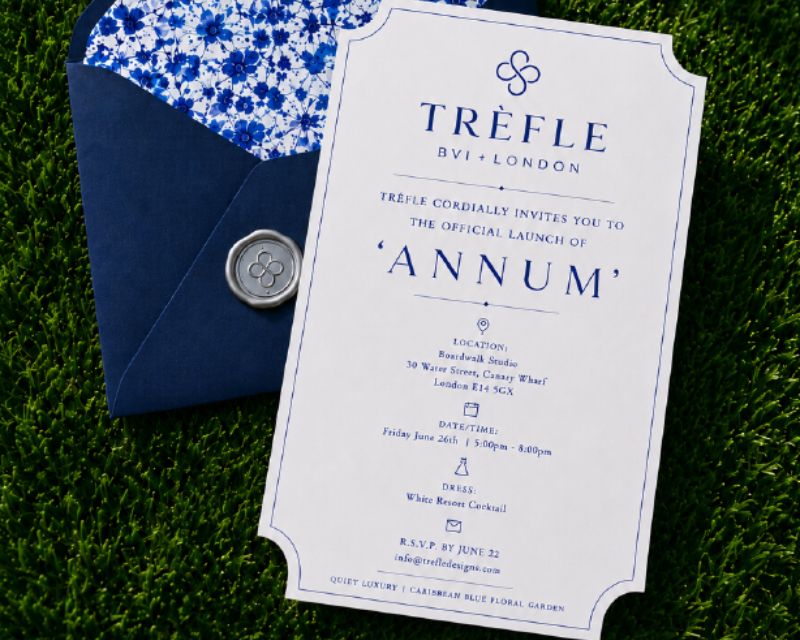
Invitation: Caribbean-British lifestyle brand pop up Canary Wharf
You are cordially invited to celebrate the London debut of ANNUM by TRÈFLE, our Caribbean-British lifestyle brand, as we unveil the first chapter of our exclusive capsule collection in a unique exhibition-style showcase.