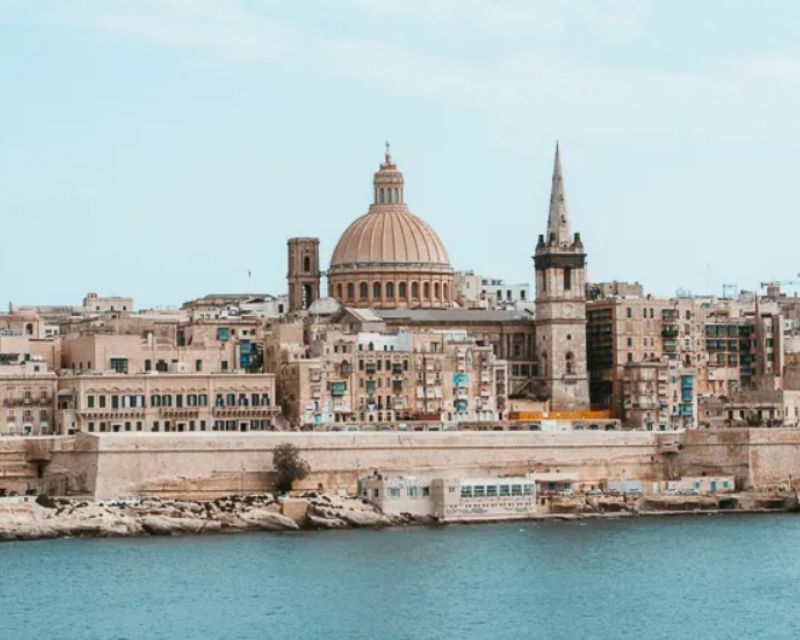
From Formula One to Family Offices: Monaco’s Expanding Influence
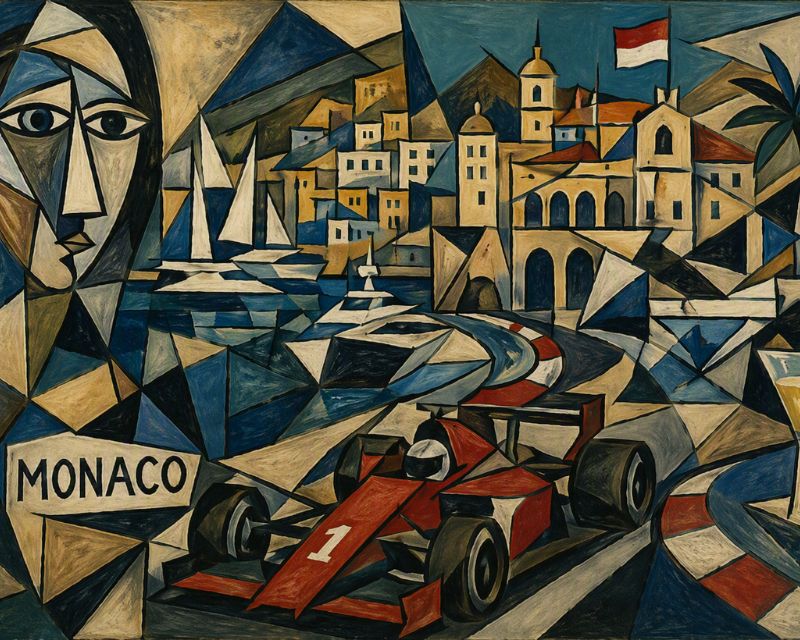
For most of the world, Monaco is still defined by a handful of iconic images: Formula One cars winding through city streets, superyachts lining Port Hercules, and the Grimaldi family presiding over one of Europe’s best-known principalities.
Yet the more intriguing story is what exists behind those familiar scenes.
Occupying barely two square kilometres of land on the French Riviera, Monaco has built one of the world’s most concentrated wealth ecosystems. It is a place where private banks, lawyers, family offices, investment advisers, entrepreneurs and property specialists operate within walking distance of one another. In an age when scale is often seen as an advantage, Monaco has managed to turn scarcity into one of its greatest strengths.
See Citywealth’s selection of top Monaco advisors and managers here
The challenge facing Monaco has always been physical. There is very little room left to build. Demand for homes and office space continues to outstrip supply and some of the world’s highest property prices are the result. Rather than expanding inland, the principality has taken the remarkable step of creating new districts from reclaimed land. Mareterra, Monaco’s newest waterfront neighbourhood, stands as a symbol of that ambition: a development literally built from the sea.
For wealthy families arriving today, the attraction is not simply real estate. It is membership of a highly connected international community.
At the recent Citywealth Forum, Magali Jacquet-Lagrèze of AMAF described Monaco through the experience of a globally mobile entrepreneur who had lived in several international financial centres before ultimately settling in the principality. The decision, she explained, was not driven solely by financial considerations. Stability, security, quality of life and a sense of long-term certainty all played a role.
That observation feels increasingly relevant.
Across Europe and beyond, families are navigating geopolitical uncertainty, changing tax regimes, regulatory complexity and concerns about succession planning. Against that backdrop, Monaco’s proposition has remained remarkably consistent. It offers stability, a predictable operating environment and access to a sophisticated network of advisers with experience serving international wealth.
Jacquet-Lagrèze made another important point. Monaco openly acknowledges its small size. But rather than viewing scale as a limitation, the principality has transformed it into an advantage. Decision-makers are accessible. Institutions are closely connected. Communication between regulators and industry tends to be more direct than in larger jurisdictions. For clients accustomed to complex structures spanning multiple countries, that responsiveness can be highly valuable.
This is one reason the family office sector has flourished.
Modern wealth often requires far more than investment management. Families are looking for guidance on governance, philanthropy, education, property, succession, healthcare and cross-border mobility. Monaco’s professional community has evolved alongside those needs, with lawyers, trustees, bankers and family office advisers increasingly working as part of an integrated ecosystem rather than in isolation.
That ecosystem extends well beyond finance.
Few places have been more successful at combining wealth with lifestyle. Monaco’s sporting heritage remains one of its defining characteristics. The Grand Prix continues to be among the most recognised events in global sport, while elite sailing, tennis and football all contribute to the principality’s international profile. Increasingly, successful athletes, team owners, sports investors and entrepreneurs are becoming part of Monaco’s wealth landscape alongside more traditional business owners.
As Citywealth expands its coverage of sport and the advisers who support athletes and sporting businesses, Monaco seems likely to play an increasingly prominent role. The same qualities that attract entrepreneurs — global connectivity, sophisticated advisers and an international outlook — are equally attractive to individuals whose wealth has been created through sport.
Yachting forms another important pillar.
The Monaco Yacht Show has evolved far beyond a showcase of luxury vessels. It has become a global gathering point for advisers, wealth managers, lawyers, family offices and investors. Recent trends suggest a market increasingly influenced by sustainability, wellness, exploration and younger generations of wealth creators. What was once viewed primarily as a display of wealth is now often discussed in the context of legacy, experiences and long-term stewardship.
That emphasis on stewardship aligns closely with another theme highlighted by Magali Jacquet-Lagrèze: sustainability.
Monaco has invested considerable effort in positioning itself as a centre for responsible investment and environmental innovation. Under Prince Albert II, issues such as marine conservation, environmental protection and sustainable development have become increasingly associated with the principality’s international identity. For many next-generation wealth holders, these themes are no longer peripheral concerns but central considerations when choosing where to live, invest and establish family structures.
Perhaps that is what makes Monaco unique.
Many jurisdictions can offer financial expertise. Others can offer favourable tax frameworks. Some can provide an attractive lifestyle.
Very few combine all three within such a compact space.
The advisers featured in Citywealth’s Top 30 Monaco List operate at the centre of this environment. Their clients are increasingly international, entrepreneurial and mobile. They require guidance not only on preserving wealth but also on managing complexity across generations, jurisdictions and asset classes.
For a territory smaller than New York’s Central Park, Monaco continues to exercise an influence that is disproportionately large.
The principality’s greatest achievement may not be its wealth, its property market or even its famous events. It is the ability to remain relevant as the nature of wealth itself evolves. While many financial centres are constantly searching for a new identity, Monaco has quietly refined an existing one: stability, expertise, internationalism and an enduring ability to attract ambitious people from around the world.
Subscribe to the Citywealth Weekly Newsletter to learn more about Private Wealth Management.
Read more:
IFC insights: Indian wealth management
The Global Migration Shake-Up: Why the Wealthy Are Moving
Citywealth Leaders List: Top 30 Immigration Advisors 2026
Citywealth Forum 2026 – Speaker: Matthew Briggs, Boyes Turner
60 seconds with Matthew Briggs, Boyes Turner


Top 75 Trustees and IFC Family Office List 2026: Trustees step beyond administration as families seek stability in an uncertain world
For much of the modern trust industry's history, trustees have worked quietly behind the scenes. Their responsibilities were clear: preserve assets, administer trusts efficiently and ensure that wealth passed between generations in accordance with a family's wishes. That role has not disappeared. It has expanded.
Citywealth Top 100 International Powerwomen 2026: the women guiding global wealth through change
The annual Citywealth Top 100 International Powerwomen list recognises leading women working across the global private wealth industry.