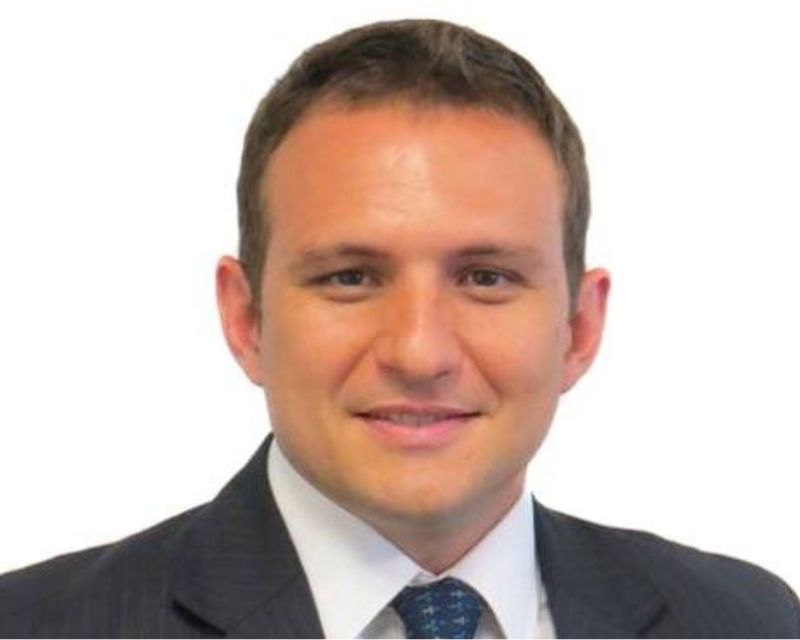
Citywealth Quick Insight Series on Family Offices Trends – Roland Jones, Axebridge Group, Barbados
This week’s Citywealth Quick Insight Series on Family Offices Trends is dedicated to Roland Jones, Chief Executive and Managing Director of The Axebridge Group, Barbados.
.

Jurisdiction change and family offices. What has changed most in how international families, including single and multi family offices, use the jurisdiction today compared with two or three years ago?
The biggest change is the reason families come. Two or three years ago the conversation often began with the tax rate. It no longer does. The move to a standard corporation tax rate in 2024 closed that chapter, and the value now rests on the treaty network, regulatory quality, and professional depth. Families arrive for a governance and treaty platform, not a number.
The profile of the client has also shifted. We see more first generation and emerging market wealth, particularly from Guyana and Latin America, and more interest in the family office itself as a governance structure rather than a simple holding company. The centre of gravity has moved from holding assets to governing them.
Legal and regulatory developments. Which specific legal or regulatory changes have been most significant over the past two to three years?
Four stand out. The corporation tax reform effective 1 January 2024, which introduced a standard rate and aligned Barbados with the global minimum tax. The repeal of the Economic Substance Act with effect from 1 January 2025, which moved substance requirements into the Income Tax Act, so substance now sits inside the tax law rather than beside it. The removal of Barbados from the FATF list of jurisdictions under increased monitoring in February 2024, which restored standing and eased cross border banking, and the continued build out of the treaty network, including a new treaty with Hong Kong in 2026. Underpinning all of this, the Trusts (Miscellaneous Provisions) Act 2018-49 remains the modern foundation of our trust law.
We structure around trusts and companies. Barbados repealed its Foundations Act in 2019, so where a family comes from a civil law background and wants a foundation in the structure because that is the form they understand, we incorporate it in a partner jurisdiction such as Panama and sit it alongside the Barbados trust or holding company.
Cross jurisdiction structuring. Are families and family offices increasingly structuring across multiple jurisdictions, and if so, which are most commonly combined with Barbados?
Yes, and it is now the norm rather than the exception. Barbados tends to sit at the apex of the structure as the treaty and governance platform, with operating assets and family members spread across other centres.
The most common combinations are with the United States, through Miami and Delaware, for North American access and family members; with Panama and other Latin American jurisdictions for regional operating businesses; with the Gulf, particularly the United Arab Emirates, through the double taxation agreement; and with Singapore or Hong Kong for Asian mandates. The reason is rarely tax alone. It is treaty access, investor protection, and a governance platform that a family’s bankers already recognise.
Family breakdown and asset protection. How are divorce, relocation and blended families changing trust, foundation or asset protection planning?
Divorce, relocation, and blended families are pushing planning toward governance and clarity rather than secrecy. The modern trust law gives families firewall protection and flexible succession, but the real change is behavioural. Families now want a written framework that survives a relocation or a breakdown: a family charter, a private trust company at the head of the structure, and marital planning built into the design rather than bolted on afterwards. Blended families in particular drive demand for structures that treat different branches fairly and transparently. The instinct has shifted from hiding assets to governing them well.
Next generation influence. Where are younger family members most influencing succession planning, investment decisions or jurisdiction choice?
The next generation is most influential on three things: purpose, transparency, and jurisdiction choice. They press for environmental and impact mandates in the investment policy, and for governance that is professional and accountable rather than controlled by one individual.
They are also the reason families choose reputable, well regulated centres over secrecy jurisdictions. A generation that has grown up online has little appetite for opacity and every reason to want a jurisdiction that will still be respectable in twenty years. That instinct suits Barbados.
Women and control of wealth. How has the growing role of women as wealth holders or decision makers changed structuring or governance choices?
The growing role of women as principals and decision makers is changing governance design. Structures built around a single controller are giving way to structures built around shared and accountable control, with family constitutions that provide for broader participation and a clear succession that does not assume a single head.
We also see more emphasis on next generation education and on governance that brings the whole family into the conversation. It is a healthier model, and the modern tools we have make it straightforward to document.
Sustainability in practice. What practical steps are families and family offices taking to embed sustainability, philanthropy or purpose into their structures?
The practical steps are concrete. Families are establishing purpose trusts, and foundations in partner jurisdictions, to house philanthropy inside the structure rather than alongside it. They are writing environmental and social mandates into their investment policy statements. And the profession is adopting the IFRS Sustainability Disclosure Standards, which creates a genuine capability in sustainability and carbon assurance. Barbados’ own focus on renewable energy and the blue and green economy gives families a domestic context for impact investment, and captive insurance companies are increasingly used to underwrite climate and renewable projects. Purpose is moving from a statement of intent to a clause in the governing document.
Digital assets and modern wealth. How are laws and regulation supporting digital assets, technology businesses or new forms of wealth?
Barbados has genuine fintech pedigree. The Central Bank and the Financial Services Commission operate a joint
regulatory sandbox, and Barbadian fintech has real regional credibility.
At present, digital assets are addressed through the existing securities and payments frameworks and through that sandbox, which lets the regulators test innovation and decide where new legislation is needed. A dedicated digital assets statute of the kind some neighbours have enacted is an area of development rather than a finished framework, and I would be candid about that. What families can rely on today is a regulator that engages with innovation rather than shutting it out, and a profession building capacity in digital asset custody, accounting, and reporting.
Residency, visas and property. How are residency routes, visa programmes and property ownership options influencing who moves to or invests in Barbados?
Residency is a real driver. The Welcome Stamp, launched in 2020, lets remote workers and entrepreneurs live in
Barbados for a renewable twelve month term, and their foreign income is not taxed here during the visa. For wealthier families, the Special Entry and Reside Permit offers long term residence to high net worth individuals and investors, including a category for property owners.
Property ownership is open to foreigners, with the foreign currency simply registered with the Central Bank so that it can later be repatriated. Together these routes attract two groups: mobile wealth creators who come to live and work, and established families who anchor a residence alongside their structure.
Future client demand. Which types of families, family offices, businesses or demographics do you expect to drive growth over the next five years?
Five groups. First, the first generation wealth of Guyana’s oil economy, which needs its first governance and succession structures. Second, Latin American families, including the Venezuelan diaspora, using the Barbados treaty position as a gateway. Third, third generation Caribbean family businesses that now need formal governance. Fourth, Gulf and Asian families seeking an Americas gateway through the treaty network. And fifth, the mobile, purpose driven wealth creators drawn by the residency routes.
To capture this demand, I have recommended, through The Axebridge Group, that Barbados adopt a dedicated family office framework, a Family Offices Act. It would place Barbados among the few jurisdictions that license the family office rather than merely tolerate it, and it would sharpen the offer to all five groups. Barbados is well primed to lead. The culture is welcoming and stable, the practitioners are highly qualified, and the profession already thinks in terms of frameworks such as the Ten Domains of Family Wealth that serve the whole of a family’s needs, not only its portfolio.
Subscribe to the Citywealth Weekly Newsletter to learn more about Private Wealth Management.
Read more:
Citywealth Forum USA 2026 – Nicki Boyd, Sphera Partners
Private bankers and their salaries (2025 update) | Citywealth News
Citywealth Magic Circle Awards marks 21st year with £10,000 raised for Magic Breakfast
Magic Circle Awards 2026 | Citywealth Awards Results
Powerwomen USA Nominees for 2026 – final week for voting!
Magic Circle Awards 2025 | Citywealth Awards Results
Mirabaud strengthens its wealth management division in the UK market | Citywealth News
Top 25 Florida Advisors and Managers 2026
Top 40 Italian Advisors and Managers 2025 | Citywealth Top List
Top 25 Investment Managers 2024 | Citywealth Top List


Citywealth Quick Insight Series on the California Market – Olivier de Givenchy, CEO of J.P. Morgan Private Bank
This week's Citywealth Quick Insight Series on the California Market is dedicated to Olivier de Givenchy, CEO, West Region, J.P. Morgan Private Bank
Citywealth Quick Insight Series on the Latam Market – Juan Pablo Cucalón, 1291 Group, Panama
This week's Citywealth Quick Insight Series on the Latam Market is dedicated to Juan Pablo Cucalón, partner at 1291 Group.