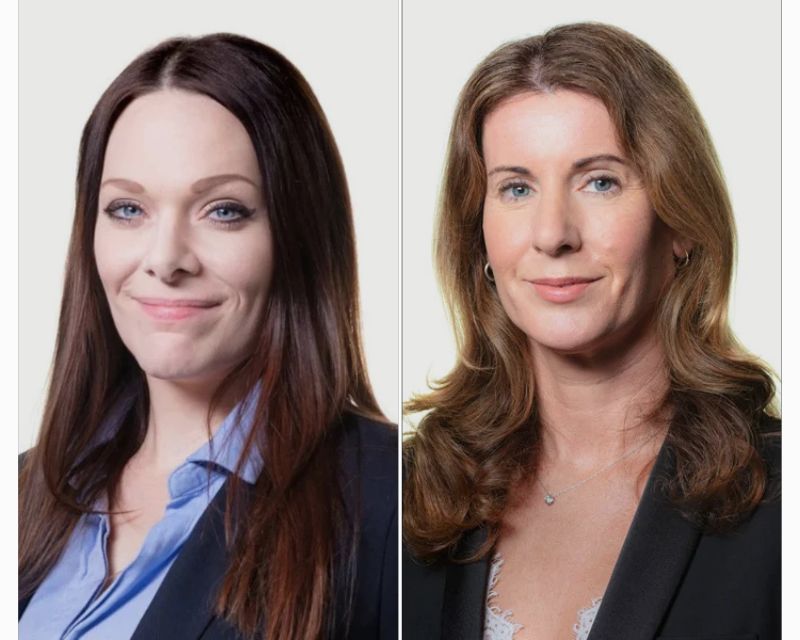
Citywealth Quick Insight Series on Family Dynamics Trends – Patricia Annino, Rimon Law, Boston
This week’s Citywealth Quick Insight Series on Family Dynamics Trends is dedicated to Patricia Annino, Partner at Rimon Law in Boston. Patricia M. Annino is a partner in Rimon’s Trust and Estates Group. A nationally recognized authority on estate planning and taxation, Ms. Annino has more than 30 years of experience serving the diverse needs of families, individuals, and owners of closely-held businesses. She focuses on planning for family business owners, including coordinating their estate planning, corporate and succession needs. In addition, she represents non-profit entities and private family foundations. Read more about Patricia on her Citywealth Leaders List profile here

How do you manage the challenges of family dynamics when advising UHNW clients, especially across multiple generations?
Every family has an inheritance system. The question is whether it is intentional or accidental. Successful families don’t simply transfer wealth. They design the systems that allow wealth, leadership, and purpose to endure. The greatest risk to significant wealth is rarely poor investment performance. It is family systems failure. Families are emotional systems. I don’t begin with assets. I begin with relationships and spend a great deal of the time in the first few meetings asking questions and listening to what they are telling me and listening carefully for questions they have not yet asked but that I need to know. It is impossible to structure without an understanding of what is going on above and below the surface in the family. There is always something that is not being said that is fundamental to the planning and it is different in every family. The only way to find it out is to have open honest communication and ask questions. Every family and every family member have different planning tolerances and the amount of time and effort they are willing to put into the design. The biggest and most important idea to convey is that life is a movie, not a snapshot. Planning must on going. Tax laws change, family members move, goals and objectives change. Net worth changes. In a multi generation family every action (divorce, succession, death, disability) causes a reaction that reverberates through the entire system. It is the commitment to the process that yields the most effective results.
What role do family values play in wealth management decisions? Can you give an example where these values shaped a key decision?
Values should not simply be written in a mission statement. They should be embedded into trustee selection, board composition, philanthropy, investment policy, distribution standards, and the education of rising generations. I recently worked with a UHNW global family that had no idea how to agree on who should serve in which role. They were also looking at the choices through their own world view of what they perceived the skills, and aptitudes of each family member was. But of course, they were doing that through a historical lens. There is a system for understanding values. Values can be identified through well-designed assessment tools and structured conversations that help families understand how individual motivations influence governance, leadership, and succession decisions.
How do you help families communicate about wealth management and succession planning?
Documents don’t communicate. Conversations do. I find that regularly scheduled structured family meetings are critical. Clear and open communication among family members and advisors is essential. The meetings should be thought out and strategically planned. It is a good practice to have a mix of all family discussions, discussion by generations, discussions with advisors and discussions with family and advisors on a regular basis- several times a year. The process will then unfold. It is also important to have succession conversations years before transition. I have also found that education of the fiduciaries is as important as education of the family.
Have you helped set up family governance structures? What are the key elements of a successful one?
Governance is not bureaucracy. It creates clarity before conflict. Governance structures can include a family constitution, family council, boards of directors, boards of advisors, conflict resolution processes, and ownership council. The key to success is allowing all voices to be heard, open and honest discussions and regular communication to let the process unfold. As with other planning, the importance is that this is understood as an ongoing process, not a one and done.
How do you handle situations where younger family members have different financial goals or risk preferences than older generations?
Today’s rising generation often seeks Purpose, impact, philanthropy, and global investing. Older generations often emphasize capital preservation, continuity, and risk management. The challenge for an advisor is not to choose a side and not to let personal bias in. The goal is to design a system where communication is open and where the generations can work together. It can be important to encourage them to bring in specialists who can impartially provide education on differing points of view.
Family conflicts often arise during wealth transitions. How do you manage disagreements about wealth distribution or management?
My goal is to prevent litigation. Families do not inherit wealth alone. They inherit ghosts. As I often say, ‘You cannot litigate love’, so why are you trying? Every family has an inheritance system, and every inheritance system has ghosts. To avoid litigation, the lawyer or advisor must be on alert and pay attention to the ghosts in the family . It is far safer to walk into a law office and present an issue as an accounting or legal issue and dispute when it is really a sandbox issue. Ghosts can be friendly or dangerous. When I sense something is bubbling up or when someone walks in with conflict, I always pick up the flashlight and look for the ghost because many times you cannot solve the problem with law or accounting – for a family to hit hard conflict it is colliding with one of its ghosts.
Over the years I have identified five types of ghosts:
Trauma ghosts such as abuse, substance abuse or alcoholism, suicide, bankruptcy, business failure, betrayal, litigation, scandal, sudden death, immigration trauma, war, or persecution. Trauma ghosts create fear, overprotection, secrecy, or control that can persist for generations.
Identity ghosts: These are the stories families tell themselves such as: We are self-made; We are different: The oldest child always leads; We never sell the business; Money must never be discussed or Success defines your worth. Some identity ghosts strengthen a family. Others trap it.
Authority Ghosts : former power holders who continue to influence decisions after they are gone such as the founder whose memory dominates every discussion, a deceased patriarch, a dominant matriarch, an influential trustee, a beloved CEO, or a revered grandparent. The legal authority may have changed, but the psychological authority has not.
Trust Ghosts: These are people or relationships that continue to command loyalty long after circumstances have changed. For example, Dad always trusted this lawyer, or Our accountant has been with us for 40 years, or We’ve always used this bank, or Our investment advisor is practically family. Sometimes that loyalty is well deserved. Sometimes it prevents families from evolving.
Economic Ghosts: These are inherited ‘money scripts.’ For example: scarcity thinking, fear of spending, conspicuous consumption, money equals love, money equals security, money equals power, never borrow, always borrow, avoid risk, or seek risk. These scripts often originate several generations earlier yet continue to influence investment decisions, distributions, entrepreneurship, and philanthropy.
Can you share a challenging family conflict related to wealth or succession, and how you helped resolve it?
Two brothers inherited significant sums of money from their father. The assets were held in two different trusts, one for each son but the younger brother was a co-Trustee of both trusts, and the older brother (my client) was not. I saw from the beginning that this was a governance issue and a sandbox issue: hard for one brother to swallow having his younger brother in charge and harder for the younger brother to step away because he felt his father asked him to take that role on. We worked with an independent mediator and after six months restructured the governance so that everyone could accept it. The common thread to both brothers was they both wanted to respect the legal form of the dynasty trust: isolating the issue to governance allowed for more productive conversations.
How do you address differences between generations on issues like legacy, social impact, and aligning wealth with family values?
Legacy is not money or wealth. Legacy is not what you leave behind. We all have a legacy now. Legacy continues because of how you lived and led. The concept I try to convey is stewardship. Stewardship is often described as preserving wealth. Stewardship is the responsibility to leave the family, the enterprise, and its capacity for leadership stronger than you inherited them. And with family enterprises it is important because families often confuse founder intent with stewardship. Sometimes they align and sometimes they don’t, with founder intent being what did the founder want and stewardship asking the question of what would best serve the enterprise and future generations now. Successful families continually regenerate, in financial capital by growing and adapting assets, in human capital with developing capable family members, in social capital by maintaining relationships and trust, in intellectual capital by learning and adapting and stewardship capital by building the family’s capacity to govern itself. In other words, stewardship is dynamic. Stewardship is the process by which each generation reinterprets enduring principles for a changing world. And the goal may be adaptive continuity.
Can you tell us about a family that faced an unexpected crisis, like the sudden death of a family leader, and how you helped them manage the transition?
Answering this a little differently, years ago I had a client who was in his early 50s and diagnosed with pancreatic cancer. He was told he had about five weeks to live. He had his own business and his two sons in their early twenties were working with him in it. He knew that he did not have enough time to teach them what they needed to know to take the business over, it was global. He asked me to meet with him and his family and explain the plan to them. In that meeting he told his family that a decade before he had purchased a significant life insurance policy and put it in trust for his wife’s benefit. Her future was financially secure. He gave his sons permission to do what they thought was right, not to think that he was telling them to keep the business or if they tried or failed, he would be disappointed, none of that was what he wanted. He apologized for not being able to be there for them (everyone cried) and gave them permission to try to continue the business, shrink it, sell it, or close it. He loved them no matter what the choice was he was proud of them. It was one of the most honest and gut-wrenching meetings I ever sat through. He died about a month later. They shrunk the business and are still running it.
How do you prepare UHNW families for the unexpected and ensure their wealth plans remain strong during times of crisis or sudden change?
Families spend years preparing for death. Very few spend enough time preparing for transition. They are not the same thing.I have started discussing a concept called ‘The Day After’ with clients: do your family, advisors and associates know what would happen the day after? It is not fair if they don’t know that and not educating them now means you are undercutting your own legacy. It is unfair to leave people guessing who will be in charge, what the documents say, who the advisors are etc. When framed that way I have found people listen and act. Again, this should not just be done once -it should be done annually.
Key Takeaways
- Patricia Annino, a partner at Rimon Law, offers over 30 years of expertise in estate planning and wealth management for families and businesses.
- She emphasises the importance of understanding family dynamics and values to prevent wealth transfer issues and ensure effective governance.
- Regular family meetings are crucial for open communication and addressing succession planning and wealth management issues.
- Annino identifies five types of ‘ghosts’ that affect family dynamics, highlighting the need for awareness of underlying emotional factors in planning.
- She recommends preparing families for unexpected transitions by discussing the vision for the future and ensuring everyone knows the plan.
Subscribe to the Citywealth Weekly Newsletter to learn more about Private Wealth Management.
Read more:
Citywealth Forum 2026 – Speaker: Jessica Medus, Mishcon de Reya
60 seconds – Nicola Simmons, Mishcon de Reya
Leaders List interview: 60 seconds with Stuart Adams, Mishcon de Reya
Mishcon de Reya bolsters private client offer with US tax
60 second interview with Emma Woollcott, Mishcon de Reya | Citywealth News
60-second interview: Hayley Geffin, comms and PR manager, Mishcon de Reya | Citywealth News
Citywealth Leaders List: Top 30 Immigration Advisors 2026
Citywealth Powerwomen Awards 2026

Citywealth Quick Insight Series on divorce and family law Trends – Clare Radcliffe, Mishcon de Reya
This week's Citywealth Quick Insight Series on divorce and family law Trends is dedicated to Clare Radcliffe, Partner, Mishcon de Reya.
Citywealth Quick Insight Series on Sports Trends – Chris Harber, Boyes Turner
This week's Citywealth Quick Insight Series on Sports Trends is dedicated to Chris Harber, Partner & Head of Immigration at Boyes Turner.