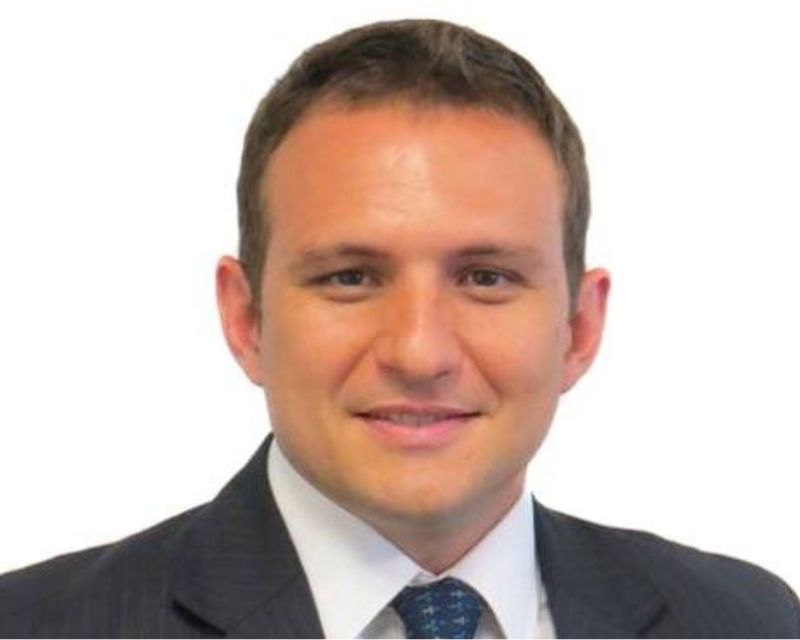
Citywealth Quick Insight Series on Digital Assets Trends – Juan Francisco Pardini, Pardini & Asociados, Panama
This week’s Citywealth Quick Insight Series on Digital Assets Trends is dedicated to Juan Francisco Pardini, lawyer, Pardini & Asociados, Panama.

Juan Francisco Pardini is a lawyer at Pardini & Asociados, a Panamanian boutique law firm with offices in Panama. The firm specialises in cross-border structuring, digital assets regulation, and wealth planning for ultra-high-net-worth individuals and crypto entrepreneur clients. The firm advises on Web3 projects, family offices, and UNHW, on compliance, digital assets regulation, cross-border structuring, and succession planning.
What’s your current assessment of the digital asset market, and how is macroeconomic or regulatory uncertainty affecting sentiment among private wealth clients?
Sentiment has cooled a lot since last year. Bitcoin hit an all-time high above $126,000 in October 2025, today it’s trading closer to $63,000–65,000, roughly half that peak. Crypto hedge funds have pulled back into cash at levels not seen in a year. So the “buy BTC at all costs” story that dominated conversations twelve months ago has given way to something more sober. For Panama-based clients, that’s actually clarifying. The people asking about crypto exposure now aren’t chasing momentum, they’re asking whether their existing holdings are properly structured, whether their foundation documents address custody and succession, and whether they’re compliant with what’s coming. Panama itself has had a strong year on the credibility side: it left the EU’s AML high-risk list in July 2025 and signed onto the OECD’s crypto reporting framework (CARF) in December, with data exchange starting 2027. That’s real institutional progress, even while token prices are down. Clients who understand the difference between price volatility and structural maturity are the ones making good decisions right now. This is exactly the kind of environment where we’ve built out Pardini & Asociados’ digital assets practice, helping clients tell the difference between price noise and structural progress, and making sure their Panama structures are ready for what’s coming, not just what’s already here.
How are recent policy changes in the U.S., EU, or Asia influencing crypto adoption or caution in the private client space?
The EU picture is the most settled. MiCA is now fully in force, and most member states’ transitional grandfathering periods for crypto-asset service providers have run out or are running out through mid-2026. For clients with European ties, this isn’t theoretical anymore, it determines which custodians and exchanges they can legally use. The U.S. picture remains more fragmented, though the GENIUS Act gave stablecoins a federal legal foundation, and that’s meaningfully de-risked dollar-stablecoin holdings for private clients using them as a treasury tool. Closer to home, Panama’s National Assembly received Anteproyecto Ley N° 314 in January 2026, a more comprehensive fintech and VASP framework than the earlier Bill 247, aligned more closely with FATF and MiCA terminology. It’s still a draft but the direction is unmistakable: Panama, the EU, and the U.S. are all converging toward “regulated but accessible” rather than either prohibition or a free-for-all. Clients are adjusting their structures accordingly, not waiting for the ink to dry.
What role are digital assets currently playing in the portfolios of HNWIs and family offices, speculative, hedging, or strategic?
Less speculative than a year ago, frankly. With Bitcoin down roughly 50% from its October peak, the clients who treated it as a quick trade have mostly been shaken out. What’s left is a more deliberate cohort: people holding it as a genuine long-term store-of-value allocation, sized appropriately, and not checking the price daily. The more interesting shift is toward tokenised real-world assets. That segment has kept growing through the broader downturn, tokenised Treasuries, private credit, and institutional funds now sit above $30 billion on-chain, roughly tripling year-on-year, even as general DeFi activity has contracted. That divergence tells you something: family offices are using blockchain infrastructure for yield and settlement efficiency on assets they already understand, not as a crypto bet. We’re seeing this play out directly in our own client work, family offices coming to Pardini & Asociados less for “should I buy Bitcoin” advice and more for help building tokenisation-ready structures around real estate and closely held companies they already own. In Panama specifically, where a lot of client wealth sits in real estate and closely held companies, that RWA conversation is far more relevant right now than “should I buy more Bitcoin.” It’s a liquidity and succession tool, not a speculative position.
How are wealth managers integrating crypto and blockchain-based products into diversified portfolios for their clients?
Mostly through regulated wrappers, spot ETFs remain the cleanest entry point for clients who want exposure without direct custody headaches. That hasn’t changed. What has changed is the seriousness with which structuring conversations happen. With prices down and CARF reporting starting in 2027, clients are less focused on squeezing out returns and more focused on getting the legal architecture right before the reporting net tightens. In Panama, that means using Private Interest Foundations or corporations with explicit governance documentation: who controls the wallets, what multi-signature thresholds apply, what happens on incapacity or death. The honest gap I still see is operational. Crypto doesn’t slot neatly into standard portfolio reporting, and most wealth managers haven’t built proper reconciliation between on-chain holdings and traditional statements. The managers doing this well have built dedicated teams for it, everyone else is improvising, and clients notice. It’s why we built Pardini & Asociados’ advisory around that exact gap, pairing legal structuring with the operational fluency to actually reconcile on-chain holdings against a client’s broader balance sheet.
Are there specific tokens, protocols, or segments (DeFi, stablecoins, RWAs) that you see gaining traction among private investors?
Tokenised Treasuries and institutional funds are the clear winner right now, that segment has grown even as the wider market corrected, which is a meaningful signal. Products like BlackRock’s BUIDL and Franklin Templeton’s BENJI have become reference points for clients who want dollar yield with on-chain settlement speed. Regulated USD stablecoins remain the practical workhorse for clients managing cross-border liquidity, especially with the GENIUS Act giving them a federal legal footing in the U.S. Beyond finance, Panama itself is a genuine reference case for agricultural blockchain, the MIDA-BID Lab rice traceability programme, now expanding toward 500 producers, has delivered real, measured income gains for participating farmers. It’s not a token you can buy, but it’s the clearest evidence in this jurisdiction that blockchain creates value outside speculation. What I’m not seeing much genuine private-client appetite for right now: speculative altcoins and DeFi yield farming. That segment has shrunk industry-wide, and Panama clients have generally stayed away from it.
How do you see ESG frameworks and sustainability intersecting with blockchain and digital assets?
More concretely than the hype suggests. Blockchain’s real value here is verification, turning ESG claims into something provable rather than self-reported. Panama’s rice programme is the best local example: it doesn’t just track crops, it generates verified carbon credits from NAMA-compliant farming that get placed directly into carbon markets. Foodchain is extending similar traceability logic to coffee across the region. For private clients, this matters in two concrete ways. Those with European family members or co-investors face growing ESG disclosure pressure, and blockchain-verified provenance data genuinely helps. And for family offices holding agricultural or forestry assets already, not for ESG reasons, just because that’s where their wealth sits, tokenised carbon credits or certified sustainable output are becoming a real, monetisable byproduct rather than a marketing line. Panama doesn’t have a formal ESG-digital-assets framework, and honestly, few jurisdictions do yet. But the practical convergence, verification technology meeting sustainability finance, is happening on the ground faster than any regulator is writing rules for it.
What are the key risks private clients should be aware of in crypto markets, and how can advisors mitigate them?
Market risk is the obvious one, and this year has been a reminder: a 50% drawdown from October’s highs isn’t hypothetical, it happened. Position sizing has to be deliberate, not an afterthought. Custody risk remains under-appreciated. Clients holding assets on platforms with unclear legal status, or managing their own keys without a tested recovery plan, are exposed in ways that traditional wealth holdings simply aren’t. FTX wasn’t a one-off lesson, it was the first of several. Then there’s the compliance timeline risk that’s specific to right now. Panama’s CARF commitment means cross-border reporting starts in 2027, and Law 526’s economic substance requirements are already live. Structures that felt low-risk two years ago need reviewing today, not after the reporting requirement bites. Finally, regulatory reclassification, a token treated as unregulated today could be swept into MiCA’s scope or reclassified as a security elsewhere, and holding it through a Panamanian structure doesn’t insulate a client with EU tax residency. Good advisors are flagging all four, proactively, not waiting to be asked. At Pardini & Asociados, that proactive flagging is built into how we review every digital asset structure, treating CARF readiness and economic substance as ongoing maintenance, not a one-time fix.
Have expectations changed in terms of custody, access, or transparency in crypto wealth management solutions?
Yes, and the correction this year has reinforced it rather than reversing it. Clients who might have tolerated a lightly regulated offshore custodian two years ago now expect institutional-grade arrangements: segregated accounts, clear legal documentation of what the custodian can and cannot do, insurance where it exists. Self-custody without a tested recovery and succession plan is increasingly seen as a liability, not a feature. Transparency expectations have moved too. Clients want their crypto and tokenised holdings reported alongside traditional assets, with proper valuation and cost-basis tracking, not a separate spreadsheet living outside the main portfolio review. The tools exist; the integration into mainstream wealth reporting is still uneven across advisors. In Panama, the specific question I get most now is about succession: what happens to a client’s digital holdings if something happens to them, and does the foundation or corporate structure actually address it in writing. That’s no longer a nice-to-have conversation, with CARF reporting starting in 2027, clients want their paperwork airtight before anyone else is looking at it.
In what ways are private banks or trustees adapting to the inclusion of digital assets in estate planning and fiduciary conversations?
Slowly, but the direction hasn’t reversed despite this year’s price correction, if anything, the correction has pushed the conversation toward planning rather than speculation. Some private banks in Switzerland and Singapore now offer proper custody and reporting for digital assets alongside traditional holdings. The harder conversation is fiduciary. Trustees have a duty of prudence, but “prudent” hasn’t been codified for crypto in most jurisdictions, including Panama. Our trust law, from 1984, doesn’t mention digital assets, and there’s no court precedent testing how a trustee’s duties apply to them. What we recommend in practice: address digital holdings explicitly in the constitutive documents, what the foundation council can hold, through which custodians, with what governance controls, and who has authority if the founder becomes incapacitated. Panama’s Digital Identity Wallet, now well established since its October 2024 launch, and the ongoing work of the electronic signature authority point toward a future where authenticated digital documents anchor succession, but the specific legislative infrastructure for blockchain-based testamentary registration still isn’t there. Advisors treating this as a first-class planning topic, rather than an afterthought, are ahead. This is a big part of what we do at Pardini & Asociados: drafting foundation and corporate documents that actually name the wallets, the custodians, and the succession triggers, so clients aren’t relying on a court to interpret a will that was never written with crypto in mind.
What innovations or infrastructure developments do you believe are most important to the future of crypto in private wealth?
Tokenised real-world assets, without question, the data makes the case better than I can. That market has kept growing through a year when broader crypto and DeFi activity contracted, roughly tripling to over $30 billion on-chain. When a Panamanian family office can tokenise an illiquid real estate position, use it as collateral, or transfer fractional interests to heirs without a full sale process, that changes succession planning fundamentally. Panama’s foundation and movable-securities framework is well suited to support it. Second, compliance infrastructure, tools built for CARF reporting starting in 2027, on-chain tax tracking, and AML integration. Whichever jurisdictions and advisors build this well will keep client trust; the rest will lose it quietly. Third, and still missing: genuinely institutional custody with tested succession protocols, offered by a major regulated bank rather than a crypto-native platform. The clients I speak with want that combination, regulated, documented, and built for what happens when they’re no longer the one making decisions. We’re closer than we were a year ago, but not there yet.
Subscribe to the Citywealth Weekly Newsletter to learn more about Private Wealth Management.
Read more:
Citywealth Forum USA 2026 – Nicki Boyd, Sphera Partners
Private bankers and their salaries (2025 update) | Citywealth News
Citywealth Magic Circle Awards marks 21st year with £10,000 raised for Magic Breakfast
Magic Circle Awards 2026 | Citywealth Awards Results
Powerwomen USA Nominees for 2026 – final week for voting!
Magic Circle Awards 2025 | Citywealth Awards Results
Mirabaud strengthens its wealth management division in the UK market | Citywealth News
Top 25 Florida Advisors and Managers 2026
Top 40 Italian Advisors and Managers 2025 | Citywealth Top List
Top 25 Investment Managers 2024 | Citywealth Top List


Citywealth Quick Insight Series on the California Market – Olivier de Givenchy, CEO of J.P. Morgan Private Bank
This week's Citywealth Quick Insight Series on the California Market is dedicated to Olivier de Givenchy, CEO, West Region, J.P. Morgan Private Bank
Citywealth Quick Insight Series on the Latam Market – Juan Pablo Cucalón, 1291 Group, Panama
This week's Citywealth Quick Insight Series on the Latam Market is dedicated to Juan Pablo Cucalón, partner at 1291 Group.