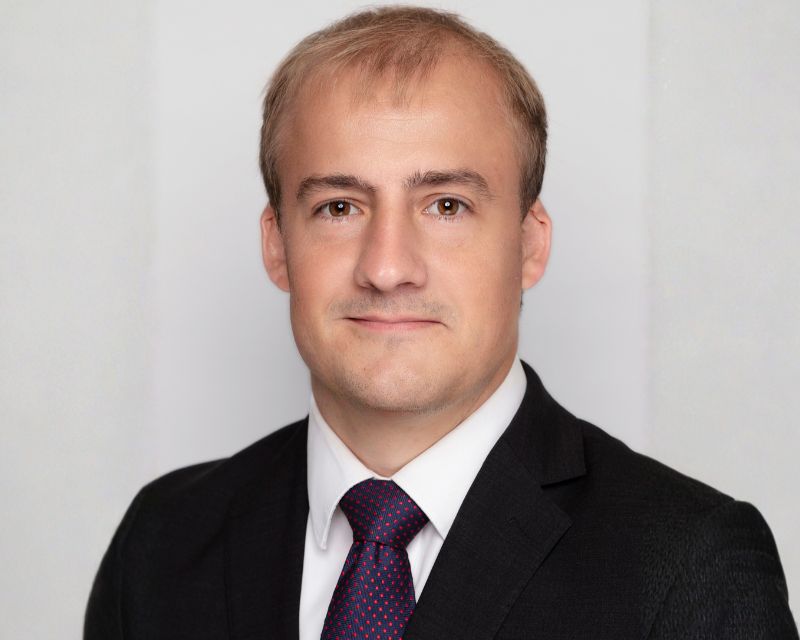
Citywealth Leaders List, 60 seconds interview – Max Kunkel, UBS
This week’s 60 seconds Citywealth Leaders List interview is dedicated to Max Kunkel, Chief Investment Officer, Global Family & Institutional Wealth at UBS.
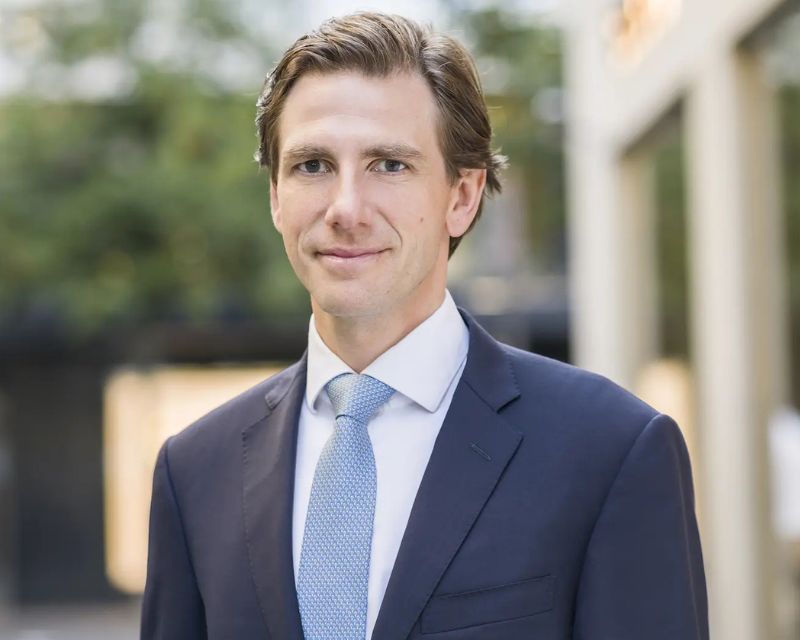
What is your assessment of the current global political landscape and its impact on wealth management strategies?
The current global political landscape is increasingly fragmented and complex, shaped by geopolitical tensions, high public debt levels, and ongoing structural economic changes. In this environment, the focus is more on a medium-term approach to asset allocation, focusing less on reacting to short-term volatility and more on building resilience across a wide range of outcomes. This shift reflects the recognition that uncertainty is likely to remain a persistent feature of markets, prompting investors to prioritise diversification across geographies, currencies, and asset classes as a core strategy.
In your opinion, how have recent policy shifts in major economies like the US, EU, China affected the long-term stability of private wealth?
Recent policy shifts across major economies have reinforced the transition toward a more multi-polar global system, which has important implications for private wealth. Despite geopolitical tensions and policy divergence, markets have demonstrated notable resilience, with global equities remaining near highs and credit markets still well supported. This suggests that policy changes are not undermining long-term stability but are instead encouraging investors to adapt through more diversified and flexible portfolio construction. As a result, private wealth is becoming less dependent on a single economic engine and more balanced across regions and opportunity sets.
As we continue to navigate uncertainty in global markets, how are wealth managers adjusting their strategies to preserve and grow clients’ wealth?
Wealth managers are increasingly focused on strengthening the core of client portfolios, ensuring that allocations are robust across a variety of market conditions. This involves building well-diversified portfolios across asset classes, sectors, and regions, which can deliver steady, long-term compounding even during periods of volatility. Rather than making radical changes in response to short-term market movements, investors are applying a disciplined approach, combining a resilient core portfolio with selective exposure to long-term structural themes such as artificial intelligence and energy transition.
How important is diversification in a post-pandemic world, and which asset classes are your clients focusing on?
Diversification has become even more critical in the post-pandemic investment landscape. Family offices are actively diversifying not only across asset classes but also across regions and currencies, recognising that traditional correlations can shift during periods of stress. Developed market equities continue to form the backbone of most portfolios, but there is a growing allocation to emerging market equities and selected alternative investments such as infrastructure and gold. At the same time, some investors are reassessing exposure to specific currencies, including the US dollar, as part of broader regional diversification strategies.
Sustainability investing has gained traction over the past few years. How are you seeing it affect the portfolios of high-net-worth individuals, and is this trend sustainable?
Sustainability investing has evolved from a niche allocation into a core consideration in portfolio construction. High-net-worth investors are increasingly integrating environmental, social, and governance factors into their investment decisions, often in combination with thematic strategies linked to climate, resource efficiency, and long-term societal change. While sustainable investing can influence the investment universe and lead to different return profiles compared to traditional portfolios, it is now firmly embedded in strategic asset allocation. The trend itself remains structurally supported, although investors are adopting a more pragmatic and outcome-oriented approach as the market matures.
What are the emerging risks and opportunities that wealth managers should be most aware of?
The current environment presents a combination of significant risks and compelling opportunities. On the risk side, geopolitical uncertainty, commodity supply disruptions, and elevated global debt levels remain key concerns. At the same time, opportunities are emerging from structural trends such as artificial intelligence, which is driving a new investment cycle across multiple industries. Additionally, emerging markets continue to offer attractive diversification benefits and growth potential, while alternative investments—such as infrastructure and hedge funds—can provide additional sources of return in an environment of greater dispersion and lower correlation.
How have the needs and expectations of private clients evolved in recent months? Are there any new priorities or concerns they are expressing?
Private clients are increasingly focused on achieving a balance between wealth preservation and long-term growth. Rather than reacting to short-term market fluctuations, they are prioritising resilience, governance, and intergenerational planning. Our latest Global Family Office Report<https://www.ubs.com/global/en/wealthmanagement/who-we-serve/family-office-and-uhnw/global-family-office-report-clients/_jcr_content/root/contentarea/mainpar/toplevelgrid_copy/col_1/inner_1639644097/col_1/actionbutton.0385835777.file/PS9jb250ZW50L2RhbS9hc3NldHMvd20vc3RhdGljL2dmby9nbG9iYWwtZmFtaWx5LW9mZmljZS1yZXBvcnQtZW4tMjAyNi5wZGY=/global-family-office-report-en-2026.pdf> shows that many investors are making measured adjustments to their portfolios, rather than pursuing radical shifts, reflecting a preference for stability and disciplined investment processes. This evolution underscores a growing awareness that managing uncertainty is not about avoiding risk entirely, but about structuring portfolios to navigate it effectively over time.
In what ways are clients seeking more personalized wealth management services, and how are you meeting those needs?
Clients are increasingly seeking personalised investment solutions that reflect their specific objectives, geographic exposures, and long-term priorities. This can include tailored allocations to alternative assets, bespoke regional strategies, and integration of family governance and succession planning considerations. Wealth managers are responding by combining global investment expertise with localised implementation, enabling a more customised approach that aligns closely with each client’s unique circumstances and long-term goals.
With the rise of digital, how are private clients responding to this?
Digital capabilities are playing an increasingly important role in how clients engage with their wealth, particularly in areas such as portfolio monitoring, access to research insights, and decision support. However, among ultra-high-net-worth clients, digital tools are primarily seen as a complement to, rather than a replacement for, personal advisory relationships. The human element remains central, particularly for complex investment decisions and strategic planning, while digital platforms enhance convenience and transparency.
Are there any new technologies or platforms that are making a significant impact on how private wealth is managed or delivered?
Artificial intelligence is emerging as one of the more significant technological forces in both portfolio construction and wealth management delivery. From an investment perspective, AI is creating new opportunities across sectors, including infrastructure, industrials, and technology. From a client service perspective, data-driven tools and platforms has the potential to enable more scalable customisation, improved analytics, and enhanced client experience.
UBS’ Citywealth Leaders List profile
Key Takeaways
- Max Kunkel, Chief Investment Officer at UBS, discusses the complex global political landscape affecting wealth management strategies.
- He emphasizes the importance of diversification in asset allocation, especially in a post-pandemic world.
- Kunkel highlights sustainability investing as a core consideration in high-net-worth portfolios.
- Wealth managers are adapting by focusing on resilience and building diversified portfolios to navigate uncertainties.
- Clients seek personalised wealth management solutions, and AI is transforming investment strategies and client services.
Subscribe to the Citywealth Weekly Newsletter to learn more about Private Wealth Management.
Read more:
Football clubs seek fundraising avenues
UBS lead SDG blended finance initiative
EuroMillions £75m winner: Tips on what to do if you come into a substantial amount of money – Mazars
The Art Basel and UBS Survey of Global Collecting 2023
The Art Basel and UBS Global Art Market Report 2025 Insights
Modern Estate Planning: From Wills to Testamentary Substitutes

Citywealth Leaders List, 60 seconds interview – Samantha Farndale, Stowe Family Law
This week's 60 seconds Citywealth Leaders List interview is dedicated to Samantha Farndale, Partner at Stowe Family Law.
Citywealth Leaders List, 60 seconds interview – Andrew Harrison, EY
This week's 60 seconds Citywealth Leaders List interview is dedicated to Andrew Harrison, US-UK Cross Border Private Client Tax at EY.