Best US Trust Jurisdictions in 2026: Top States & Advisers
Compare South Dakota, Delaware, Nevada, Wyoming and Alaska for dynasty trusts, asset protection, privacy and fiduciary expertise in 2026. For decades, the conversation around international wealth structuring centred on offshore financial centres. However, wealthy US families historically also use the United States domestic trusts, where they have developed highly specialised trust laws designed to attract long-term private capital. South Dakota, Delaware, Wyoming, Alaska and Nevada have each taken a different approach. Delaware remains the legal heavyweight, supported by its specialist Court of Chancery and an extensive body of trust law. South Dakota has become closely associated with perpetual dynasty trusts, directed trusts and flexible fiduciary governance. Wyoming has developed a strong market in private family trust companies, while Alaska retains its importance as the pioneer of the domestic asset protection trust. Nevada has also built a substantial industry around asset protection, long-duration trusts and fiduciary administration.
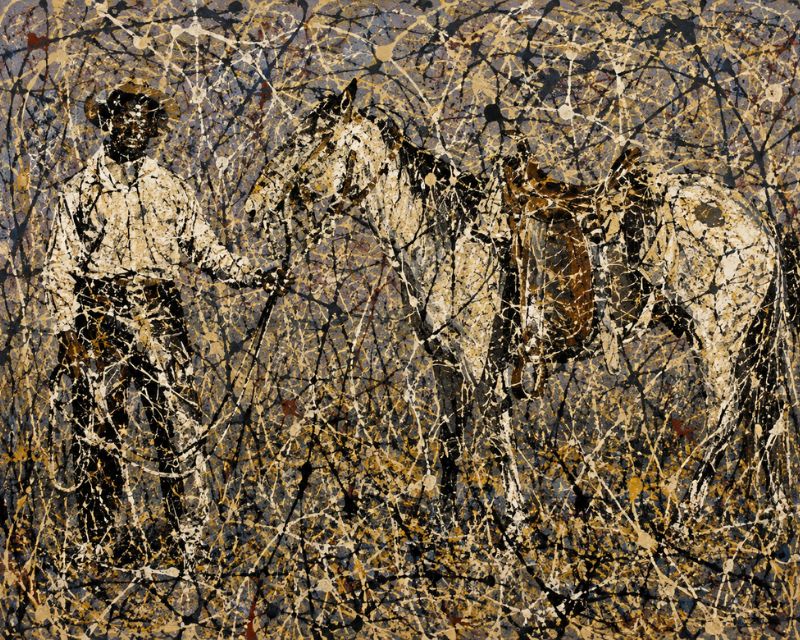
A cowboy and horse in Jackson Pollock style
Their appeal is not limited to tax. Families are using these jurisdictions to address succession, privacy, creditor protection and the governance of wealth held across businesses, property, private investments and, increasingly, digital assets.
See the Top 30 Domestic Trust Advisors List here
The Great Wealth Transfer comes into view
The growth of domestic trust jurisdictions coincides with the ‘Great Wealth Transfer’. Estimates that US$124 trillion will be transferred through 2048, of which US$105 trillion is expected to pass to heirs. Although longevity is also presenting the question that heirs may have to wait longer, resulting in a slower than expected ‘Great Wealth Transfer’.
Despite this families must decide who will control investments, how beneficiaries should be prepared, whether a family business should remain intact and what responsibilities should sit with trustees, family members and outside advisers.
The traditional model, in which one trustee assumes almost every fiduciary responsibility, is increasingly being supplemented by directed trusts and private trust companies. These can divide investment, distribution, tax and administrative decisions between different individuals or organisations.
That flexibility is particularly attractive where family wealth includes an operating company, private equity interests, real estate or other assets requiring specialist knowledge. It also creates a greater need for precision. Trust documents must clearly establish who holds each power and where responsibility lies when decisions are challenged.
South Dakota: legislation as an industry
South Dakota has regularly updated its trust legislation through a long-established process of legislative review, treating trust law as an evolving area of financial services rather than a static body of legislation. Its Trust Task Force, whose members are appointed by the governor, continues to review the state’s laws and recommend changes. Members of the task force were instrumental in crafting the South Dakota Trust Company Act, helping establish the state as one of America’s leading fiduciary centres.
This willingness to update the law has supported the growth of directed trusts, perpetual trusts and specialist fiduciary roles. Recent developments have addressed the allocation of tax decisions and the circumstances in which a trustee may reimburse a grantor for income tax attributable to a trust.
Among the best-known figures in the market is Al King III, co-founder of South Dakota Trust Company, which he established with Pierce McDowell III in 2002. Over the past 23 years, the firm has grown organically to administer more than US$200 billion in assets, serving families from 54 countries and 47 US states, including more than 133 billionaire and 477 centimillionaire clients.
King has been a prominent advocate for South Dakota’s trust framework, writing and speaking extensively about dynasty trusts, directed trusts, private family trust companies and the division of responsibilities between trustees and outside advisers.
Under his leadership, South Dakota Trust Company has also developed corporate trustee and trustee agent services for regulated and unregulated private family trust companies in South Dakota, Wyoming and Nevada. Its work includes helping families establish, operate and maintain compliance for these structures.
Terry Prendergast, a trusts and estates and trust company attorney at Davenport Evans, represents the legal infrastructure behind that growth. He joined the firm in 2017 after almost four decades practising law in South Dakota, with a practice covering trust companies, estate planning, probate and trust administration.
Together, these advisers demonstrate how South Dakota has built a specialist trust industry in which legislators, lawyers and professional trustees have worked together to refine the state’s fiduciary framework over many years.
Cultural South Dakota
South Dakota’s artistic legacy includes Oscar Howe (1915–1983), the internationally acclaimed Yanktonai Dakota painter whose vibrant modernist works transformed perceptions of Native American art. Combining traditional Lakota themes with contemporary techniques, Howe became one of the twentieth century’s most influential Indigenous artists.
Famous residents
Cheryl Ladd, Charlies Angels. Bob Barker, The Price is Right.
Delaware: The Beneficiary Well-Being Trust
Delaware’s advantage is grounded in legal experience. Its trust statutes are supported by a specialist court, established corporate fiduciaries and a substantial body of judicial decisions.
The state has continued to adapt its laws. One of its most distinctive recent developments is the Beneficiary Well-Being Trust, which was signed into law in August 2024. The legislation allows a settlor to create a trust that can fund education, engagement and other programmes intended to prepare beneficiaries for the responsibilities accompanying inherited wealth.
This marks a notable change in emphasis. Traditional trust planning has often focused on preserving assets and controlling distributions. Delaware’s legislation recognises that a trust may also be used to help beneficiaries understand wealth, family history, decision-making and personal responsibility.
Todd Flubacher, a partner in the Trusts & Estates and Private Client practice at Morris Nichols, has been closely associated with explaining how the new regime may be used in trust planning and administration. He has written and spoken extensively about how beneficiary well-being provisions can be incorporated into trust design.
His work is particularly relevant because it connects technical trust law with a broader concern among families, how to prevent inherited wealth from becoming damaging or disempowering. Rather than treating beneficiaries as passive recipients, the approach allows families to consider education and preparation as part of the fiduciary structure itself.
Delaware’s wider market includes lawyers specialising in taxation, trust modification, administration and disputes. Their role becomes particularly important when an old trust no longer reflects a family’s circumstances or when trustees and beneficiaries disagree over its meaning.
Cultural Delaware
Delaware has also made an enduring contribution to American art through Howard Pyle, born in Wilmington in 1853. Widely regarded as the father of modern American illustration, Pyle’s depictions of Robin Hood, King Arthur and pirates shaped popular visual culture and inspired generations of artists through the Brandywine School.
Famous Delaware resident
Joe Biden, former US President
Wyoming: family involvement within a formal structure
Wyoming has developed a distinctive position around private family trust companies and family participation in fiduciary governance.
A private trust company can enable family members and trusted advisers to take part in investment, distribution or administrative committees while maintaining a formal trust company structure. This can be useful where a family wishes to retain knowledge of an operating business, ranch, property portfolio or other concentrated asset.
The structure does not eliminate fiduciary responsibilities. Instead, it requires families to identify who is authorised to make particular decisions, how conflicts will be handled and when independent participation is necessary.
Betty Andrikopoulos, Executive Managing Director and a board member at Willow Street, has served as president of the Wyoming Trust Association since it was founded in 2018. Willow Street was among the organisations that established the association to provide a collective voice for Wyoming’s trust industry.
Andrikopoulos works with families and advisers as they establish relationships with Willow Street and serves in governance roles connected with private family trust companies. Her experience therefore combines client planning with the practical operation of family fiduciary structures.
Wyoming’s opportunity is broader than asset protection. It lies in providing a framework through which families can remain involved without relying entirely on one individual trustee or conventional trust department.
Cultural Wyoming – Jackson Pollock
Wyoming’s contribution to American culture also extends beyond its reputation for ranching and outdoor landscapes. Cody was the birthplace of Jackson Pollock (1912–1956), the pioneering Abstract Expressionist whose innovative drip paintings transformed post-war modern art. Although he left Wyoming as a child, Pollock remains the state’s best-known artistic figure and one of the most influential American painters of the twentieth century.
Famous residents
Harrison Ford; Dick Cheney, former US Vice President
Alaska: an established pioneer
Alaska became the first US state to introduce domestic asset protection trust legislation in 1997. The model allowed a settlor, subject to statutory conditions, to establish an irrevocable trust, remain a discretionary beneficiary and obtain protection against certain future creditor claims.
Other states have subsequently adopted similar legislation, but Alaska retains a well-developed fiduciary sector. Its structures are used for asset protection, dynasty planning, life insurance, retirement assets and trusts holding alternative investments.
Matthew Blattmachr, President and Chief Executive of Peak Trust Company, has been with the business since 2008, working across investments, operations and trust administration before becoming chief executive.
He now oversees three offices and more than 40 employees across Alaska, Nevada and Delaware. His experience includes the administration of private foundations, charitable trusts, grantor trusts, incomplete non-grantor trusts and structures holding private placement life insurance.
Blattmachr has also played an active role in the development of Alaska’s trust and estate legislation. In 2019, he organised Alaska Trust & Estate Professionals, a working group intended to support the continued development of the state’s trust laws. He currently serves as its president.
His wider public and professional roles have included leadership of the Anchorage Estate Planning Council and service on the board of Commonwealth North, Alaska’s non-partisan public policy forum.
New York lawyers Joshua Rubenstein, Global Chair Private Client and Bonnie Chmil, Litigation Partner of Katten are also Alaska legal specialists.
Cultural Alaska
Alaska’s cultural heritage is reflected in the work of Sydney Laurence, often described as “Alaska’s Painter”. His dramatic landscapes of Denali and the state’s mountains helped define how generations of Americans came to visualise the Alaskan wilderness, establishing him as one of the state’s best-known artists. There is also Nora Marks Dauenhauer, the Tlingit poet, linguist and Alaska’s first Native Writer Laureate, whose work preserved Indigenous language and culture.
Famous resident
Nevada: where planning meets disputes
Nevada should be recognised alongside the four jurisdictions originally associated with domestic trusts. Several of the advisers selected for this year’s Leaders List work principally in Nevada, while firms such as Peak Trust Company and Willow Street operate trust businesses across more than one domestic jurisdiction.
The state combines long-duration trusts and asset protection legislation with no state income tax. It has also developed a significant contentious trust practice.
That litigation capability matters. As trusts become larger, last longer and include more beneficiaries, the possibility of disagreement inevitably increases. Disputes may concern the interpretation of trust documents, investment decisions, distributions, alleged conflicts or the conduct of trustees and other fiduciaries.
Leigh Goddard, Managing Partner of McDonald Carano’s Reno office and Chair of the firm’s Trust, Estate & Fiduciary Litigation Practice, represents beneficiaries, trustees, executors, guardians, conservators and personal representatives in complex fiduciary disputes.
Her work includes claims involving breach of fiduciary duty, will and trust contests, fiduciary misconduct, fraud, financial elder abuse, guardianships, surcharge proceedings and actions to recover funds.
Cultural Nevada
Nevada’s artistic heritage is reflected in the work of Nevada Wilson (1877–1961), born in Elko and regarded during her lifetime as the state’s most celebrated artist. Her Impressionist paintings of the deserts and mountains of the American Southwest helped capture the distinctive landscapes of the region, and her work has recently been the subject of a major retrospective following an extensive restoration project
Famous Nevada residents
Andre Agassi, eight-time Grand Slam tennis champion and Steffi Graf achieved legendary status by winning 22 Grand Slam singles titles and a Golden Slam.
Digital assets and the next generation of wealth
All five jurisdictions are now adapting to forms of property that were not contemplated when many long-term trusts were drafted.
Cryptocurrency, tokenised investments, online businesses and digital intellectual property raise practical questions about custody, valuation and fiduciary responsibility. A trust may be legally authorised to own a digital asset, but someone must still decide who controls the private keys, how transactions are authorised and what happens if access is lost.
Similar questions arise with family businesses, private equity interests and other concentrated assets that require specialist knowledge rather than conventional investment management.
Directed trusts and private trust companies can allocate those responsibilities more precisely, but they also require much clearer drafting and governance.
As a result, competition between domestic trust jurisdictions is no longer based solely on tax or asset protection. Increasingly, it is about the quality of fiduciary administration, governance and long-term flexibility.
Looking ahead
Domestic trust jurisdictions have traditionally been promoted through lower tax, privacy and asset protection. Those features remain important, but they no longer tell the full story.
The more significant question is how wealth should be managed over several generations. Families are asking how beneficiaries should be prepared, how businesses should be governed after the founder’s death and how responsibilities should be shared between trustees, investment advisers, lawyers and family members.
The advisers recognised in the Citywealth Leaders List reflect that evolution. The most influential have done more than administer trusts. They have helped shape legislation, build specialist trust companies, develop new fiduciary structures and guide families through increasingly demanding succession challenges.
As the Great Wealth Transfer gathers pace, South Dakota, Delaware, Wyoming, Alaska and Nevada are likely to remain at the forefront of domestic trust planning. Their continued success will depend not simply on attracting wealth, but on providing legal certainty, professional expertise and governance structures capable of serving families for generations to come.
Key Takeaways
- The article discusses domestic trust jurisdictions in the US, focusing on South Dakota, Delaware, Wyoming, Alaska, and Nevada.
- These states offer unique benefits such as privacy, flexibility, and specialized trust laws, accommodating diverse family needs including digital assets.
- As the ‘Great Wealth Transfer’ approaches, families must navigate issues of governance and responsibility across generations.
- Key figures like Al King III and Matthew Blattmachr drive innovation in trust legislation and management within these jurisdictions.
- The future of trust planning will hinge on legal clarity and the ability to adapt to evolving family wealth complexities.
- The leading US domestic trust jurisdictions in 2026 are South Dakota, Delaware, Nevada, Wyoming and Alaska. South Dakota stands out for perpetual and directed trusts; Delaware for its specialist courts; Nevada and Alaska for asset protection; and Wyoming for private family trust companies.
Subscribe to the Citywealth Weekly Newsletter to learn more about Private Wealth Management.
How Citywealth selects its leading advisers
The Citywealth Leaders List is compiled from submissions made through the Citywealth portal, recommendations from industry professionals and Citywealth’s independent editorial research.
The final selection is reviewed by Citywealth’s editor, who has 20 years of experience covering the wealth-management and private-client industries. Inclusion reflects an adviser’s professional expertise, market reputation, contribution to the development of trust law or fiduciary practice, leadership and relevance to the needs of high-net-worth and ultra-high-net-worth families.
Submitting information does not guarantee inclusion. The final list represents Citywealth’s independent editorial assessment.
Editorially featured US domestic trust jurisdiction advisers
Al King III — South Dakota Trust Company/JTC
- Jurisdiction: South Dakota
- Specialism: Dynasty trusts, directed trusts, private family trust companies and fiduciary governance
- Why included: Al King III co-founded South Dakota Trust Company in 2002 and has become a prominent advocate for South Dakota’s trust framework. His work has contributed to the growth of specialist trustee services and private family trust-company structures serving US and international families.
Terry N. Prendergast — Davenport Evans
- Jurisdiction: South Dakota
- Specialism: Trust-company law, estate planning, probate and trust administration
- Why included: Terry Prendergast brings almost four decades of experience practising South Dakota trust and estate law. His work with trust companies and fiduciary structures represents an important part of the legal infrastructure supporting South Dakota’s development as a leading domestic trust jurisdiction.
Betty Andrikopoulos — Willow Street
- Jurisdiction: Wyoming
- Specialism: Private family trust companies, fiduciary governance and family participation
- Why included: Betty Andrikopoulos combines practical work with families and advisers with industry leadership. As president of the Wyoming Trust Association since its establishment in 2018, she has helped provide a collective voice for Wyoming’s trust industry and advance understanding of private family trust-company structures.
Technical correction: Her name in the current article links to the Powerwomen USA results page, rather than a personal profile. This should be replaced.
Todd A. Flubacher — Morris Nichols
- Jurisdiction: Delaware
- Specialism: Trust and estate planning, private-client law and beneficiary well-being trusts
- Why included: Todd Flubacher has played a prominent role in explaining Delaware’s Beneficiary Well-Being Trust legislation and how its provisions may be incorporated into trust planning. His work connects technical trust design with beneficiary education, engagement and preparation for inherited wealth.
Matthew Blattmachr — Peak Trust Company
- Jurisdictions: Alaska, Nevada and Delaware
- Specialism: Trust administration, fiduciary services, alternative assets and trust legislation
- Why included: Matthew Blattmachr leads Peak Trust Company and has experience across investments, operations and trust administration. He also helped establish Alaska Trust & Estate Professionals and has contributed to the continuing development of Alaska’s trust and estate legislation.
Joshua S. Rubenstein — Katten Muchin Rosenman
- Jurisdictions: New York and Alaska-related trust planning
- Specialism: Estate planning, trust administration, tax and contentious trusts
- Why included: Joshua Rubenstein advises high-net-worth families on integrated planning, administration and trust litigation. His work addresses the preservation of family wealth across generations and includes specialist knowledge relevant to Alaska trust structures.
- Citywealth profile: View Joshua S. Rubenstein’s Citywealth profile
Bonnie Lynn Chmil — Katten Muchin Rosenman
- Jurisdictions: New York and Alaska-related trust disputes
- Specialism: Trust, estate and fiduciary litigation
- Why included: Bonnie Chmil represents clients in complex disputes involving trusts, estates and fiduciary duties. Her contentious-trust experience is particularly relevant when long-duration domestic trusts face disagreements over control, administration, distributions or fiduciary conduct.
- Citywealth profile: View Bonnie Lynn Chmil’s Citywealth profile
Leigh Goddard — McDonald Carano
- Jurisdiction: Nevada
- Specialism: Trust, estate and fiduciary litigation
- Why included: Leigh Goddard represents beneficiaries, trustees, executors and other fiduciaries in complex disputes. Her experience encompasses breach of fiduciary duty, trust contests, fiduciary misconduct, fraud, financial elder abuse and actions to recover trust assets.
Read more:
IFC insights: Indian wealth management
The Global Migration Shake-Up: Why the Wealthy Are Moving
Citywealth Leaders List: Top 30 Immigration Advisors 2026
Citywealth Forum 2026 – Speaker: Matthew Briggs, Boyes Turner
60 seconds with Matthew Briggs, Boyes Turner


Top 75 Trustees and IFC Family Office List 2026: Trustees step beyond administration as families seek stability in an uncertain world
For much of the modern trust industry's history, trustees have worked quietly behind the scenes. Their responsibilities were clear: preserve assets, administer trusts efficiently and ensure that wealth passed between generations in accordance with a family's wishes. That role has not disappeared. It has expanded.
Citywealth Top 100 International Powerwomen 2026: the women guiding global wealth through change
The annual Citywealth Top 100 International Powerwomen list recognises leading women working across the global private wealth industry.