Citywealth Quick Insight Series on Digital Assets Trends – Matteo Dante Perruccio, 3iQ
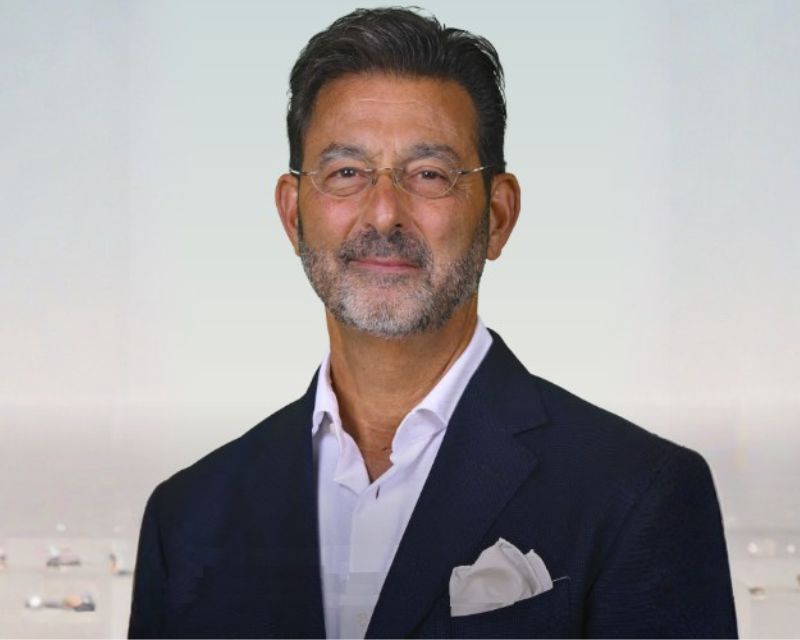
This week’s Citywealth Quick Insight Series on Digital Assets Trends is dedicated to Matteo Dante Perruccio, Global Head of Corporate Strategy at global digital asset investment manager 3iQ.
What’s your current assessment of the digital asset market, and how is macroeconomic or regulatory uncertainty affecting sentiment among private wealth clients?
“Digital assets have moved from a niche allocation to a recognized component of institutional portfolios. Since 3iQ became Canada’s first regulated digital asset investment fund manager in 2017, we’ve watched private wealth clients shift from opportunistic exposure to structured, long-term allocation. Macro headlines can move sentiment in the short term, but the bigger driver today is regulatory clarity — frameworks like the US GENIUS Act and the EU’s MiCA regime give advisors a common language for custody, disclosure and risk that didn’t exist five years ago. That clarity, more than price action, is what determines whether a private client engages strategically or stays on the sidelines.”
How are recent policy changes in the U.S., EU, or Asia influencing crypto adoption or caution in the private client space?
“The direction across all three regions is the same: digital assets are being classified and supervised, not left in a grey zone. In the US, the GENIUS Act created the first federal regime for payment stablecoins, and a joint SEC-CFTC interpretive release now classifies Bitcoin, Ether, Solana and XRP as digital commodities — a meaningful de-risking signal for compliance teams.
“In Europe, MiCA is fully in force, with a MiCA II sequel already under discussion. Canada was earliest to this path: 3iQ has operated under OSC oversight since 2017, and that head start is a large part of why regulated, exchange-listed vehicles have become the preferred entry point for wealth managers who want exposure without building custody and compliance infrastructure themselves.”
What role are digital assets currently playing in the portfolios of HNWIs and family offices — speculative, hedging, or strategic?
“We’re seeing a clear shift from speculative exposure toward strategic allocation. Family offices and HNWIs increasingly treat digital assets as a long-term store of value and portfolio diversifier, sized like any other strategic allocation rather than a trade. The growth of staking-enabled products — 3iQ launched the world’s first Ether staking ETF in 2023 and one of the first Solana staking ETFs in 2025 — reflects that shift: clients aren’t just buying the asset, they’re looking for the yield and network participation that come with holding it through a regulated structure. In addition, increasingly institutions and family offices are interested in actively managed investment outcomes.”
How are wealth managers integrating crypto and blockchain-based products into diversified portfolios for their clients?
“Increasingly through regulated, exchange-listed vehicles rather than direct holding. ETFs and professionally managed funds let a wealth manager plug digital asset exposure into the same custody, compliance and reporting framework they already use for any other listed security. Our own fund range — from the 3iQ Bitcoin ETF through to the multi-crypto QMAP managed-account platform — is built around that principle: single-asset core exposure, staking yield or diversified multi-asset participation, sized to the client’s mandate rather than a one-size allocation.”
Are there specific tokens, protocols, or segments that you see gaining traction among private investors in 2026?
“Bitcoin remains the cornerstone allocation and the primary gateway for private investors. Beyond that, client interest is moving into tokenized real-world assets and stablecoin infrastructure — both now operating inside real regulatory perimeters (the GENIUS Act in the US; MiCA’s e-money and asset-referenced token categories in Europe) rather than as speculative wrappers.
“On the network side, Solana has drawn institutional attention for its staking economics: our Solana Staking ETF (SOLQ) was the first ETF anywhere to offer exclusive Solana exposure with staking rewards from launch, and it has already attracted institutional flow, including from ARK Invest. XRP is a similar story — we filed among the first prospectuses globally for a dedicated XRP ETF.”
How do you see the evolution of ESG frameworks and sustainability intersecting with blockchain and digital assets?
“The conversation has matured well past broad energy-use assumptions. Investors now evaluate individual networks on energy efficiency, which has improved globally as mining has migrated to the cheapest energy supply, which in general tends to to be where there is excess output of hydroelectric, natural gas etc.
“Proof-of-stake networks like Ethereum and Solana score far better on those measures compared to proof-of-work blockchains like Bitcoin and sophisticated allocators increasingly understand the distinction. Separately, blockchain’s own utility for ESG reporting, supply chain transparency and asset verification is becoming a use case in its own right. As standards firm up, we expect sustainability criteria to become a standard input into manager and product selection.”
What are the key risks private clients should be aware of in crypto markets — and how can advisors mitigate them?
“Volatility, regulatory uncertainty and operational/technology risk are the three that matter most. The mitigation is largely the discipline private clients already apply elsewhere: appropriate position sizing, diversification and manager due diligence. What’s specific to digital assets is custody: a regulated investment structure with institutional custody and independent oversight removes the largest source of operational risk (lost keys, exchange failure, unaudited counterparties) that has driven the industry’s worst outcomes. Advisors who default clients to regulated, exchange-listed structures are mitigating most of that risk before it becomes a conversation.”
Have expectations changed in terms of custody, access, or transparency in crypto wealth management solutions?
“Materially. Institutional-grade custody, independent oversight and transparent reporting are now baseline expectations, not differentiators. Clients increasingly ask the same due-diligence questions of a digital asset product that they’d ask of any traditional fund — who holds the assets, who audits them, what’s the governance — and expect the same standard of answer. Ease of access still matters, but only alongside that rigor.
“In its private actively managed funds 3iQ, has been at the forefront of identifying and mitigating operational risk through triparty agreements keeping assets off exchange as much as possible. Our proprietary risked managed platform QMAP, was built to provide institutional quality risk oversight so investors can focus on their preferred investment outcomes.”
In what ways are you seeing private banks or trustees adapting to the inclusion of digital assets in estate planning and fiduciary conversations?
“Digital assets are becoming a standard line item in wealth transfer and fiduciary conversations rather than a special case. Private banks and trustees are building frameworks for custody continuity, succession, valuation and access controls, precisely because keys and credentials don’t behave like traditional assets on death or incapacity. The direction of travel is toward digital assets carrying the same governance, security and legal certainty as any other asset class in an estate plan — which is also the underlying case for holding exposure through a regulated fund structure rather than direct, self-custodied holdings.”
What innovations or infrastructure developments do you believe are most important to the future of crypto in private wealth?
“Regulated ETFs, tokenization of real-world assets, DeFi, institutional custody, and compliance infrastructure — in that order of client-facing importance. Together, they’ve taken digital assets from a retail, self-custody product to something a private bank or trustee can hold with confidence. 3iQ’s own path traces that evolution: Canada’s first regulated digital asset investment fund manager in 2017; North America’s first exchange-listed Bitcoin and Ether funds in 2020; the world’s first Ether staking ETF in 2023; among the first Solana staking and XRP ETFs in 2025 along with the launch of our managed account platform QMAP. Each step removed a specific barrier — access, custody, yield, complexity and diversification— and that pattern, more than any single token, is what will keep bridging traditional and digital finance for private wealth.”
Subscribe to the Citywealth Weekly Newsletter to learn more about Private Wealth Management.
Read more:
Leaders List interview: 60 seconds with Stuart Adams, Mishcon de Reya
Mishcon de Reya bolsters private client offer with US tax
60 second interview with Emma Woollcott, Mishcon de Reya | Citywealth News
60-second interview: Hayley Geffin, comms and PR manager, Mishcon de Reya | Citywealth News
Citywealth Leaders List: Top 30 Immigration Advisors 2026
Citywealth Powerwomen Awards 2026

Citywealth Quick Insight Series on Tax Trends – Anna Warren, Bentley Reid
This week's Citywealth Quick Insight Series on Tax Trends is dedicated to Anna Warren, Tax Director at Bentley Reid, financial planning, tax advice, and investment management.
Citywealth Quick Insight Series on Family Dynamics Trends – Patricia Annino, Rimon Law, Boston
This week's Citywealth Quick Insight Series on Family Dynamics Trends is dedicated to Patricia Annino, Partner at Rimon Law in Boston.