Citywealth Forum 2026: A shift from structures to strategy in a world challenged by tax and tax authorities
The Citywealth Forum 2026 reflected a market no longer defined by technical structuring alone, but by how well advisers can navigate uncertainty, complexity and competing client priorities. The forum revealed a clear shift in wealth planning: advisers are no longer focused solely on whether structures work in theory, but whether they can withstand political, legal, reputational and generational pressure in practice. Across discussions on trusts, taxation, litigation, philanthropy and cross-border planning, one message emerged consistently: uncertainty is now embedded in the system itself. Governments are becoming more willing to revisit established structures, families are more complex and litigious, and reputational risk can escalate globally within hours. The challenge for advisers is therefore changing. It is no longer just about designing efficient structures, but about stress-testing them across jurisdictions, generations and an increasingly unpredictable policy environment
Across the day, there was a noticeable shift in tone: less focus on what structures are, and more on how they behave under pressure: political, legal, generational and reputational.
Clients are not simply asking whether something works in theory. They are asking whether it will hold up across jurisdictions, relationships and time. That shift is forcing advisers to interrogate long‑standing assumptions about trusts, tax planning and risk management.
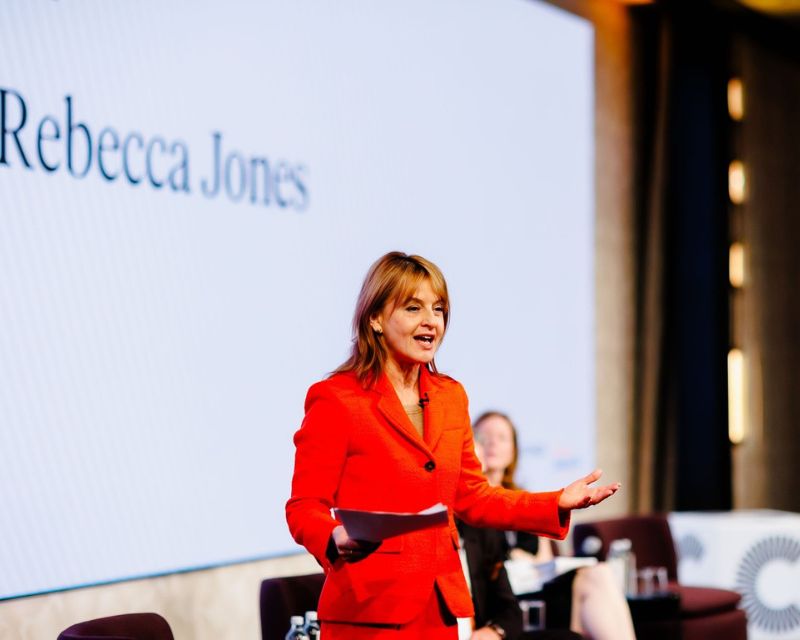
Opening the forum, Rebecca Jones, who served as Chief News Presenter for BBC One, BBC Two, and the BBC News Channel, anchoring coverage for major events like the death of Queen Elizabeth II and the war in Ukraine. acted as moderator. She introduced the themes that carried through the day: a backdrop of political volatility, increasing scrutiny of wealth and a growing mismatch between how structures are designed and how they are tested in practice.
Panel 1: Trusts & investment strategies
Moderator:
Nataša Williams, Co-founder and CEO at Cadro
Speakers:
Alex Hulkhory, Hottinger Group
Nyah Duffy, Buzzacott
Simon Voisin TEP, Coriats
What emerged clearly from this session was the tension between long‑term fiduciary thinking and short‑term client pressure. Trustees are expected to deliver stability, yet are increasingly pulled into reacting to volatility, shifting mandates and more vocal beneficiaries.
ESG was not discussed as a trend, but as a source of friction. For many families, particularly across generations, there is no longer a shared definition of what “responsible investing” looks like. That creates governance strain — not just investment risk — as trustees are forced to reconcile competing expectations within the same structure.
Communication with beneficiaries and management of this role with the families involved was seen as a key requirement.
There was also a more candid acknowledgment that governance models have not fully caught up with the assets they are meant to oversee. Digital assets, more complex portfolios and faster information cycles are exposing weaknesses in traditional oversight frameworks. The implication is not that structures need replacing, but that trustees need to behave more like active managers than passive stewards.
Panel 2: International Financial Centres update
Moderator:
James Penny, Barclays Private Bank
Speakers:
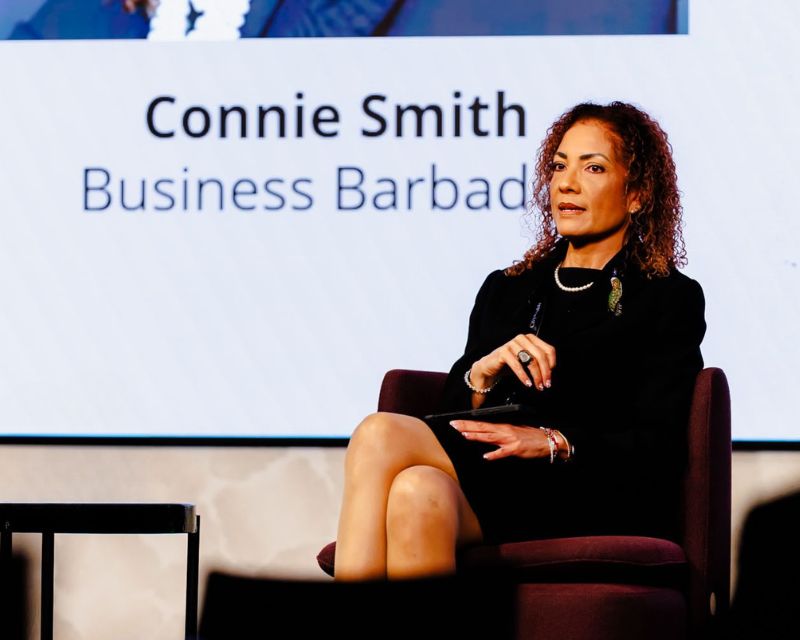
Connie Smith, Business Barbados
Daisy Ip, Invest Hong Kong
Magali Jacquet-Lagrèze, Monaco For Finance, AMAF (Association Monégasque des Activités Financières)
The discussion moved beyond jurisdictional marketing into a more realistic assessment of what makes an IFC viable in current conditions. Also that UHNW clients will choose multiple jurisdictions now for differing reasons.
Tax neutrality is no longer enough. Stability, political, regulatory and social, is now competing directly with tax efficiency as a deciding factor. Clients are effectively pricing in geopolitical risk when choosing where to locate assets or residency.
There was also a recognition that jurisdictions are no longer competing in isolation. They are being compared simultaneously on infrastructure, reputation, ease of doing business and lifestyle. In that context, smaller or more agile jurisdictions are positioning themselves not just as tax solutions, but as holistic environments for wealthy families and an extra jurisdiction to add to their cache.
Importantly, mobility is changing the dynamic. Decisions that were once long‑term are now revisited more frequently, which places pressure on jurisdictions to remain consistently attractive rather than relying on legacy positioning.
Daisy Ip also pointed out the lifestyle available in Hong Kong and the surrounding China, something that is often not relayed.
Panel 3: Crossroads of legal systems
Moderator:
Ian Edge, 3PB
Speakers:
Afsor Ullah, Druces
Alexandra Goldrein, Slater Heelis
This was one of the more technically demanding discussions, but also one of the most revealing in terms of where advice can break down. The details revealed in separate cases made it blatantly obvious that a deep level of cultural and religious understanding was essential to avoid ‘impossible’ situations arising.
The core issue is not simply legal conflict, but legal incompatibility. Religious frameworks are not always designed to align with common law principles, particularly in areas such as inheritance and marital recognition. When these systems intersect, the result is not just complexity, but uncertainty — outcomes that cannot always be predicted or controlled through structuring alone.
What became clear is that many cross‑border structures are built with insufficient regard for how they will actually be tested — through divorce, death, or dispute. At that point, theoretical compatibility gives way to practical enforceability.
The panel highlighted a need for advisers to move earlier in the process — designing structures that anticipate points of conflict, rather than attempting to resolve them after the fact.
Panel 4: Politics, taxation and transgenerational wealth
Moderator:
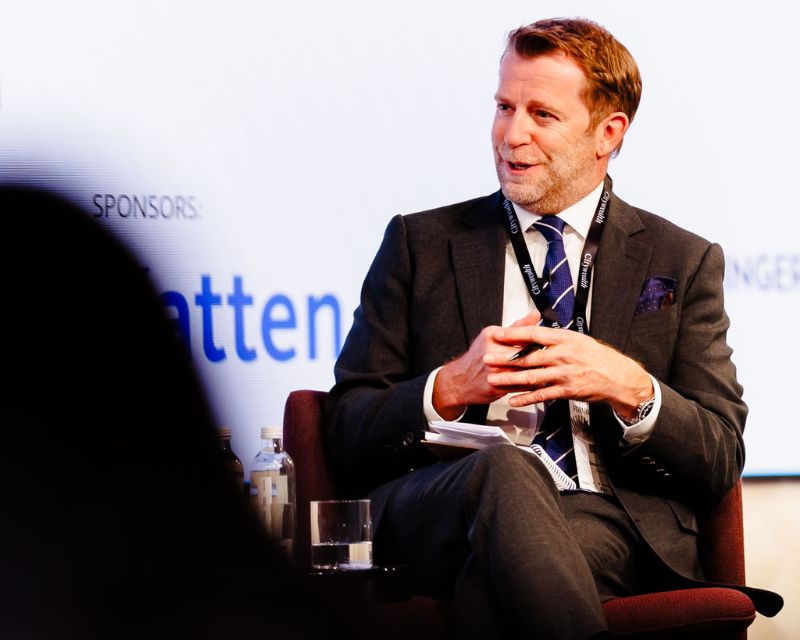
Joshua Rubenstein, Katten
Speakers:
Anita Miller-Neale, S&W
Michael Lewis, EY
Morag Ofili, Edwin Coe LLP
This session made explicit what is often implicit in wealth planning: tax policy is becoming more political, and therefore less predictable.
The combination of fiscal pressure, demographic change and widening inequality is creating a policy environment in which private wealth is an increasingly visible target. The concern is not just higher taxation, but greater volatility in how and where that taxation is applied.
AI added a further dimension to the discussion. If labour markets are disrupted, tax systems built on income may weaken, pushing governments towards capital and wealth taxes. That scenario, while not immediate, is beginning to influence long‑term planning assumptions.
The generational aspect sharpened this further. Wealth creators and inheritors may face fundamentally different tax environments, raising questions about whether current structures are built for the right time horizon.
Panel 5: Litigation and capacity
Moderator:
Joshua Rubenstein, Katten
Speakers:
Christopher S. Cook, Baker & McKenzie
Clare Archer, Penningtons Manches Cooper
Jessica Medus, Mishcon de Reya
If the morning sessions were about planning, this panel focused on what happens when planning fails.
Capacity is no longer a peripheral issue. It sits at the centre of many disputes, particularly as longevity increases and decision‑making becomes more complex across legal, financial and personal spheres.
One of the more striking points was the rise in challenges during lifetime rather than after death. This changes the nature of disputes entirely — they are more immediate, more personal and often harder to contain.
There was also a sense that traditional assumptions about family unity are weakening. Disputes are not always driven by lack of clarity, but by competing interests among beneficiaries who are better informed and more willing to litigate.
For advisers, this means drafting must go further than technical accuracy. It has to anticipate human behaviour under stress.
Panel 6: Reputation and risk
Moderator:
Dan Tench, CMS
Speakers:
Gideon Benaim, Simkins
Josh Leigh, Schillings
Ryan McSharry, INFINITE
Kate Wilson, 5RB
Reputation was discussed not as a communications issue, but as a structural risk to wealth.
Digital platforms and AI have fundamentally changed the speed at which reputational damage can occur and the difficulty of reversing it. Information, whether accurate or not, can become embedded before legal remedies are available or effective.
The extension of this risk beyond death is particularly relevant for wealth planning. Families are now having to consider how reputational issues may affect legacy, philanthropy and even asset value over time.
What emerged is that reputation management is no longer reactive crisis handling. It needs to be built into planning — alongside legal and tax advice — with clear strategies for both prevention and response.
Panel 7: The business of philanthropy
Moderator:
Matthew Briggs, Boyes Turner
Speakers:
Anna Josse, Prism the Gift Fund
Anna Tylor, RNIB
Rennie Hoare, C. Hoare & Co.
The closing panel highlighted how philanthropy is becoming more formalised and, in some cases, more demanding.
Donors are increasingly applying the same expectations to giving as they do to investment — governance, accountability and measurable outcomes. This is shifting philanthropy from discretionary activity to structured capital allocation.
There was also an implicit tension: while the sector is becoming more sophisticated, regulatory and operational constraints are limiting its efficiency. This creates a gap between intent and execution, particularly for cross‑border giving.
The influence of US models was clear, but not entirely transferable. The question for UK and European advisers is how to adapt those approaches within different regulatory and cultural frameworks.
Keynote: Greg Swenson
Chairman of Republicans Overseas UK and Co-Founder of The Hamilton Society
The keynote brought a US lens to the discussion, focusing on the scale and structure of American capital, philanthropy and policy, and how these shape global wealth planning.
A key point was the dominance of the US in philanthropic giving. The scale of capital deployed through structured vehicles, supported by tax incentives and mature capital markets, creates a system where private wealth is able to operate in a coordinated and institutional way. That ecosystem underpins much of what is seen as best practice globally.
However, the implication for international advisers is not straightforward. That model is highly dependent on the US regulatory and political framework, and cannot simply be replicated elsewhere. What works in the US does not automatically translate into European or offshore environments, where incentives, regulation and administrative infrastructure differ materially.
The keynote also pointed to the broader influence of US economic and policy direction on global capital movement. Decisions around allocation, structuring and philanthropy are increasingly shaped by those macro conditions rather than purely technical considerations.
This reinforces a wider shift seen throughout the forum: wealth planning is becoming more exposed to external forces. The US remains a central driver of capital and philanthropy, but also of policy direction and market signals. For advisers, the challenge is not just understanding those trends, but interpreting how they translate — often imperfectly — across jurisdictions.
Overall takeaway
The strongest thread running through the forum was that uncertainty is no longer an external factor to be managed — it is embedded in the system.
Structures still matter, but they are being tested in ways they were not originally designed for: conflicting legal systems, political volatility, reputational exposure and changing family dynamics. What emerged, particularly in the discussion around taxation and cross‑border planning, is a growing concern that even well‑constructed arrangements are no longer insulated from challenge.
There was a clear sense that governments are becoming more willing to revisit, question or reframe structures after the fact — even where those structures were established compliantly and in good faith. That changes the risk calculus for advisers. It is no longer just about whether a plan works under current law, but whether it will continue to be respected over time.
The role of the adviser is therefore expanding. It is not just about designing efficient solutions, but about stress‑testing them — across jurisdictions, across generations and now against a more uncertain policy environment where the application of rules may be less predictable than in the past.
Subscribe to the Citywealth Weekly Newsletter to learn more about Private Wealth Management.

Citywealth Forum 2026 Speaker spotlight: Simon Voisin, Coriats
Simon Voisin, Managing Director at Coriats, a Jersey, Channel Islands trustee, shared his perspective on modern trusteeship during the Trusts and Investment Strategies panel at the Citywealth Forum 2025, discussing fiduciary duty, family dynamics, luxury assets and the growing complexity facing trustees.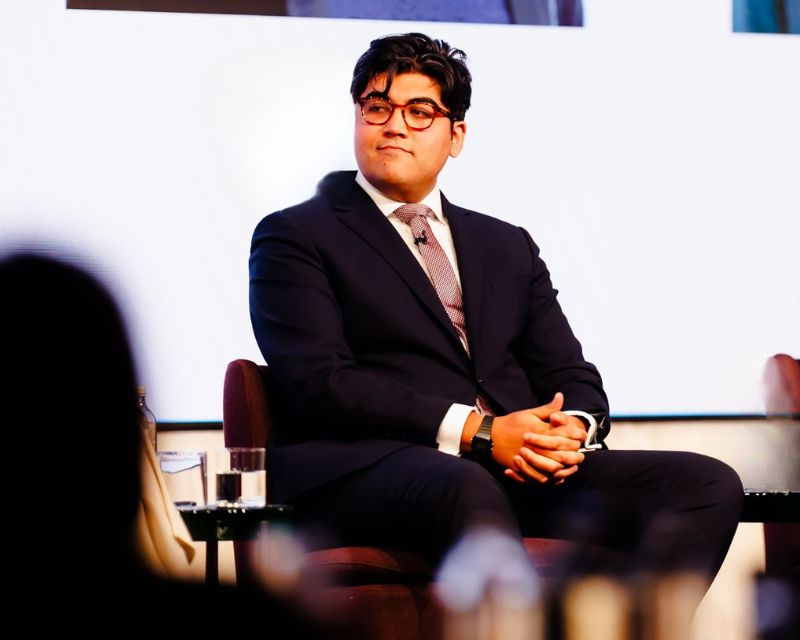
Citywealth Forum 2026 Speaker spotlight: Alex Hulkhory, The Hottinger Group part of Edmond de Rothschild
Alex Hulkhory, Senior Investment Manager at The Hottinger Group, part of Edmond de Rothschild, discussed the changing investment landscape during the Trusts and Investment Strategies panel at the Citywealth Forum 2026, highlighting inflation risk, the pressure on traditional portfolios and the growing importance of genuinely multi asset investing.