Is the Supercar Losing Its Power?
For generations, the supercar has embodied success: loud, visible and unapologetically aspirational. Luxury supercars are entering a new era as electric vehicles, hybrid hypercars and shifting generational values reshape the global collector market. From Ferrari and Lamborghini to Xiaomi’s performance EVs, wealthy buyers are increasingly divided between analogue combustion classics prized for provenance and emotion, and cutting-edge electric luxury driven by sustainability and technology. Industry experts, collectors and wealth advisers reveal why the future of the supercar may lie not in extinction, but in a more selective market where rarity, heritage and storytelling matter more than ever.
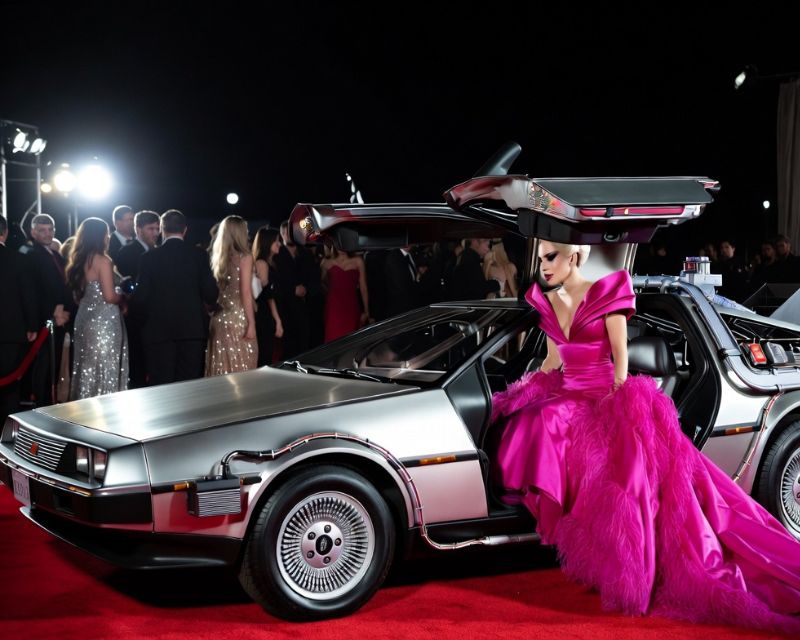
Celebrity tastes highlight the divide. Traditional supercar enthusiasts include Lewis Hamilton, Cristiano Ronaldo, Travis Scott and Floyd Mayweather with their Ferraris, Lamborghinis and Bugattis, while Jay Leno and Ralph Lauren champion classic ICE icons. On the electric side, Leonardo DiCaprio favours EVs such as the Mercedes-Maybach EQS, with Matt Damon, Robert Downey Jr. and Margot Robbie also leaning towards electric or hybrid performance. As electric vehicles, sustainability concerns and shifting attitudes toward ownership reshape luxury lifestyles, questions are growing about whether traditional high-performance cars retain their appeal among the next generation of wealthy buyers.
Traditional collectors continue to prize Ferraris, Aston Martins and Lamborghinis, while younger buyers often favour electric or hybrid performance in a world shaped by Tesla, the Cybertruck, urban living and environmental considerations. Celebrity preferences reflect this divide, but the deeper story lies in market trends and generational change.
Whether the supercar is losing relevance remains open to debate. What is clear, however, is that as with all collectibles, provenance is key to long-term value.
Provenance and Investment Value
As Joshua S. Rubenstein, National Chair of Private Wealth at Katten Muchin Rosenman, New York, observes: “There is no question that there is a market in luxury cars, but to hold their value, it helps to have provenance. I once represented an offshore trustee in its purchase of a non-functioning, dilapidated 1941 Mercedes road car from a seller’s garage in California. We had it shipped across the United States to a specialist repair shop in Vermont. It cost one million dollars to purchase, one million dollars to repair, and one million dollars to ship first across the US as a wreck, and then on to Oslo once restored. It sold at an antique car auction in Oslo for six million dollars. The difference for this car? It had belonged to Hermann Göring.” Göring was a leader of the Nazi Party and one of the primary architects of the Nazi police state in Germany.
Beyond individual stories of provenance and rarity, wider market forces are now reshaping the collector car sector.
Founder Richard Hawken, CEO of EMM London Private Office, identifies 2026 as a pivotal year for the collector car market, characterised by an expansion into the Middle East and a shift toward a “luxury goods” approach to automotive investment. He adds: “The world adopted EV initially, now the tide is changing back with many manufacturers writing down losses, cutting R&D or ceasing building them entirely. Depreciation of modern super car hybrids is eye-watering in favour of slightly older ICE cars which have doubled in six months. The US and UAE are less favourable to electrification.”
This “luxury goods” approach means investors are placing greater emphasis on rarity, brand prestige, provenance, exclusivity and long-term wealth preservation, rather than focusing solely on horsepower or driving enjoyment. In practical terms, buyers may now approach the purchase of a rare Ferrari with the same mindset as acquiring a Picasso or a Patek Philippe.
Strong resale values and potential for capital appreciation are central to this shift, as carefully selected models, particularly those with limited production numbers and exceptional history, have frequently outperformed many traditional investments in recent years.
The Rise of High-End ICE/Hybrids
High-end ICE/hybrids combine powerful internal combustion engines, typically V8 or V12, with electric motors and batteries. These systems deliver enhanced power, torque and efficiency while preserving the iconic engine sound and emotional appeal of traditional supercars. Examples include Lamborghini’s Revuelto V12 hybrid and Urus SE, and Ferrari’s latest hybrid models.
Market signals in 2025 showed resilience for these vehicles at Lamborghini, which achieved record deliveries of 10,747 cars and revenue of 3.2 billion euros driven by its fully hybridised range, and at Ferrari. Pure luxury EVs faced headwinds. This suggests provenance-rich traditional supercars remain strong as investment-grade assets.
The strength of traditional supercars as investment-grade assets has become even more apparent as the luxury EV market loses momentum.
Why Luxury EVs Are Struggling
Pure electric supercars and luxury EVs have faced significant challenges. Many models have depreciated rapidly, often by 50 to 60 percent or more in the first few years. Factors include high initial prices, rapid technological advances that quickly make earlier models feel outdated, range anxiety in certain markets, and buyer preference for engine sound and character.
Several manufacturers have reported substantial writedowns or moderated their ambitions for fully electric vehicles amid softer than expected demand. Porsche has warned of financial pressures linked in part to the transition to electric mobility and has revised timelines for some EV models. Lamborghini has delayed the launch of its first fully electric model until 2029, while Ferrari has reportedly pushed back plans for its second battery electric vehicle. Against this backdrop, hybrid models have increasingly been positioned as a practical middle ground for buyers seeking lower emissions without sacrificing performance.
Beyond market shifts and electrification concerns, collector cars often carry strong emotional value for their owners, even when collections are occasionally refined or downsized.
Collector Perspectives
Even dedicated collectors occasionally prune their holdings though. In 2016, Jerry Seinfeld consigned 18 cars, mostly Porsches, at Gooding and Company’s Amelia Island auction, raising approximately 22 million dollars. Darcy M. Katris, Partner and Co-Chair of Individual Client Services and Co-Chair of Family Office at Morrison Cohen, New York, mentions Seinfeld’s collection: “His love of cars started when he was a child and is widely known.” Seinfeld explained his decision to sell: “Honestly, if I had unlimited time, space and attention span I would never sell one of them. And the reason I wanted to bid these cars farewell in this way is really just to see the look of excitement on the faces of the next owners who get them.” He linked the sale to turning 60 and reflecting on his collection. Despite this, Seinfeld maintains one of the world’s largest and most valuable Porsche collections.
Generational and Cultural Shifts
Amanda Gray, Partner, Mishcon de Reya said: “The shift in interest to new types of vehicles mirrors the change in focus of the next generation. This approach can be equally applicable to art and collecting. No longer are collectors solely driven by just acquisition, but different forms of value assessment come into play such as clean energy, sustainability and efficiency. We live, work and travel differently. We engage with our interests in diverse ways.
“What we drive and what we collect are projections, emblematic of personal values and identity. It is unsurprising that with shifts in collecting patterns and objectives across generations, there are corresponding changes in luxury and classic car interest. Collectors respond to internal and external factors; they are inquisitive about new developments in clean energy and engineering. Collecting becomes experiential. They want to be part of the journey in breakthroughs in design and engineering.”
“There is, however, space for both the ultra-contemporary and a Darracq 12-HP. They are different markets. It can be seen as a broadening of collecting aspirations as opposed to a contraction.”
Alessia Allegretti, Partner at Boies Schiller Flexner, a US law firm, based in Milan said: “For a previous generation, the supercar was a very visible symbol of achievement: noise, speed, scarcity and theatre. That appeal has not disappeared. Ferraris, Aston Martins, Lamborghinis and other historically important marques will continue to attract collectors, particularly where the car has provenance, rarity, design significance or a place in automotive history. In that sense, the best supercars are increasingly comparable to art, watches or other collectible assets. They are not purchased only for use, but also for memory, emotion, identity and scarcity.”
“What is changing is the behaviour and value system of the next generation of wealthy buyers. Many younger clients are less interested in ownership as a public display of wealth and more interested in authenticity, personalisation, sustainability and meaningful experiences. Electric performance, Formula E, urban living, limited storage, regulatory pressure and changing social attitudes all affect the traditional supercar narrative. A car now needs to be more than expensive and powerful. It needs to have a story, a purpose, a design identity or a technological edge that makes it feel relevant.”
“This is why the question is not simply whether electric cars will replace combustion-engine supercars. The deeper point is that luxury itself is being redefined. For some younger buyers, a loud combustion-engine car may still be highly desirable. For others, it may feel less aligned with the way they wish to present themselves. The aspiration is still there, but it may be expressed through quieter, more curated and more values-driven choices.”
“This does not mean that supercars will become irrelevant. It means that the market will become more selective. The truly iconic models, rare, beautiful, historically significant, well-preserved and linked to a powerful brand story, are likely to remain resilient and may increasingly be treated as collector’s pieces. More ordinary or over-produced models may face greater pressure, particularly if younger buyers do not attach the same emotional value to them.”
“Therefore, I would not describe this as the end of the supercar. I would describe it as a shift from status object to cultural object. The supercar will remain powerful where it represents heritage, design, craftsmanship, innovation and story. It may lose power where it is merely a loud expression of wealth.”
Monaco’s Wealthy Still Value Supercars
Audrey Ramirez, Managing Director, Equiom Monaco said. “Here in Monaco, supercars are part of the DNA, and we’re not yet seeing a fundamental decline in their appeal among high and ultra-high net worth individuals.
Across established wealth centres, these assets remain embedded in both lifestyle and identity, often forming carefully curated collections rather than serving as daily transport. What is evolving is their role: many clients are embracing electric vehicles for day-to-day use, while retaining traditional supercars as experiential or passion-driven assets. This points to a shift in positioning rather than relevance. Increasingly, supercars are viewed alongside other tangible lifestyle assets, such as art or fine watches, held for enjoyment, legacy and, in some cases, long-term value.
From our perspective, clients and family offices are taking a more considered approach to how these assets are held and managed within broader wealth structures, ensuring they align with both financial objectives and evolving lifestyle preferences.”
Global Wealth Trends and Market Splits
(Knight Frank Wealth Report 2026)
Rory Penn, Chair of the Private Office at Knight Frank, and the firm’s Wealth Report 2026 cited below, illuminate this divide with global precision. Newly created wealth is embracing EV and hybrid technology, while established wealth is increasingly treating analogue combustion classics as cultural assets rather than transport. This creates a clear divide between new-money markets buying EV and hybrid hypercars and traditional markets preserving V12 and manual classics.
Middle East Momentum
Richard Hawken’s observation on the Middle East expansion is borne out in the region’s growing influence. In the UAE and Dubai, the Middle East increased its share of global UHNWIs from 2.4 percent to 3.1 percent. Dubai remains the world capital of visible hypercar culture, limited-edition collecting and hybrid hypercars, yet has cooled on full EV exotica. Lamborghini cited weak wealthy buyer demand when abandoning pure-EV plans. Buyers prioritise noise, spectacle, rarity and emotional drama, favouring V12 Ferraris, hybrid Lamborghinis, Bugattis and Paganis. Notable is the vast collection of Sheikh Hamad bin Hamdan Al Nahyan, known as the Rainbow Sheikh, which includes thousands of vehicles, many custom and oversized, housed in pyramid-shaped museums.
Saudi Arabia, with projected 63 percent UHNWI growth, is shifting toward high-tech luxury EVs and futuristic design via Vision 2030, but traditional performance prestige remains culturally dominant, pointing to hybrid expansion first.
In the United States, which generated 41 percent of all new UHNWIs globally, two luxury car markets run in parallel. Silicon Valley and Miami buyers lean toward EV performance and tech luxury, while traditional collectors in Palm Beach, Los Angeles, Scottsdale and Greenwich prize Ferrari F40s, Porsche Carrera GTs, manual Lamborghinis and analogue 911s. The pure EV supercar has not fully won over wealthy American buyers. Even Lamborghini and Lotus have retreated toward hybrids because demand for engine theatre, sound and emotional driving experience remains strong.
China, the second-largest wealth hub and part of an Asia-Pacific region now accounting for nearly 31 percent of UHNWIs, has become the global centre of luxury EV innovation, AI-integrated vehicles and electric performance design. Younger, first-generation wealthy Chinese consumers, less emotionally attached to combustion heritage, drive demand for Xiaomi performance EVs, BYD luxury models and software-defined electric hypercars.
Xiaomi’s performance EVs, particularly the SU7 Ultra, have become one of the most closely watched developments in the global car industry because they challenge the assumption that high performance electric cars must come from traditional marques such as Porsche, Tesla or Ferrari. The SU7 Ultra is effectively Xiaomi’s “halo car”, designed not only to sell vehicles but to prove the company’s engineering credibility. With more than 1,500 horsepower, sub two second acceleration claims and Nürburgring focused performance credentials, it has been positioned as a Chinese rival to the Porsche Taycan Turbo GT and Tesla Model S Plaid, but at a significantly lower price point.
India recorded 63 percent UHNWI growth and is accelerating ownership of Ferraris, Lamborghinis and Rolls-Royces among figures such as Mukesh Ambani, the Poonawalla family (Adar and Yohan) and other tech and industrial leaders. Visible status and roaring ICE engines still dominate. Infrastructure and charging limitations make full EV supercars less practical in the short term, though hybrids offer a bridge. Many of these cars see limited road use due to traffic and chauffeur-driven lifestyles, functioning more as statements than daily drivers.
Europe, while slower in wealth growth, is the epicentre of the philosophical battle between emissions regulation and buyer and heritage preferences.
Where Supercars Shine on the Road
Enthusiasts seeking the ultimate driving experience often head to Germany’s Autobahn for unrestricted speeds, Italy’s Stelvio Pass or Dolomites for thrilling bends and scenery, or organised track days. These locations highlight the enduring emotional appeal of analogue performance.
Recent Auction Strength
At the 2025 Pebble Beach auctions, classic and modern supercars performed strongly. Highlights included a 1961 Ferrari 250 GT SWB California Spider Competizione selling for 25.3 million dollars and other Ferrari icons fetching multi-million sums, underscoring demand for provenance-rich models.
Outlook
The Knight Frank Wealth Report data reinforces Richard Hawken’s perspective. Wealth is growing fastest in younger, more tech-oriented economies, yet the emotional centre of luxury motoring still sits with combustion heritage. This paradox suggests that as the world gets richer, analogue classics may become even more valuable. EVs can democratise speed, but they cannot easily replicate rarity, sound, history or mechanical emotion. The likely winners over the next decade are the hybrid hypercar, the pragmatic compromise for newly wealthy buyers seeking both performance and sustainability, alongside appreciating analogue classics that behave increasingly like art assets rather than vehicles.
Supercars are not disappearing. The market is simply becoming more selective.
Key Takeaways
- The supercar market is evolving due to electric vehicles and changing generational values.
- Younger buyers lean towards electric or hybrid supercars, valuing sustainability over traditional combustion engines.
- Provenance and rarity are crucial for investment, making classic supercars still desirable.
- Luxury EVs face depreciation and challenges, while hybrids gain traction as a middle ground.
- The market is becoming more selective, with iconic models maintaining value as cultural collectibles.
Subscribe to the Citywealth Weekly Newsletter to learn more about Private Wealth Management.
Read more:
IFC insights: Indian wealth management
The Global Migration Shake-Up: Why the Wealthy Are Moving
Citywealth Leaders List: Top 30 Immigration Advisors 2026
Citywealth Forum 2026 – Speaker: Matthew Briggs, Boyes Turner
60 seconds with Matthew Briggs, Boyes Turner


The great wealth transfer: succession battles, family trusts and inherited wealth
From London to Hong Kong, courts are increasingly being asked to untangle disputes over trusts, governance and family control as first generation fortunes pass to heirs with very different expectations
Probate in Transition: Global Reform, Rising Disputes and the Shift Beyond Wills
Probate is undergoing a fundamental transformation. Across jurisdictions, legal reforms are simplifying processes, while rising disputes, cross-border complexity and shifting family dynamics are exposing the limits of traditional wills.