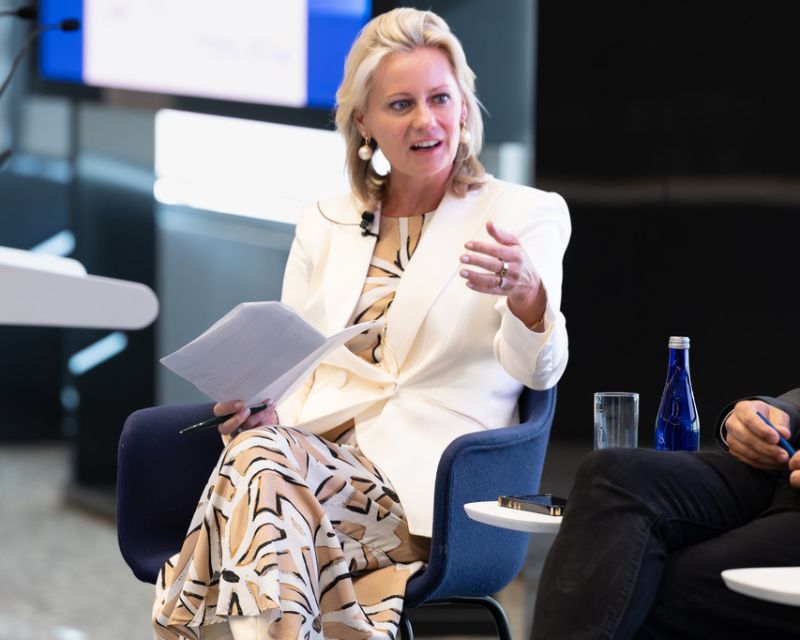
Citywealth Forum 2026 Speaker spotlight: Connie Smith, Invest Barbados
Connie Smith, Chair of Business Barbados, discussed the changing priorities shaping international financial centres during the International Financial Centres panel at the Citywealth Forum 2026, arguing that globally mobile families are increasingly prioritising stability, transparency and long-term confidence over pure tax considerations.
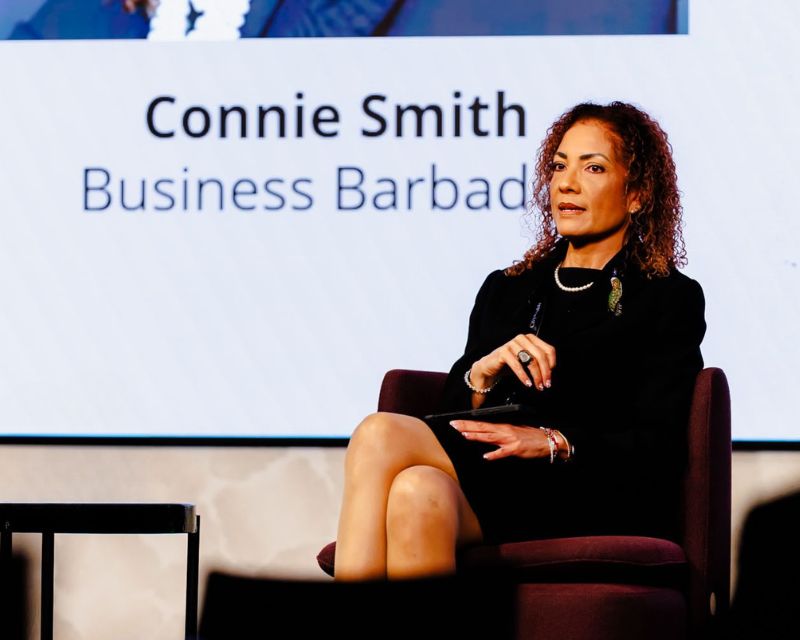
Smith used the International Financial Centres panel at the Citywealth Forum 2026 to challenge one of the long-standing assumptions in international wealth structuring: that tax remains the primary driver of jurisdictional choice.
Her argument was measured but clear. The priorities shaping decisions for internationally mobile families are evolving.
“We are seeing a really clear, meaningful shift in global priorities,” she said.
From tax efficiency to long-term confidence
Smith framed the evolution in straightforward terms. While tax remains part of the conversation, it is no longer the dominant factor it once was.
“Investors are no longer making decisions that are based solely on tax,” she said.
Instead, families are increasingly asking broader questions about security, durability and governance.
“Where is the rule of law strong and reliable? Where are structures defensible and future-proof?” she asked.
Lifestyle and family considerations now sit alongside technical structuring decisions.
“Where can my family live and live well and meaningfully? And importantly, where will this work still be valid in ten or twenty years from now?”
For Smith, this represents a broader reframing of the industry itself. Tax concern has not disappeared, but it is no longer the defining objective.
“The currency for the next generation is not tax minimisation, but confidence,” she said.
Barbados’ positioning in a changing market
Against that backdrop, Smith positioned Barbados as a jurisdiction that has adapted early to shifting global expectations.
Rather than competing primarily on lower tax rates, she argued that Barbados has focused on transparency, legal certainty and substance.
“Jurisdictions that are transparent, well-regulated and substance-driven, that’s not a disadvantage,” she said. “Those are now things that are being preferred.”
She pointed to Barbados’ long-standing treaty network and legal infrastructure as part of that positioning.
“We’ve been very deliberate over the last 40 years,” she said, referencing the development of double taxation and bilateral investment agreements designed around substance rather than simple arbitrage.
In Smith’s view, global minimum tax initiatives and increased transparency requirements have shifted attention towards jurisdictions with long term credibility.
Stability, neutrality and credibility
Smith also emphasised geopolitical positioning as an increasingly important consideration for internationally mobile families.
Barbados, she said, operates from a position of neutrality.
“Our ethos is friends of all”, she said.
That combination of political stability, legal familiarity and neutrality is becoming more relevant as families assess geopolitical as well as financial risk.
For Smith, reputation and durability are now central to how jurisdictions compete internationally.
“I think that confidence and stability in the legal system, and the durability of the structures, that’s where Barbados wins,” she said.
From promotion to delivery
A notable part of Smith’s contribution focused on how jurisdictions function operationally once investors arrive.
She described a deliberate shift away from simply attracting business towards ensuring investors can establish themselves smoothly and efficiently.
“We’re seeing a very deliberate shift from promotion to facilitation, and from promise to delivery,” she said.
That includes improving access to professional services, regulatory systems and practical support throughout the lifecycle of a client’s presence in the jurisdiction.
Smith highlighted the role of organisations such as Invest Barbados and Business Barbados in helping investors navigate those processes beyond the initial point of entry.
Mobility and changing client behaviour
Smith also addressed the increasing mobility of wealthy families in response to geopolitical uncertainty and changing global priorities.
She described ongoing conversations with internationally mobile clients reassessing where they live, work and structure their affairs.
“They’re looking for alternative locations,” she said, referencing demand for jurisdictions offering “credibility and livability and accessibility.”
She pointed to Barbados’ connectivity, professional services network and international accessibility as part of that appeal, alongside softer factors such as familiarity and ease of transition.
One example she referenced was the island’s “Welcome Stamp” initiative, which enabled thousands of individuals and families to live and work remotely from Barbados while maintaining international business connections.
Her broader point was that mobility is no longer exceptional within wealth planning. It is becoming increasingly normal, and jurisdictions need to adapt accordingly.
A different kind of competition
Smith’s contribution stood out because it reframed how international financial centres compete in a more transparent global environment.
Rather than focusing primarily on tax reductions, she argued that the next phase of competition will centre on trust, resilience and long term viability.
Her message remained consistent throughout the discussion. Wealth may be increasingly mobile, but it is also increasingly cautious.
Families are looking for jurisdictions where structures are durable, systems function effectively and long term lives can be built alongside financial arrangements.
For advisers, that changes the nature of the conversation. The question is no longer simply where a structure works today, but where it will continue to work in the future.
Key quotes from Connie Smith
“The model of the low-tax option is not sufficient to sustain business.”
“Investors are no longer making decisions that are based on tax.”
“Where is the rule of law strong and reliable? Where are structures defensible and future-proof?”
“The currency for the next generation is confidence.”
“Jurisdictions that are transparent, well-regulated and substance-driven are now being preferred.”
“Our ethos is friends of all, but satellites of none.” It means Barbados wants to maintain good relationships with all countries and global powers, without being politically controlled, dominated or overly aligned with any single one.
“We’re seeing a shift from promotion to facilitation, and from promise to delivery.”
Subscribe to the Citywealth Weekly Newsletter to learn more about Private Wealth Management.

Citywealth Forum 2026 Speaker spotlight: Joshua Rubenstein, Katten
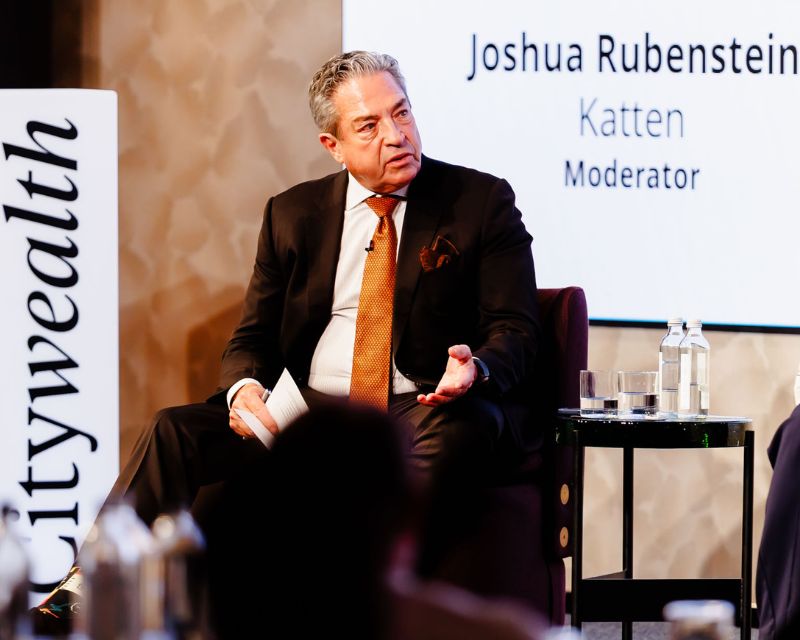
Joshua Rubenstein, Partner and Global Chair of Private Wealth at Katten, discussed the growing complexity of litigation, ageing and mental capacity during the litigation and capacity panel at the Citywealth Forum 2026, highlighting the rise in lifetime disputes, the legal realities of diminished capacity and the increasing importance of communication and documentation within wealthy families.
Citywealth Forum USA – March 10th 2027 proposed date
Call for speakers, patrons, and financial partners. Shape our content for the Citywealth Forum USA 2027