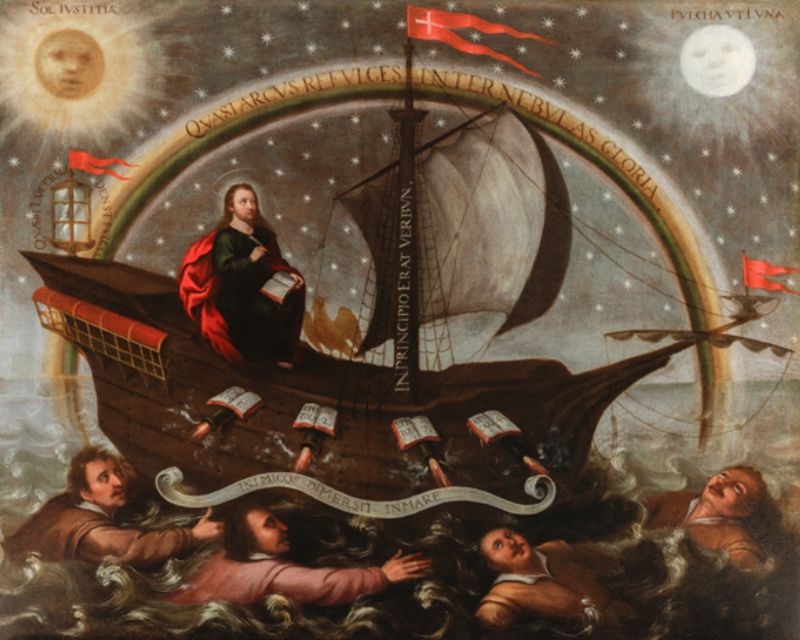
61st International Art Exhibition of La Biennale di Venezia
Pre-Opening Days: 6 – 8 May 2026
Public Opening: 9 May – 22 November 2026
National Pavilions
Denmark
Estonia
Finland
Iceland
Japan
Kazakhstan
Netherlands
Spain
Uruguay
Collateral Events
Demond Melancon – Arsenale
Manuel Mathieu – Arsenale & Giardini
Li Yi-Fan, Taiwan – Palazzo delle Prigioni
Around Town
LAS Art Foundation and Amos Rex present Natasha Tonte – Ateneo Veneto
Fondazione Sandretto Re Rebaudengo Venice – Island of San Giacomo
DRIFT – Mounted between the Peggy Guggenheim Collection & Ponte dell’Accademia
National Pavilions
Denmark
Artist: Maja Malou Lyse, Curator: Chus Martínez
Venue: Giardini
Described as Danish art’s fourth-wave feminist, Maja Malou Lyse is the youngest artist to represent Denmark
in Venice. Things To Come, Lyse’s presentation for the Danish Pavilion explores whether an image could be
powerful enough to alter humanity’s fertility potential – and whether pornography can rescue the human
species. The exhibition engages with recent scientific study that suggests exposure to virtual sexual stimuli
can measurably increase sperm motility. The finding offers a striking demonstration of how image
consumption does not merely influence imagination or ideology but enters the biological realm. Set against
the backdrop of a global decline in male fertility, the exhibition investigates the paradoxical role of
contemporary media technologies as both a toxin and antidote. Science, fiction, and pornography intersect
as competing yet entangled image systems shaping how futures are imagined, governed and lived. Things
To Come presents a large-scale video work which takes the form of a speculative fairytale. The legendary
porn star Nicolette Shea appears as a laboratory scientist working in a sperm bank in the year 2045. The film
operates as a manifesto for a contemporary naturalism: one that understands mind, visual order, language,
and social and political culture as emergent from material processes.
Estonia
Artist: Merike Estna, Curator: Natalia Sielewicz
Venue: Church of Patronato Salesiano don Bosco, located between Giardini and Arsenale
The Estonian Pavilion will present The House of Leaking Sky, a new exhibition by Merike Estna. Working live
inside the Pavilion throughout the Biennale, Estna will produce a cycle of eleven large-scale paintings in
public view, including what is expected to be the largest single painting created at the 2026 Venice
Biennale. The space functions as an open studio, foregrounding process, repetition, and endurance. The
presentation also includes a floor of hand-painted ceramic tiles and the tools of production, extending
painting into craft and daily making. Living in Venice with her family for the duration of the Biennale, Estna
weaves art-making into domestic rhythms. Drawing on feminist perspectives, art history, Italian painting
lineages, and Estonian folklore, The House of Leaking Sky explores motherhood, female labour, and forms of
knowledge historically overlooked. Presented in the Church of Patronato Salesiano Don Bosco, between the
Giardini and the Arsenale, the project positions painting as a social and performative act.
Finland
Artist: Jenna Sutela, Curator: Stefanie Hessler
Venue: Giardini
The Pavilion of Finland will present Aeolian Suite by Jenna Sutela, curated by Stefanie Hessler. Coinciding
with the 70th anniversary of the Pavilion of Finland, Aeolian Suite will unfold as an immersive presentation of
sound, music, and movement inspired by the wind and its many varied presences in our lives, from
technology, climate research, divination, and a messenger and carrier. Sutela explores the ambivalence of
the wind and how it is intangible, unpredictable, but also inescapable. Working with hair artist Sara
Mathiasson and scenographer Celeste Burlina, Sutela draws inspiration from the Commedia dell’arte
traveling theatre, grammelot, and the winds of Venice and Helsinki.
Iceland
Artist: Ásta Fanney Sigurðardóttir, Curators: Margrét Áskelsdóttir and Unnar Örn
Venue: Docks Cantieri Cucchini
Ásta Fanney Sigurðardóttir will present Pocket Universe, a new multidisciplinary exhibition representing
Iceland at the 61st International Art Exhibition – La Biennale di Venezia. Focusing on shifting perspectives
through hope, imagination and belief, the exhibition proposes that even in times of instability, a change in
mindset can open new possibilities. Working across sound, performance, moving image, sculpture and
installation, Ásta creates layered, dream-like environments where worlds appear and dissolve without fixed
interpretation. Presented at Docks Cantieri Cucchini, the work unfolds as an exhibition of encounter rather
than spectacle, evolving through live actions, charged objects and returning gestures throughout the
Biennale.
Japan
Artist: Ei Arakawa-Nash, Curators: Horikawa Lisa and Takahashi Mizuki
Venue: Giardini
Commissioned by the Japan Foundation, the Japan Pavilion presents Grass Babies, Moon Babies by
Japanese American queer performance artist Ei Arakawa-Nash, co-curated by HORIKAWA Lisa, Senior
Curator and Director (Curatorial & Collections), National Gallery Singapore, and TAKAHASHI Mizuki,
Executive Director and Chief Curator, Centre for Heritage, Arts and Textile (CHAT) in Hong Kong.
As an artist deeply influenced by postwar avant-garde art movements, Arakawa-Nash’s presentation
includes quintessential elements of his practice – improvisation and audience collaboration – while being
underpinned by the concepts of parenthood and diasporic identity. Featuring a participatory installation that
unfolds through collective engagement, the pavilion invites audiences to “adopt” one of many baby dolls.
Visitors can then participate in acts of care—such as changing a doll’s diaper—activating a QR-code
experience that delivers an oracular poem linked to the baby’s assigned birthday. These birthdays are
shaped at the intersection of the artist’s intimate, personal experiences and the long arc of historical and
social forces within and beyond Japan.
Kazakhstan
Curator: Syrlybek Bekbota
Artists: Ardak Mukanova, Asel Kadyrkhanova, ADYR‑ASPAN (Gulmaral Tattibayeva, Natalia Ligay),
Anar Aubakir, Smail Bayaliyev, Nurbol Nurakhmet, Mansur Smagambetov, Oralbek Kaboke.
Venue: Museo Storico Navale Riva S. Biasio, 2148, 30122
The Kazakhstan Pavilion presents Qoñyr: The Archive of Silence, an immersive exhibition curated by
Syrlybek Bekbota, showcasing works by Ardak Mukanova, Gulmaral Tattibayeva and Natalia Ligay (ADYRASPAN),
Anar Aubakir, Asel Kadyrkhanova, Smail Bayaliyev, Nurbol Nurakhmet, Mansur Smagambetov, and
Oralbek Kaboke. This marks Kazakhstan’s third participation in the Venice Art Biennale and is a milestone for
Central Asia, as it is the first time a country from this region has selected its artists and curator through an
open call, focusing on practitioners living and working in Kazakhstan. Qoñyr offers a framework for listening
attentively and reflecting quietly, drawing inspiration from a Kazakh term that embodies sound, earth, and
silence. The exhibition is further informed by Abiken Khasenov’s 20th-century composition Qoñyr, which
mirrors Kazakhstan’s turbulent history through a shift from major to minor musical keys. The pavilion presents
a sensorial journey shaped by sound, material, and movement, from urban sonic interventions and
monumental sculptures of the steppe to installations addressing nuclear trauma and political repression. It
culminates in a virtual-reality experience, inviting visitors to engage with history, memory, and resilience on a
deeply embodied level.
Netherlands
Artist: Dries Verhoeven, Curator: Rieke Vos
Venue: Gerrit Rietveld Pavilion, Giardini di Venezia
Artist Dries Verhoeven and curator Rieke Vos present a performance and architectural installation titled The
Fortress, marking the first time that performance will be presented in the Dutch Pavilion. The Fortress
examines Western society’s reflex for self-preservation amid major geopolitical uncertainty; the urge to
safeguard its boundaries, peace of mind and way of life. The work transforms Gerrit Rietveld’s iconic, lightfilled
pavilion – a symbol of postwar progress – into a closed, bunker-like space, which the artist and curator
frame as a metaphor for the West’s increasing fortress mentality. As the performance unfolds, visitors
confront how the urge to protect our personal, social, and national boundaries can become a prison of our
own making. Verhoeven and Vos take the contradictions of the structure of the International Art Exhibition of
La Biennale di Venezia as their starting point for this new work. Dries Verhoeven says: “The Giardini della
Biennale, with its national pavilions, embody a world order from a bygone era, in which former Western
powers still occupy a central position. Countries that in reality are closing their borders or rearming, appear
to exist alongside one another in harmony. The art space, against better judgment, is trying to uphold the
idea of a hopeful common future.”
Spain
Artist: Oriol Vilanova, Curator: Carles Guerra
Venue: Giardini
The Spanish Pavilion will present a multimedia installation by Oriol Vilanova, curated by Carles Guerra. Los
restos draws on an extensive collection of postcards the artist has gathered over twenty years from flea
markets and second-hand shops. These fragments of personal correspondence, often overlooked or
discarded, embody the ruins of a past era. An exploration of memory, fragility, and the cultural significance
of what endures, Los restos transforms this accumulation into a meditation on what we choose to preserve
and what remains when stories are filtered through everyday objects. The Spanish Pavilion will present this
collection as an evolving ‘anti-museum’, where modest yet sustained gestures of gathering become a
powerful response to our present concerns about preservation, accumulation, and the economies
associated to cultural value.
Uruguay
Artist: Margaret Whyte, Curator: Patricia Bentancur
Venue: Giardini
The Uruguayan Pavilion presents ANTIFRAGIL, an installation by artist Margaret Whyte and curator Patricia
Bentancur at Biennale Arte 2026. Inspired by Nassim Taleb’s concept of antifragility, Whyte transforms
chaos and vulnerability into creative force, turning disorder into resilience. The work combines textiles with
obsolete machines, helmets, and debris, forming an assemblage strengthened through friction and
interaction. Addressing social, gender, and political themes, Whyte bridges craft and contemporary art,
exploring history, philosophy, and spatial relationships, and positioning her practice as a vital voice in South
American and global art discourse.
Subscribe to the Citywealth Weekly Newsletter to learn more about Private Wealth Management.
Read more:
Insurance Can Be Used to Complement a Trust Strategy | Citywealth News
Digital Assets and PPLI Explained | Citywealth News
Private Placement Life Insurance | Citywealth News

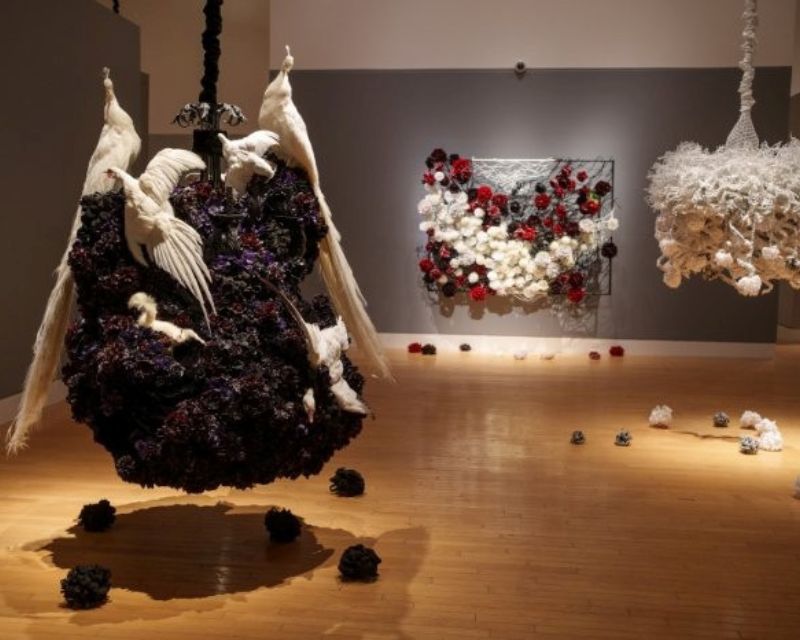
Petah Coyne: How Much a Heart Can Hold
Last Four weeks to Experience this Wonderland of Physical Forms at the Lowe Art Museum at University of Miami. On view until March 14.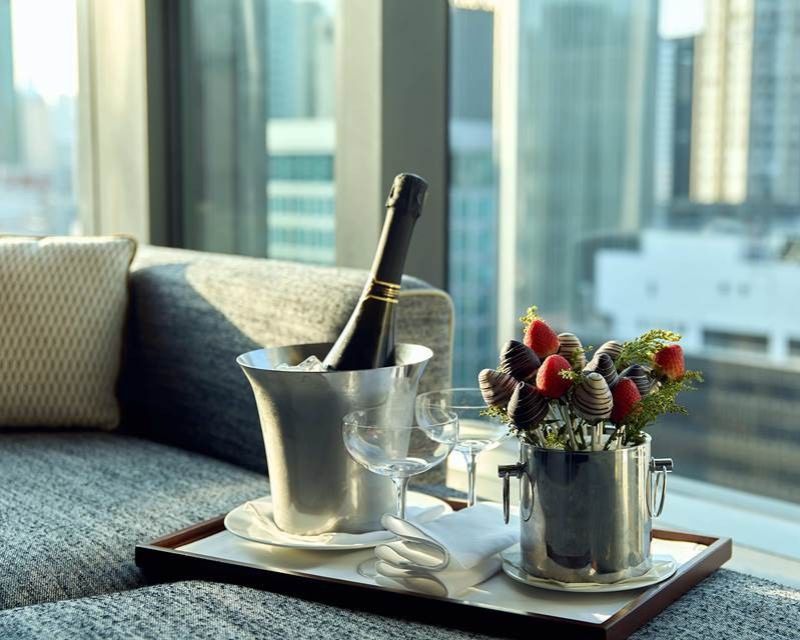
The Hari Hong Kong Marks Valentine’s Day with ‘The Love Chapter’
The Hari Hong Kong will usher in Valentine’s Day with a romantic stay package featuring a chocolate strawberry bouquet and bubbles, an array of sublime dining experiences, afternoon tea for two, a couple’s yoga session and more.