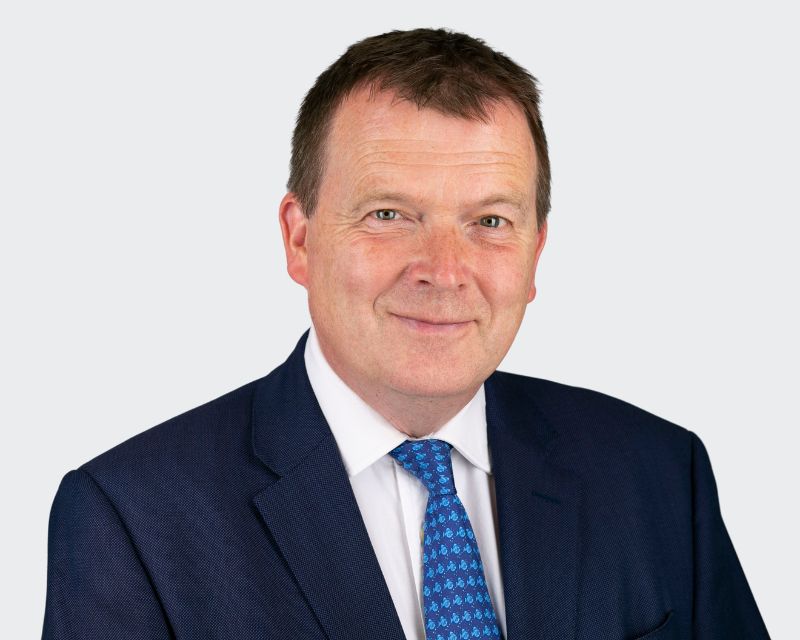
Citywealth Quick Insight Series on Family Office Dynamics: Stuart Pinnington, at IQ-EQ
This week’s Quick Insight Series on family dynamics and family office dynamics is dedicated to Stuart Pinnington, Global Head of Asset Owners at IQ-EQ.

How do you manage the challenges of family dynamics when advising UHNW clients, especially across multiple generations?
Advising UHNW families means navigating complex relationships, competing priorities and differing levels of financial familiarity and sophistication. The key is to create a governance framework that allows each generation to express viewpoints openly: making space for emerging voices to be heard, while also honouring earlier generations’ intentions and ideas around legacy. Advisors are often crucial in these discussions. They can act as neutral partners to help parents articulate concerns around stewardship or give younger family members the confidence and language to voice ambitions around impact, entrepreneurship, philanthropy or governance.
Reliable data, secure technology platforms and well-governed ownership structures are all crucial to ensure that robust decision-making frameworks are in place. These background structures help to depersonalise difficult topics and ease potential friction points, while also democratising the family’s access to crucial insights around the shared wealth, ensuring all can be involved. Ultimately, the adviser’s role is not to solve family tension but to design frameworks that reduce it and preserve cohesion over time.
What role do family values play in wealth management decisions? Can you give an example where these values shaped a key decision?
Family values are as relevant to financial decisions as tax efficiency or investment returns, and having these ideas understood explicitly, rather than assumed, ensures they become a practical guide for decision-making over generations.
In practice, this means aligning structuring, reporting and investment execution with the family’s strategic priorities. For example, a family whose ethos centres on responsible ownership may opt for an investment mandate that integrates ESG criteria or thematic private market exposure. Transparent reporting dashboards or consolidated data allow each generation to see the impact of this capital against shared objectives. This collective access to reporting reduces the risk of misalignment, especially as younger members, who are often more impact-oriented (and tech savvy), become more active within decision-making.
How do you help families communicate about wealth management and succession planning?
Silence around wealth is one of the most common causes of poor succession outcomes. Many founders or wealth stewards delay conversations with younger generations around family financial matters. By the time heirs are involved, often the opportunity to shape behaviours, optimise structuring or phase in responsibility has narrowed or even passed.
A proactive approach combines facilitated dialogue with practical infrastructure. Structured family meetings, scenario planning and tailored education help each generation understand both the purpose and process of wealth. Concurrently, introducing mechanisms like trusts, family investment companies or staggered gifts allows families to test governance in real-time, supported by transparent reporting and oversight. The sooner these conversations begin, the better – particularly given the recent changes to UK inheritance tax.
Have you helped set up family governance structures? What are the key elements of a successful one?
In my experience, a successful family governance structure is one that balances formality and flexibility. It should provide a clear framework for decision-making, while allowing room for evolving family goals and dynamics.
For instance, family offices can help establish an agreed family constitution that defines how decisions are made, who is involved and how conflicts are resolved. This decision-making framework can reduce friction and promote transparency, particularly benefiting younger generations by providing a formalised, structured pathway for their future involvement in family wealth management.
Another key element is operational governance. In my role, I’m seeing an increasing need for middle-office functions such as portfolio reporting, trade settlement and regulatory compliance, which collectively support smooth day-to-day operations within family offices. Establishing these systems and operational frameworks early help the family office to scale sustainably as assets and complexity grow.
How do you handle situations where younger family members have different financial goals or risk preferences than older generations?
Disagreements around wealth distribution often emerge because of unclear expectations, differing values and a lack of communication. In the Great Wealth Transfer, Baby Boomers – who are today reaching retirement age – are set to pass on trillions to Generation X (those born between the mid-1960s and 1980) and Millennials (those born between the early 1980s and the late 1990s).
However, while Generation X typically shares a lot of financial values with their Baby Boomer parents (such as prioritising home ownership and financial security), Millennials and Gen Z often have different attitudes towards spending, saving and investing compared to their predecessors. A recent study found that 80% of young investors today are interested in alternative investments such as digital currencies, collectables, venture capital and private equity. The assets classes are usually considered higher risk by older investors.
I truly believe that facilitating honest, open intergenerational conversations is vital; these dialogues help bridge major differences in financial attitudes and goals. I also advise families to engage with professional advisers such as financial planners, lawyers and tax experts. They can act as ‘neutral ground’, bringing objectivity to sensitive family dynamics and providing structure and fairness in decision-making.
Family conflicts often arise during wealth transitions. How do you manage disagreements about wealth distribution or management?
Although family dynamics can be inherently complex, effectively managing disagreements about wealth tends to boil down to two simple things: clarity and preparation from the outset. Early and structured planning can make all the difference, and estate planning is something I often recommend. By clearly documenting how assets are to be managed and distributed – whether through wills, trusts or family foundations – families can reduce ambiguity and foster confidence in the process. When everyone understands the ‘how’ and the ‘why’ behind financial decisions, potential disputes often dissolve before they begin.
How do you prepare UHNW families for the unexpected and ensure their wealth plans remain strong during times of crisis or sudden change?
Preparing families for uncertainty is about balancing strong structures with adaptability. It is critical to design succession and governance frameworks that can evolve with shifting markets, regulations and family dynamics. Structures such as trusts, foundations and private trust companies provide both control and continuity, while regular reviews ensure that strategies remain aligned with each family’s objectives and risk appetite.
I also encourage contingency planning, appointing professional trustees, stress-testing investment strategies, and involving next-generation members early, to ensure resilience during life events or crises. Ultimately, the goal is to create stability without rigidity: a framework that safeguards wealth, supports informed decision-making and empowers families to respond confidently to change while protecting their long-term legacy.
Stuart Pinnington’s Citywealth Leaders List profile
IQ-EQ’s Citywealth Leaders List profile
Subscribe to the Citywealth Weekly Newsletter to learn more about Private Wealth Management.
Read more:
IQ-EQ boosts support for Chinese-speaking family offices with new hire | Citywealth News
How Private Equity Is Fuelling a Sports Revolution
Top 50 Crypto Professionals 2024 | Citywealth Top List
Leaders List interview: 60 seconds with Mirek Gruna, IQ-EQ
IQ-EQ publishes first sustainability report
IQ-EQ announces ESG alliance with Novata
IQ-EQ expands its US business with the acquisition of JGM Fund Services | Citywealth News


Citywealth Quick Insight Series on Family Office Dynamics: Ross Munro, Harneys Fiduciary
This week’s Quick Insight Series is dedicated to Ross Munro, CEO of Harneys Fiduciary.
Citywealth Quick Insight Series on Family Office Dynamics : Tom McGinness, Head of JTC Private Office
This week’s Quick Insight Series is dedicated to Tom McGinness, Head of JTC Private Office.