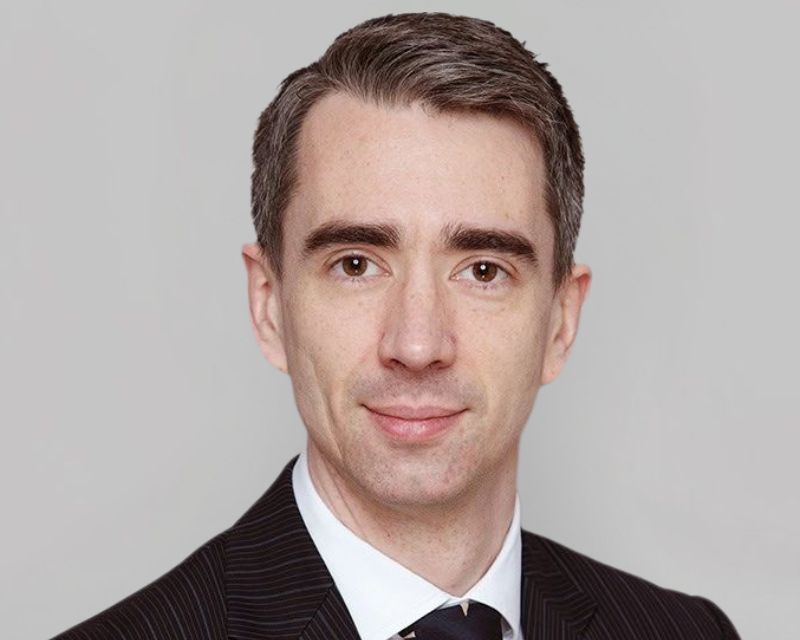
Top Trends in Wealth Management – Peter McLean, Head of Multi-Asset Portfolio Solutions, Stonehage Fleming Investment Management
This week’s Top Trends in Wealth Management is dedicated to Peter McLean, Head of Multi-Asset Portfolio Solutions, Stonehage Fleming Investment Management.

What is your assessment of the current global political landscape and its impact on wealth management strategies?
The global political landscape is undergoing long-term structural shifts and disruption, with significant implications for globally diversified investors. Three key channels of political and geopolitical transition are particularly relevant for capital markets. First, the US is rebalancing its economic priorities toward domestic production over consumption, with policies such as tariffs, tighter immigration controls, and increased support for domestic manufacturing central to President Trump’s agenda. These policies have the potential to generate inflationary pressures and dampen consumption growth over time. In response, Chinese and European economies are expected to pivot toward domestic consumption and reduce reliance on the US market, reflecting a broader de-emphasis on manufacturing as a growth engine. Second, the global race for artificial intelligence leadership has become a strategic priority, with US policy promoting the sale of key AI-enabling technologies to China in pursuit of semiconductor dominance, although uncertainty remains around the sustainability of chip demand and its impact on technology sector valuations. Third, elevated government debt and persistent fiscal deficits are constraining the ability of governments to pursue pro-growth fiscal policies and increasing pressure on central banks to maintain low interest rates. This dynamic has unsettled bond markets, with rising long-term sovereign yields in France, the UK, Japan, and the US in recent months.
In your opinion, how have recent policy shifts in major economies like the US, EU, China affected the long-term stability of private wealth?
Ongoing policy shifts across major global economies are introducing heightened uncertainty and disruption throughout the investment landscape, increasing the probability of elevated market volatility and reshaping the leadership dynamics in capital market returns. In recent months, the implementation of US tariffs, alongside the expansive One Big Beautiful Bill fiscal package, has contributed to volatility across bond, equity, and currency markets. As a result, private wealth investment strategies must become increasingly responsive to evolving global structural developments in order to effectively pursue long-term real return and risk objectives.
As we continue to navigate uncertainty in global markets, how are wealth managers adjusting their strategies to preserve and grow clients’ wealth?
2025 has witnessed investors pivoting capital away from US assets earlier in the year, as political uncertainty rose and growth expectations converged with Europe. Uncertainty relating to President Trump’s protectionist agenda has driven notable market volatility with a sharp decline in the US Dollar in the first half of the year. For wealth managers focused on long term wealth preservation and growth, it is critical to consider the constraints on government policy making and implications for capital markets longer term. In particular, the economic and political consequences of sustained higher tariffs are already leading to a strategic pivot towards negotiation and deal-making by President Trump, reducing the associated uncertainty and supporting US capital flows once again. Critically, investors need to balance short term volatility in sentiment with structural drivers of returns, with the US retaining key advantages that support long term capital investment.
How important is diversification in a post-pandemic world, and which asset classes are your clients focusing on?
Diversification is a critical and foundational element of our investment philosophy, designed to manage portfolio risk while accessing a broad spectrum of investment opportunities. In recent years, the effectiveness of global diversification has been tested by the exceptional performance of a narrow group of assets, specifically US technology stocks linked to the rapidly expanding AI growth theme. However, as the broader implications of AI continue to unfold and long-term market leaders emerge, portfolios must be positioned to selectively capture opportunities beyond the current concentration in mega-cap technology, where valuations are elevated and growth expectations remain high. Our strategy emphasises allocations to defensive sectors with high-quality characteristics, such as healthcare and insurance, as well as to smaller companies exhibiting strong growth dynamics. These exposures are implemented through carefully selected active managers
What are the emerging risks and opportunities that wealth managers should be most aware of?
One of the key potential headwinds for investors in the coming years is the risk of a stagflationary environment in the United States – a macroeconomic scenario characterised by low or negative growth alongside elevated inflation. This outcome could materialise if inflation expectations become de-anchored due to a combination of relevant factors, including the imposition of tariffs, a shrinking labour supply, rising electricity costs driven by data centre expansion, and concerns surrounding the independence of the Federal Reserve. While employment growth remains modest, inflation expectations are currently contained, with little evidence that this scenario is imminent. However such a development poses notable headwinds for bond and equity markets and warrants close monitoring for signals that portfolio rebalancing may be necessary. The AI-driven growth trend is particularly relevant in this context, as a surge in productivity could help mitigate inflationary pressures and significantly boost economic growth. This represents a compelling investment opportunity; however, careful monitoring and selectivity are essential to avoid misallocation of capital.
Stonehage Fleming’s Citywealth Leaders List profile
Subscribe to the Citywealth Weekly Newsletter to learn more about Private Wealth Management.
Read more:
Citywealth Leaders List interview: 60 seconds with Bev Stewart, Stonehage Fleming
Stonehage Fleming appoints new group head of HR
Stonehage Fleming holds final close on Private Capital Annual Vintage programme

Top Trends in Wealth Management – William Morris CFA, Head of Investments, Weatherbys Bank
This week's Top Trends in Wealth Management is dedicated to William Morris CFA, Head of Investments, Weatherbys Bank.
Citywealth Leaders List, 60 seconds interview – James Sturla, Head of Private Client Business Development at Hampden Capital
This week's 60-second Citywealth Leaders List interview is dedicated to James Sturla, Head of Private Client Business Development at Hampden Capital.