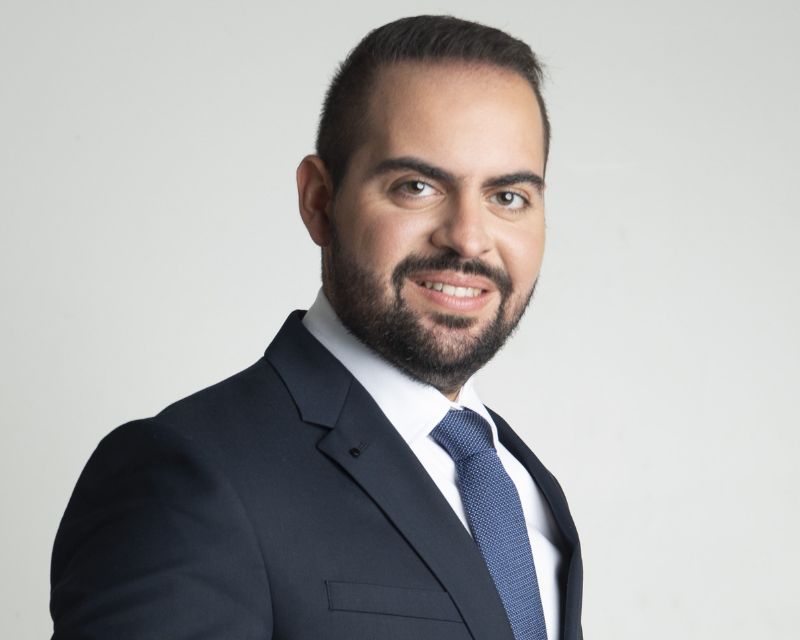
Top 10 trends in wealth management – James Ayling, JM Finn
Top 10 wealth management trends with James Ayling, Investment Manager at JM Finn.
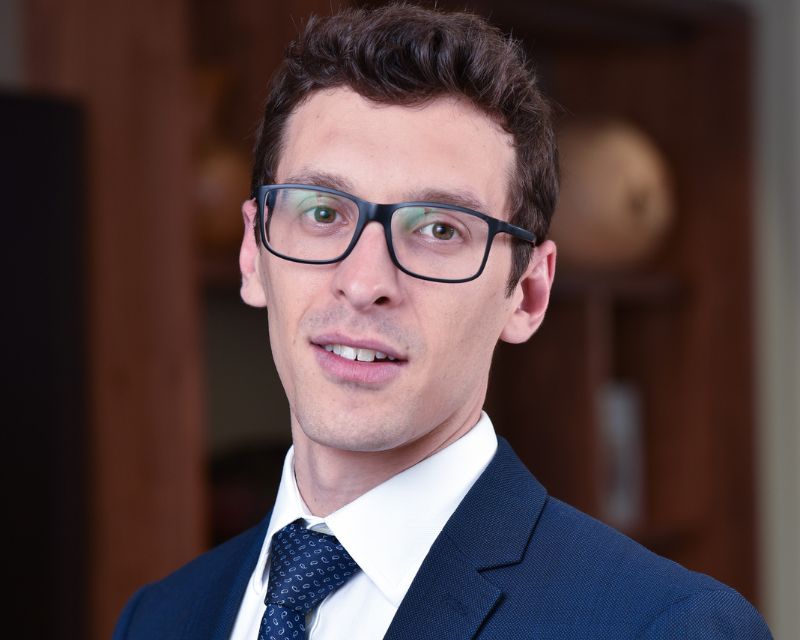
Top 10 wealth management trends
What is your assessment of the current global political landscape and its impact on wealth management strategies?
The global political landscape is unhelpful and complex to put it mildly. I apply second-order thinking to try and gain a better understanding and appreciation of the underlying factors driving geopolitical tensions. It seems fair to assume globalisation has peaked and we are now set for a sustained period of de-globalisation; for portfolios that means thinking about the disruption to highly optimised global supply chains, the risks that could emanate from tight raw material supplies, and the implications of a more rigid labour market. These factors will impact productivity and together point towards a more structural inflation backdrop. Assets that can outpace the eroding effects of inflation look well placed to continue to garner greater investor interest.
On the other hand, evidently artificial intelligence (AI) is being viewed as the beginning of another pivotal technological wave and it is contributing to geopolitical unease as major economies jostle for large language model (LLM) leadership. It could prove to be a meaningful productivity boost for the global economy and provide a powerful disinflationary force to combat structural demographic headwinds. However, it feels too early to know the broader implications of AI with particularly certainty today. Access to the latest AI semiconductor chips, computing power, LLM training data, and ultimately energy resource are key issues being considered today. For our investment strategies we are seeking to gain exposure to this structural growth trend across the various parts of the value chain.
In your opinion, how have recent policy shifts in major economies like the US, EU, China affected the long-term stability of private wealth?
Policy shifts have understandably unsettled wealthy investors and they have sought out greater advice from their professional advisors for strategies to help protect or better insulate their asset bases from shorter-term government policy shifts. Clearly a number of countries have looked to adopt the populist narrative to increase the tax burden on the wealthier in society. With high public debt levels and pressure on government tax receipts, the appeal of a ‘quick fix’ tax take can seem high. However, let’s not close our eyes to the reality that wealthier investors have greater scope to move themselves and their assets geographically. If unfavourable conditions are expected to persist longer term and the incentives to move are great enough to outweigh the costs and geographical ties an individual or a family may have – then I think you could well see ongoing shifts in private wealth. Already, you see some countries looking opportunistically at seeking to establish themselves as favourable destinations for private wealth.
I think economies and policy makers need to be pragmatic. Sure, governments can stretch the elastic band but at some point the band snaps. Take the UK, we benefit from a well-established legal framework and well-defined property rights. This has meaningful value for wealthy investors and the government should seek a fair return for such conditions but shouldn’t overplay its hand for short term gains at the cost of longer-term investment from both human capital and financial capital.
As we continue to navigate uncertainty in global markets, how are wealth managers adjusting their strategies to preserve and grow clients’ wealth?
I don’t believe it’s the uncertainty in global markets that is causing wealth managers to adjust strategies to protect and grow clients’ wealth. Uncertainty has always been present and seems inherent in the highly complex world we live in. Uncertainty in the strict definition reflects situations where predictable results aren’t known. Many situations labelled as uncertain are actually probabilistic events where outcomes can be estimated but there is debate around the probability of an outcome occurring.
If we focus on US trade tariff policy – to me – it is the greater divergence in possible outcomes and the lack of a stable operating environment (that had become the accepted operating norm) that is central to investor concerns.
To navigate a more testing time period, we have raised the bar on what constitutes a true diversifier in a multi-asset portfolio. That has seen us turn more positive towards gold. We have also thought about equity duration and asset valuations to seek a greater balance in the short term between returns from income and capital growth.
How important is diversification in a post-pandemic world, and which asset classes are your clients focusing on?
Truthfully, I am not sure diversification has become any more important than it was in the pre-pandemic world. It remains sensible to ensure you don’t have all your eggs in the same basket; that was true pre-pandemic and remains just as true post-pandemic.
The nuance I think is in understanding the underlying drivers of the assets clients hold in their portfolios. That is what really provides diversification. If you hold housebuilders and utilities – some may say you’ve diversified across sectors. Okay, but I suspect both are likely to find it harder to operate in a higher interest rate environment.
I also recall UK newspaper headlines suggesting the housing market would crash with higher rates. So far that hasn’t happened as housing supply has been limited and house prices have proven solid; those with houses to sell have displayed patience and discipline. Could it be possible that lower interest rates might actually cause house prices to weaken as second hand housing stock comes back to the market on the back of lower mortgage rates?
Crucially, I don’t believe we should seek to diversify everything. Instead, we should seek to take risk deliberately and be more aware of the risks we are exposing clients to – appropriate and deliberate risk taking remains our focus.
Sustainability investing has gained traction over the past few years. How are you seeing it affect the portfolios of high-net-worth individuals, and is this trend sustainable?
We have seen a shift away from more what I would term benevolent ‘green’ or ‘doing good’ orientated sustainable investing to more self-sufficient sustainable investing. By that I mean investors continue to want exposure to beneficial companies. But, those companies need to be capable of generating real profits and free cash flow in order to be viable self-sustaining companies into the future.
As a client rightly said recently; revenue is vanity, profit is sanity but cash remains king. A company won’t be sustainable if it doesn’t generate the cash needed to keep the lights on.
I think the return to a more normalised interest rate environment that has brought back a more realistic cost of capital is a good thing for financial markets; zero rates caused market distortions and resource misallocation. Adam Smith’s notion of the invisible hand feels like it has scope to capital allocate once more.
What are the emerging risks and opportunities that wealth managers should be most aware of?
I feel as though demographics pose a meaningful risk and opportunity for the wealth management industry. Intergenerational wealth transfer is a complex problem as different generations have different levels of financial interest and understanding. Baby boomers, millennials and Gen-Z all operate and learn in different ways and we need to strive to learn and adapt alongside our changing client base.
As social media becomes increasingly pervasive and the role of social influencers develop as the TV and broadcast personalities of tomorrow, I think there is a growing opportunity to deliver valuable financial education in a more viral and appealing format to improve the financial futures of the next generation. Yet I worry that low quality financial advice or financial misinformation can be too easily broadcast and consumed which could lead to worse financial outcomes for future generations.
How have the needs and expectations of private clients evolved in recent months? Are there any new priorities or concerns they are expressing?
In a more polarised political environment, a recent trend I’ve observed is that clients want their portfolios to be more reflective of their own personal values. I’ve had clients seeking to avoid exposure to controversial senior management teams or to divest from unhealthy beverage or snack-based companies to reflect their concerns around sugar or the health impact from ultra-processed foods.
A number of clients have understandably re-visited or re-underscored their viewpoint on defence companies and wanted to understand what a world of higher defence spending as a proportion of global growth could mean. New considerations are how cybersecurity fits into modern warfare and how low-cost military hardware with sophisticated software has challenged traditional rules of military engagement.
In what ways are clients seeking more personalised wealth management services, and how are you meeting those needs?
I would say clients increasingly feel as though they have easy access to passive investment options and generalised advice. They want more personalised wealth planning advice that is tailored to their individual demands or needs and investment management from someone they can build a trusted relationship with.
At JM Finn we are a fiduciary and we focus on placing the client at the centre of what we do. We listen to our clients; we strive to understand their needs and their wants and better understanding their unique situations. We produce tailored wealth planning advice relevant to them and we look to offer a high quality personal service in keeping with clients’ long term investment goals and their ability and willingness to bear risk.
With the rise of digital, how are private clients responding to this?
Far too often you hear people suggest digital technology is the answer to all client needs and wants. I’m not sure it is the one-stop utopia some hope it to be. Certainly it can be a helpful tool that gives clients greater transparency and information on their portfolios.
Though, you tend to find people’s digital expectations can be markedly different; more nuance appears to be needed in the digital age.
Some clients appreciate clean and basic functionality – they may simply want easy access to information and a clean user interface. Yet, what they expect from their wealth manager may remain steadfast focused on traditional private client portfolio management; a direct point of contact to an in-person investment manager who understands their history, their likes and dislikes and who can articulate a clear investment process; what the companies held in their portfolio do, how they have evolved over time and where the company or its industry may be heading.
Other clients understandably want a more integrated digital experience; they want more detailed portfolio information and analytics to be available seamlessly across devices; computers, tablets, mobile. They want to be able to interact and communicate with their investment managers easily through a variety of channels and they have greater expectations for the timely dissemination of new information akin to how we have all become increasingly accustomed to the push-notifications on our mobile devices.
Are there any new technologies or platforms that are making a significant impact on how private wealth is managed or delivered?
I think there has been a growing focus on data analytics and data science within the wealth management space. At a recent industry conference, there was a great deal of excitement around how client relationship management (CRM) systems could contain a treasure trove of valuable information and insights that could enable wealth managers to deliver a hyper-relevant and hyper-personalised service that is bespoke tailored to a clients’ financial situations today, their goals for tomorrow and adjusted for their financial experiences and behaviours gleaned from the past.
We as a business have developed a number of valuable scenario and simulation tools to help clients better think about their future financial goals.
The value of securities and their income can fall as well as rise. Past performance should not be seen as an indication of future results. All views expressed are those of the author and should not be considered a recommendation or solicitation to buy or sell any products or securities.
Read about our Citywealth top 100 list of litigators and polymaths

Top 10 wealth trends
Top 10 wealth trends with Robert Kitchen - CEO, Brown Shipley
Citywealth: Family, Wealth Management, and the Power of Planning
Quick insight series with Joshua Rubenstein, Partner, National Chair, Private Wealth at Katten Muchin Rosenman