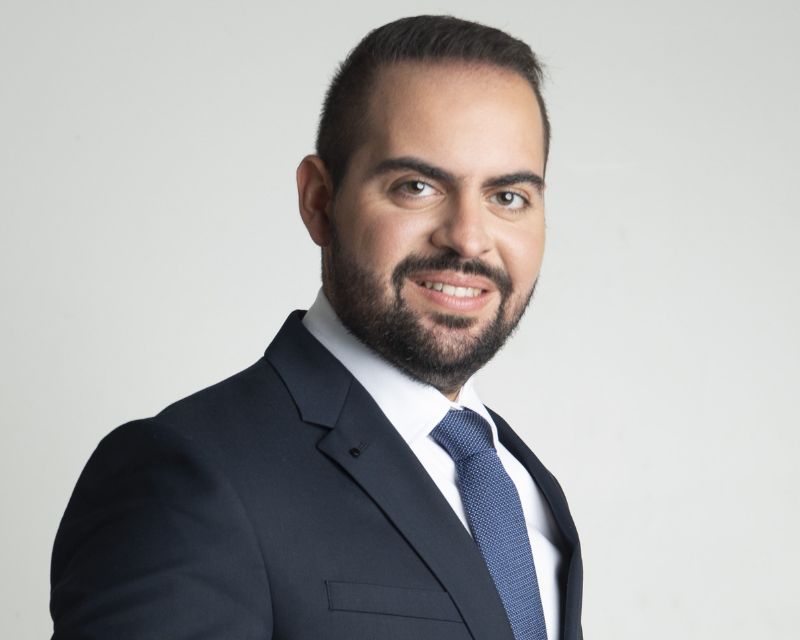
Top 10 Crypto & Digital Asset Trends – James Burnie, Gunnercooke
James Burnie, financial services regulation and FinTech Partner, Gunnercooke – advising financial institutions on EU and UK financial regulation. Burnie has an MA in Law from Cambridge University, and a specialist corporate and commercial LLM from the London School of Economics, where his specialisms included Information Technology and the Law.

What’s your current assessment of the digital asset market, and how is macroeconomic or regulatory uncertainty affecting sentiment among private wealth clients?
The digital asset market is currently in a state of transition. At its genesis there was an innovation wild west, with a mix of fantastic concepts and fraud meaning large amounts of volatility and the ability to make stellar gains and losses.
As regulation is kicking in, we are seeing a splitting of the market. The first group are start-ups with innovate products, which are tending to set up on offshore jurisdictions, however they lack the financial fire power to comply with the legal and regulatory requirements of selling into major jurisdictions. Filling this void are intermediaries, which tend to be more TradFi in outlook, and which act as a bridge between the wild west and the general retail public. In fact, the FCA in recent consultations seems to explicitly recognise and endorse this distinction, seeing the intermediary as the safety buffer required to protect the general public.
How are recent policy changes in the U.S., EU, or Asia influencing crypto adoption or caution in the private client space?
Taking the long view, arguably recent policy changes have implicitly endorsed the position of crypto as a mainstream asset class, as the emphasis is no longer on whether to allow crypto, but rather on how best to regulate it.
Much of the new policy is influenced by approaches to regulating traditional finance, which is tending to increase customer confidence. It is also arguably leading to a slight shift in the demographic involved, as more traditional players are starting to get involved in the industry.
What role are digital assets currently playing in the portfolios of HNWIs and family offices — speculative, hedging, or strategic?
Generally the role is hedging against the future. There is an acknowledgment that cryptoassets are intrinsically highly speculative in nature, however also a perception that a failure to incorporate them in a wealth strategy risks the potential impact they could have as they become mainstream. It is therefore common to have a small percentage of wealth in cryptoassets to be on the safe side.
How are wealth managers integrating crypto and blockchain-based products into diversified portfolios for their clients?
Generally managers are cautious, often because of a lack of understanding of the asset class. We are however increasingly seeing managers suggest a small holding in cryptoassets as a sensible strategy.
Are there specific tokens, protocols, or segments (DeFi, stablecoins, real-world assets) that you see gaining traction among private investors in 2025?
This is highly dependent on the individual. First timers generally take a cautious approach focussing on the major asset classes whereas those who are more comfortable take a risk on the “next big thing”. Different classes of cryptoasset appeal to different groups, for example banks tend to be attracted to stablecoins as a cheap means to do payments, high risk traders tend to be attracted by the potential high risk / high reward nature of DeFi and investment managers tend to be attracted to RWAs as a means of more effectively allocating and moving property.
How do you see the evolution of ESG frameworks and sustainability intersecting with blockchain and digital assets?
We are seeing this with the requirement to publish certain ESG metrics in cryptoasset whitepaper in both the UK and the EU. Traditional participants in cryptoasset were more concerned with issues such as security than ESG, and in part that is reflection of the genesis of crypto as a reaction to issues such as the Lehman Bank collapse. As new investors come into the market, it is likely that these will bring into greater focus priorities such as ESG.
What are the key risks private clients should be aware of in crypto markets — and how can advisors mitigate them?
Many new investors in crypto are tempted into increasingly riskier projects, and it is not uncommon for one of these to result in a total lack of capital. At the heart of this is usually a lack of knowledge and experience. As such, it is smart to start small, with an amount of money that can be completely lost, and to focus on self-education before looking to make any serious investment.
Have expectations changed in terms of custody, access, or transparency in crypto wealth management solutions?
Over the last few years standards have become higher as it has become increasingly clear what good practice looks like. Also, as scams have made people aware of the dangers of the industry, infrastructure is increasingly being put in place to mitigate the risks of fraud. This is likely to increase, and indeed already we are seeing certain aspects of crypto, such as the dedication to full transparency, result in a more protective solution to clients than exists in traditional finance. Whilst there is clearly some way to go for the industry, it will be interesting to whether in the future it will be traditional finance that will be influenced by the standards in crypto rather than the other way around.
In what ways are you seeing private banks or trustees adapting to the inclusion of digital assets in estate planning and fiduciary conversations?
Currently banks and trustees are struggling, in part because of a lack of knowledge regarding how digital assets operate and in part because currently the regulatory regime for cryptoassets is sometimes a disparate framework to that applied to traditional finance. As new regulations are coming into effect globally, the latter issue is beginning to dissipate, and it is likely that client pressure will mean that existing private banks and trustees will seek to upskill in the sector, otherwise we are seeing new entrants coming in which will seek to displace them.
What innovations or infrastructure developments (e.g. tokenization, ETFs, compliance tools) do you believe are most important to the future of crypto in private wealth?
Whilst the industry is offering a plethora of new investment opportunities and concepts, the biggest barrier for private wealth has been lack of a framework for participants to interact with the industry. As such, the new regulatory frameworks being rolled out globally are likely to be the most important development. Simply put, if a new concept does not fit with the new regulatory regime, it is unlikely that private wealth will be able to access it.
You may also like to read about a specialist Isle of Man crypto and digital advisory company.


Top 10 wealth trends
Top 10 wealth trends with Robert Kitchen - CEO, Brown Shipley
Citywealth: Family, Wealth Management, and the Power of Planning
Quick insight series with Joshua Rubenstein, Partner, National Chair, Private Wealth at Katten Muchin Rosenman