Marylebone at a Crossroads: When a Village Is Recast as a Medical Quarter
Marylebone has long been one of London’s rare villages. It is defined not by a single function but by balance: homes, gardens, culture, small shops, medicine, history and daily life coexisting within a human scale. That balance now feels under strain.
In recent years, the narrative around Marylebone has increasingly centred on its role as a global medical destination, driven in part by the priorities of the Harley Street Business Improvement District, whose membership base is made up largely of medical professionals and healthcare businesses. Supporting medical excellence is important. But when one economic identity begins to dominate planning, branding and public realm decisions, other forms of value risk being marginalised.
A village is not the same thing as a quarter. Stop the BID taking over Paddington Street Gardens.
Paddington Street Gardens and the question of precedent
Paddington Street Gardens is not incidental land. It is consecrated ground, once a major burial site for the parish of St Marylebone, with tens of thousands interred beneath and historic monuments still standing today. It is also one of the calmest and most beautiful green spaces in the West End.
Paddington Street Gardens is Marylebone’s village green
Proposals connected to wider public realm strategies have raised the prospect of new structures within the gardens. While investment and improvement are often framed as benefits, many residents are asking a more fundamental question. If building is permitted here, even on a limited scale, does it set a precedent that makes further encroachment easier in the future.
Green space, once reduced, is rarely restored. In a dense neighbourhood already under pressure, precedent matters.
When heritage is reduced to a plaque
The rest of Marylebone’s cultural history is not abstract. It is rooted in specific streets and buildings where Britain’s creative life was shaped.
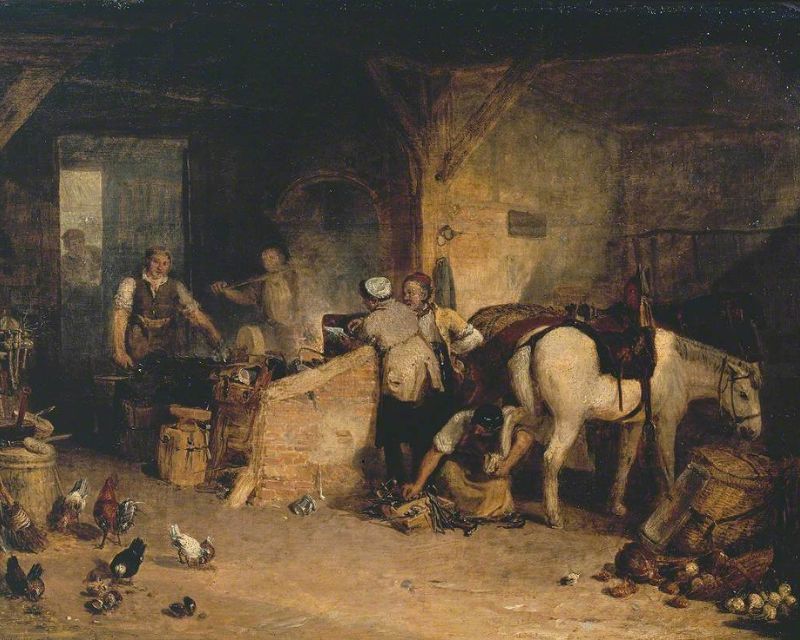
J.M.W. Turner, Britain’s greatest maritime artist, lived and worked on Queen Anne Street in Marylebone for decades. It was here that he painted, exhibited and refined a body of work that defined Britain’s relationship with the sea and with light itself. That house no longer exists. Today, Turner’s presence is reduced to a plaque on an office building within the Howard de Walden estate. This matters.
In Amsterdam, Rembrandt’s former home has been preserved and presented as a living part of the city, embedded in everyday life and civic identity. It is not a token marker but a place of encounter, learning and pride. The Netherlands made a choice to keep its great artist present. Marylebone made a different choice.
Turner’s lived environment has been erased, absorbed into administrative and commercial use, with little effort to interpret or honour his presence beyond a plaque. There is no cultural destination, no interpretive space, no sense that one of Britain’s most important artists once shaped his work here.
This contrast raises an uncomfortable question. What does it say about a place when its artistic inheritance is quietly diminished while other identities are actively expanded.
A medical quarter and a village are not the same thing
The Harley Street BID exists to serve its members, and it is right that it does so. But Marylebone itself is not a business improvement district. It is a residential neighbourhood.
When public realm decisions increasingly align with the needs of a single sector, however valuable that sector may be, there is a risk that village life becomes secondary. Gardens begin to feel like amenities rather than sanctuaries. Heritage becomes branding rather than stewardship. Quiet streets become transport solutions.
Healthcare and culture are not in opposition. But a place that becomes defined primarily by what it provides professionally risks losing what it provides socially, environmentally and historically.
Oxford Street and the ripple effect into village life
This pressure is compounded by wider transport proposals linked to the pedestrianisation of Oxford Street. Rerouting buses away from a global shopping street and into surrounding neighbourhoods may solve one problem while creating others.
Marylebone is not a traffic corridor. It is a place of schools, homes, gardens and local routines. Increased bus movements risk altering air quality, noise levels and the fragile microclimate that allows spaces like Paddington Street Gardens to function as refuges.
Village life depends on rhythm. Once disrupted, it is difficult to restore.
Wildlife, workers and what is quietly lost
Paddington Street Gardens is also a living habitat. Butterflies have all but disappeared from much of the UK. We mobilised nationally to protect bees. Why not do the same for butterflies, using the long-standing wild areas that already exist rather than fragmenting them.
Any discussion of change should also acknowledge the gardeners who maintain the space daily, often with minimal resources and little recognition, managing competing demands from residents, dog walkers and day visitors. Protecting green space also means protecting the people who care for it.
A call for balance, not opposition
This is not an argument against medicine, investment or change. It is an argument against imbalance.
Marylebone’s value lies in its layers: consecrated ground, living gardens, cultural memory, village life and yes, medical excellence. To privilege one layer at the expense of the others is to misunderstand what makes the place work.
Turner’s erasure from the physical landscape should give us pause. Paddington Street Gardens should too. Once heritage is reduced to plaques and green space to developable land, the loss is permanent.
Marylebone does not need to become a medical quarter defined by a single purpose. It should remain a village, protected not only for what it does, but for what it is.
Why “Consultation” Is No Longer Working for Residential Communities
Across Marylebone, residents are repeatedly told that major changes to public space, heritage sites and neighbourhood life have been subject to “consultation”.
In practice, these consultations often attract very low engagement. Busy residents, carers, older people and those without time or digital access are underrepresented. Yet the existence of a consultation process is then cited as evidence of community consent, allowing councils, Business Improvement Districts and other bodies to proceed with significant changes.
This raises a serious question of democratic adequacy.
Consultation was designed to invite participation, not to legitimise predetermined outcomes. In residential neighbourhoods, it is increasingly being used as a procedural shield rather than a meaningful exchange. The result is a growing disconnect between decision makers and those who live with the consequences.
In my view, consultations in their current form are no longer fit for purpose where people’s homes, green spaces and daily environments are concerned.
When consultation becomes facilitation
Consultation processes often rely on:
- short timeframes
- technical language
- online platforms that exclude some residents
- surveys that frame questions narrowly
Low response rates are then interpreted not as a warning sign, but as tacit approval.
This is not engagement. It is facilitation of change.
A call for reform, not resistance
This is not a call to block progress. It is a call to reform how local democracy works.
Residential neighbourhoods require deeper engagement than tick box exercises. That may include:
- minimum participation thresholds before decisions proceed
- independent facilitation rather than BID or developer led processes
- direct resident assemblies or forums with binding input
- longer consultation periods for heritage or green space decisions
- clear evidence of how resident objections alter outcomes
If consultations cannot meet these standards, they should not be relied upon to justify irreversible change.
Say no to consultation as a fig leaf
Communities are increasingly being asked to accept loss of green space, heritage dilution and environmental impact on the basis that “consultation has taken place”.
It is time to say no to consultation as a fig leaf for governance.
Questions for the House of Lords
This issue goes beyond Marylebone. It raises constitutional questions about local democracy, planning law and civic consent. Members of the House of Lords, particularly those with expertise in planning, heritage, environment and constitutional affairs, should be asked:
- Whether current statutory consultation requirements genuinely protect residential communities
- Whether low engagement consultations should carry legal weight
- Whether Business Improvement Districts should be able to shape residential public realm through consultation-led processes
- Whether reform is needed to distinguish commercial consultation from residential consent
Consultation was created for good reasons. But something has gone wrong.
If neighbourhoods like Marylebone are to remain living communities rather than managed zones, local engagement must move beyond process and return to principle.
#SavePaddingtonStreetGardens
#SaveMarylebone
Ask questions
Contact points for further information and questions:
Address: House of Commons, London, SW1A 0AA
Email: rachel.blake.mp@parliament.uk Website: www.rachelblake.org.uk
Twitter: @RNBlake
Westminster City Councillors: Barbara Arzymanow, Ian Rowley and Karen Scarborough – via westminster.gov.uk
Marylebone Association: marylebone.org
Harley Street BID: harleystreetbid.com/contact
Marylebone Forum: maryleboneforum.org
Westminster Council Magazine (City for All): media@westminster.gov.uk
Westminster Council Cabinet
Leader – Cllr Adam Hug
leader@westminster.gov.uk / ahug@westminster.gov.uk
Telephone: 07929 664919
Cabinet Member for Planning and Economic Development – Cllr Geoff Barraclough
gbarraclough@westminster.gov.uk
Cabinet Member for Climate, Ecology and Culture – Cllr Ryan Jude
rjude@westminster.gov.uk
Cabinet Member for City Management and Air Quality – Cllr Max Sullivan
msullivan@westminster.gov.uk
Marylebone Ward Councillors
Conservative
Cllr Barbara Arzymanow
barzymanow@westminster.gov.uk
Cllr Ian Rowley
irowley@westminster.gov.uk
Cllr Karen Scarborough ALSO on the board of The Harley Street Bid
kscarborough@westminster.gov.uk
Labour
Rachel Blake MP
Labour Member of Parliament for Cities of London and Westminster
- Who Else Influences Decisions in Marylebone?
- Marylebone Forum
- The Marylebone Neighbourhood Forum is supposed to represent local people in planning policy and CIL funding priorities, yet around half of its committee are non residents linked to major BIDs and estates.
- General contact:
chair@maryleboneforum.org
https://www.maryleboneforum.org - Non resident committee members include representatives from:
Baker Street Quarter Partnership, Marble Arch BID, St Marylebone Parish Church, The Portman Estate, Howard de Walden Estate, The Crown Estate, Harley Street BID and New West End Company. - This concentration of corporate and landowning interests is a key reason residents question whether the Forum truly represents them.
- Penny Alexander
- Baker Street Quarter Partnership
- Penny is Chief Executive of Baker Street Quarter Partnership, a BID representing c.200 businesses and landowners in the wider Baker Street area. The organisation works to drive forward positive change to ensure a thriving and prosperous community for everyone, with a range of initiatives including public realm improvements, facilitating security monitoring and training, social and wellbeing events and activities, area promotion and encouraging sustainability. Penny’s priorities for Marylebone are to continue to enhance the area for those that work in, live in and visit the area and believes strongly in a collaborative approach to achieving this, bringing together businesses, their employees and residential communities.
- Kay Buxton
- Marble Arch BID
- Kay is Chief Executive of Marble Arch London BID, which stretches from Park Lane to Paddington Green and includes Marble Arch and Edgware Road at the Forum’s western boundary. The BID works with businesses, landlords, estates and the local community to improve Edgware Road and its surroundings, through a dedicated Street Team, public realm improvements, destination marketing, volunteering, and training to the 200 offices, shops, hotels, and restaurants, that make up the business community. As a Chartered Town Planner Kay is supporting the Plan Sub-committee to develop the Neighbourhood Plan for Marylebone.
- The Revd Canon Dr Stephen Evans
- St Marylebone Parish Church
- Stephen became Rector of St Marylebone (both the geographical area and the parish church) in September 2010 and lives locally with his family in Beaumont Street. Stephen’s priorities for the area include tackling the issues of air quality, traffic congestion and limited green and open spaces. He believes in investing in the quality of community life for everyone in Marylebone to make it a true living, sustainable and vibrant place where people want to live, work, study and shop.
Simon Loomes (Secretary & Acting Chair)- The Portman Estate
- Simon is Strategic Projects Director for The Portman Estate, a company which comprises 110 acres of Marylebone including frontages on Oxford Street and Baker Street. His responsibilities cover the delivery of the Estate’s major development schemes as well as area-wide strategies including town planning, stakeholder engagement and public realm. Simon’s priority for Marylebone is to see sustainability become a core focus, putting air quality, the environment and wellbeing at the heart of regeneration in the area. Simon was elected as Secretary in 2020.
- Andrea Merrington
- Howard de Walden Estate
- Andrea Merrington, Planning Director at the Howard de Walden Estate, heads up the Town Planning team and is responsible for all matters relating to design and conservation and town planning across 92 acres of principally medical, office, residential and retail property in Marylebone which makes up the Estate. Andrea joined the Estate is 2009 and plays a significant role in not only Town Planning but also engagement with valued stakeholders such as Westminster City Council, surrounding businesses and occupiers around the Estate. Andrea is currently the vice chair of the Westminster Property Association’s Senior Advisory Committee and sits on the Board of the Harley Street Partnership BID.
- Zayna Over, The Crown Estate
Nicki Palmer- Harley Street BID
- Nicki is Director of the Harley Street BID. Nicki has significant experience and knowledge of BIDs, having worked from the inception stages, through the ballot process and to the delivery of many successful BIDs across London. In April 2020, She took on the exciting challenge of developing the Harley Street Partnership, and the Partnership became a formalised BID in December 2021. Nicki is determined that the Harley Street BID will position itself as an effective tool to ensure the business community is fully engaged across its footprint. Nicki will lead on planning the future of the Harley Street BID area and strive to deliver and guarantee that the BID brings value, a sense of community, recognition for the wealth of medical expertise and a collective voice for local businesses.
- Nathan Parsad-Wyatt, New West End Company
- St Marylebone Parish Church
- The church is central to the history of Paddington Street Gardens and its Rector sits on the Forum committee.
- The Revd Canon Dr Stephen Evans, Rector
rector@stmarylebone.org
Telephone: 020 7935 7315 - This does have residents on its committee
- Michael Bolt
- Michael has lived in Marylebone for the past 20 years and has been involved in a large number of community matters over that time. Since 2009 he has sat on the Marylebone Association Committee dealing with many different areas of interest to residents, including licensing, planning, transport and city management. He was Chairman of the Marylebone Association between 2013 and 2016 and again from 2019 to 2022. During this time he has been keen to ensure residents’ concerns are represented effectively and has been heavily involved with many issues of concern to those who live in Marylebone. Michael has participated in the Marylebone Forum since its inception and prior to that the neighbourhood area designation process.
- Sarah Buttleman
- Sarah represents both the residential and worker communities having lived locally for 32 years, bringing up her family, as well as working as a solicitor for Streathers in Baker Street. She is also a school governor for the St Marylebone CE School. Her priorities for Marylebone are to ensure that it remains a good place to live, work and visit by supporting the needs of all of the area’s users.
- Ann Marie Johnson
- Ann Marie has been a resident homeowner in Marylebone for over 25 years and spent much of her working life based in the area and the West End. During this time, she has also played key roles in the community including being a trustee of Manchester Square, an NHS Health Champion on behalf of a local GP practice and sitting on various community committees including the Safer Neighbourhood Panel. Ann Marie’s priority for Marylebone is to ensure the best possible quality of life for local residents and workers in the area.
- Ian Macpherson (Treasurer)
- Ian has lived in Marylebone for 40 years and prior to retirement, worked as a chartered surveyor in the area with a significant amount of his work related to properties in Marylebone. Ian would like to see a continuation of improvements to Marylebone for its residents, those who work here, as well as visitors. Ian was elected as Treasurer in 2019.
- Julie Redmond
- Julie was the Chair of the Marylebone Association from 2023-24. She has lived and worked in the area since 2005, was married in the Marylebone Town Hall and has a child at school in Marylebone. Her background is in medical training and pharmacology, having previously worked as an NHS A&E nurse. Julie stood as a candidate in the 2022 local elections. She believes the Marylebone community is like a family and she wants to make Marylebone a safer, cleaner area, to conserve green spaces and the character of the area, to help families and businesses thrive.
- Yael Saunders
- Yael was the Chair of Marylebone Forum between 2018-2025. She has lived in Marylebone for 20 years and became involved in local community matters in 2008 after hearing about plans to build on the Luxborough Street playground. With concerns about the lack of positive healthy opportunities for youngsters and the impact this has on the community, Yael helped to set up the campaign to save the playground, which then led to joining Marylebone Forum. Yael’s priorities include the provision of open access play space, the redevelopment of Seymour Leisure Centre and Library and encouraging the switch to electric vehicles.
- Steve Thomas
Steve moved to Marylebone in 2005 and instantly loved the sense of community he found there, with the mix of long-term residents alongside businesses choosing to operate here creating a special neighbourhood. After finishing a career in the defence & security sectors in 2018, Steve has become ever more active in local issues and especially so with the onset of the pandemic, volunteering at GP surgeries and vaccination centres as well as supporting vulnerable residents. Steve has recently become chair of the Harrowby & District Residents Association and, as such, sits on the committee of the Marylebone Association. Steve’s priorities for Marylebone are a safe, walkable, cycle-friendly neighbourhood served effectively by local authority and police services so that it continues to be a great place to live as well as visit.
- Contact Details for Organisations Behind Recent Changes
- Harley Street BID
Nicki Palmer (nicki@harleystreetbid.com)
https://harleystreetbid.com
Telephone: 07939 946989 - Concord London, developer of Marylebone Square
- Founded by Terry Hui and Christopher Murray — the people behind “The Marshmallow”
- Concord Pacific and W1 Developments — Concord London is a “premier
- property developer recognized for delivering exceptional high-end residential
- and mixed-use projects across the UK.”
- Christopher Murray
- christopher.murray@concordltd.com
info@concord-london.com - Press contact: Andrew Reid andrew.reid@concordltd.com
https://www.concord-london.com - https://concord-london.com/#team
- Telephone: 020 7580 3899
- Howard de Walden Estate
- The King’s Fund and No. 11 Cavendish Square
Enquiries: 020 7307 2400
Venue: https://www.11cavendishsq.com - Contact the media and external engagement team
- For the latest news from The King’s Fund or to be added to our news mailing service, please contact the media and external engagement office on 020 7307 2585 or email mediaoffice@kingsfund.org.uk (The inbox is only monitored between 9am-5pm, Monday-Friday. For out of hours call 020 7307 2585.)
- Frank Rigby, Media and External Engagement Executive
Telephone: 020 7580 2864 - Call to Action: A Seat at the Table, Not Just Another Consultation
- At this point it is not enough for residents simply to respond to individual consultation surveys. Many find these consultations opaque and hard to understand, with no clear explanation of how views are evaluated or weighted against the interests of large estates and institutions. They also have very few residents at the table.
- It is reasonable for residents to say:
- No more opaque consultations without transparent evaluation and genuine shared decision making.
- Until there is a clear framework for how resident input is treated, further tick box style consultations risk giving a veneer of consent to decisions that have already been shaped elsewhere.
- Residents can now:
- Demand more residents’ seat on the Harley Street BID board.
If the BID is shaping public parks and streets, there must be formal resident representation at board level. - Ask for a public register of interests for every BID director.
This should include all property, development and hospitality interests in the area. - Write to the Leader of Westminster Council and the relevant cabinet members to ask for a pause on any major changes to Paddington Street Gardens.
No masterplan element should proceed without a public meeting in Marylebone and clear, published criteria showing how resident views will be weighed. - Tell Westminster and the BID that consultations which are opaque or difficult to interpret are not acceptable.
Residents can explicitly say that they will not support further processes of that kind, and that they expect clear documents in plain English explaining options, trade offs and evaluation criteria. - Copy in Marylebone ward councillors, the Marylebone Forum and the Marylebone Association on all correspondence.
That ensures every actor around the table is aware of local concerns.
Subscribe to the Citywealth Weekly Newsletter to learn more about Private Wealth Management.
Read more:
Citywealth Future Leaders Awards 2025 – Winners’ Tribute
60-second interview: Jonathan Giles, managing director, Rathbones | Citywealth News
60 seconds – Richard Cook, Rathbones Group
Rathbones reports surge in IHT queries
Rathbones appoints Simonetta Rigo as Chief Client Officer
Rathbones announces combination: Investec Wealth & Investment
Leader List Interview: 60 seconds with Matt Crossman, Rathbones | Citywealth News
Louise Willows Willows Marketing: A Career Journey | Citywealth News


Nomadar Expands Talent Identification Project to Ecuador with Cadiz CF and HOPE Foundation
Nomadar (NASDAQ: NOMA), a U.S.-based company operating at the intersection of sports, technology, tourism, and health, announced today a recent international project in Manta, Ecuador, in collaboration with HOPE Foundation and with the technical support of Cadiz Club de Fútbol, as part of the Company´s expansion strategy for its High Performance Training (“HPT”) Program.
From Elephant Orphans to Guardians
It is difficult to do animals justice through human language. Our lexicon is built upon qualities and values as we understand them; thus, the creatures outside our realm defy true characterisation.