


Freeports, tax and risk: what’s changing in the art market
As new AML rules tighten oversight and geopolitical tensions disrupt global logistics, freeports remain central to the art market. From Geneva’s established dominance to Qatar’s emerging ambitions, their role is evolving within a more scrutinised system.
If you contributed to this article and would like to make a post, you can take one paragraph of text with a link back to the Citywealth site.
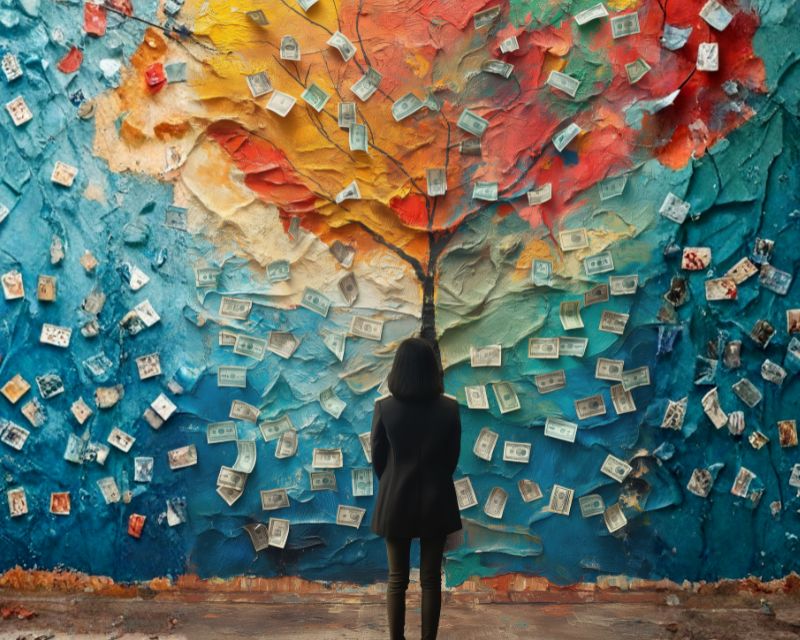
Freeports have long played a central role in the art market, offering security, tax benefits and discretion, while facing growing regulatory scrutiny, particularly as new AML frameworks such as the EU’s Regulation 2019/880 and proposed US legislation begin to tighten oversight of provenance, ownership and transactions. At the same time, the model continues to expand, with developments such as Qatar’s planned freeport in Doha, launched alongside Art Basel Doha, pointing to a broader build-out of art market infrastructure, even as the wider geopolitical environment becomes more uncertain.
Freeports, also known as bonded warehouses, allow art and other high-value assets to be stored without immediate payment of customs duties or VAT, making them a central feature of the global art market.
As explored in last year’s Citywealth feature, these “billion-dollar art vaults” sit at the intersection of finance, logistics and cultural stewardship, raising fundamental questions about how art is owned, stored and moved in an increasingly regulated and complex global market.
Qatar: infrastructure meets uncertainty
Qatar’s planned freeport in Doha reflects a ‘next phase’, combining storage, logistics and market infrastructure within a free zone near Hamad International Airport, and developed in parallel with the launch of Art Basel Doha, positioning it not only as storage, but as part of a broader market ecosystem. However, its emergence also coincides with a period of heightened regional instability, with the US–Israel–Iran conflict disrupting airspace, shipping routes and wider logistics networks across the Middle East. For a model that depends on the secure and predictable movement of high-value works, these conditions introduce a layer of practical uncertainty. While the facility itself follows the established freeport model, its long-term role will depend not only on infrastructure and demand, but on whether reliable transport conditions across the region can be sustained.
By contrast, in more established jurisdictions, freeports are already embedded within the day-to-day workings of the art market.
Freeports as infrastructure: security, strategy and global shifts
Dr. Jacqueline Nowikovsky is an art advisor based in London and Vienna and Founder of N Fine Art. She advises a select number of private collections in Europe, the United States and Asia, with a focus on Modern, Post-War and Contemporary Art. Her expertise is centred around the preeminent artistic movements of the 20th and 21st Century.
Nowikovsky said. “Freeports remain, in my daily practice, a highly practical, secure and well-regulated storage solution. Far from the questionable reputation they are sometimes associated with, they operate under strict governance, compliance frameworks and transparency requirements. As such they provide an efficient infrastructure for collectors who own more works than they can physically display, as well as for those who view their collections as part of a carefully managed asset portfolio.”
“Geopolitical fragmentation and uncertainty have increased the appeal of trusted freeports in established jurisdictions, which many collectors see as reliable safe havens. We have also seen relocations linked to changes in tax regimes, where import duties and transfer costs can become significant considerations. From a strategic perspective, a politically stable and relatively cost-efficient location for asset storage is very attractive.”
Beneath these practical advantages sits a more technical framework, which defines how freeports operate from a legal and tax perspective.
How freeports work: customs, VAT and tax rules explained
Mark Cagienard, Co-Head of Tax Group, CMS von Erlach Partners, Zurich said. “In terms of customs and consumption taxes, freeports, or bonded warehouses, are often referred to as a ‘no man’s land’. While this is not legally correct, as Swiss freeports are not extraterritorial and form part of Switzerland, goods stored within them are treated as not having been introduced into Swiss customs territory.”
“In practical terms, this special customs status allows goods to be transferred across the Swiss border into a freeport under a transit regime without the payment of customs duties or import VAT at the point of entry. Transactions involving goods while they remain within the bonded warehouse do not generally trigger local duties or VAT.”
“Once goods leave the bonded warehouse, which operates under customs supervision, they must either be formally imported into Switzerland or exported under a transit regime to another country or bonded facility.”
“It is important to note that this treatment applies to indirect taxes such as VAT and customs duties and does not extend to taxes on income or gains. While there is some potential for misuse, for example where assets are not properly declared to tax authorities, this is comparable to risks associated with other forms of secure storage.”
While these principles are well established in European jurisdictions such as Switzerland, the use and treatment of freeports in the United States is shaped by a different legal and tax framework, driven by state-level sales taxes and federal enforcement.
Against that legal and tax backdrop, the range of clients using freeports reflects both their practical utility and their role within the wider art market.
“Customers can vary widely. They may include private collectors, often operating through structures such as trusts or offshore entities for reasons of discretion, as well as auction houses, museums and galleries. Freeports also provide professional storage and logistical services tailored to these clients.”
In practice, these users engage with freeports in ways that reflect both regulatory requirements and day-to-day operational needs.
Practical use: compliance, logistics and collector behaviour
Nowikovsky said. “Transactions with art-market participants have been subject to AML regulations for several years now, so serious collectors are well aware of these standards, and applying them in the context of freeports is no different. As art-advisor part of my role is to facilitate the administrative side of compliance and ensure these requirements are handled smoothly and efficiently.”
“In practical terms, freeports are typically located near major airports, operate under bonded customs status, and offer museum-grade climate control. Their private viewing rooms are regularly used for confidential viewings ahead of acquisitions or sales. Future hubs will likely remain closely tied to regional political and economic developments, so it is still too early to draw firm conclusions on how freeports in places like Qatar will develop.”
Art as asset versus art as experience
Max Dolgicer, art collector and tech entrepreneur who has recently released a podcast ‘Vita Brevis, Business, Art, Life & Death’ with host Carlos Cardenas, available on Spotify said. “There are many opinions surrounding the use of art free ports, some positive, some critical, and many somewhere in between. I tend to take a more balanced view, recognizing that there is no single model that suits every collector.”
“For collectors who are deeply engaged with their works and who prefer to live with them on a daily basis, free ports may not be the most appropriate place for storage. This is particularly true for artworks that are considered ‘never for sale’ or those that are frequently lent to museums and other cultural institutions.”
Dolgicer said. “At the same time, free ports can serve a practical role for collectors and other market participants when it comes to works intended for sale or pieces viewed as financial assets. Some collectors adopt a hybrid approach, keeping certain works close while placing others in storage. In that sense, the use of free ports simply reflects the different ways people relate to art, as both a cultural object and an asset.”
Beyond their practical function, freeports also highlight the differing ways in which collectors approach art, as both asset and experience. For collectors approaching art as a financial asset, this distinction often plays out in how acquisitions and tax are structured.
Tax strategies and shifting incentives
Barbara Guggenheim, PhD, Founder and President, Barbara Guggenheim Associates, International Art Consultant and a leading New York and Los Angeles-based firm with over 40 years advising high-profile clients, including celebrities such as Tom Cruise and Steven Spielberg, as well as corporations like Coca-Cola and Sony, said. “Savvy art collectors and art speculators who are two different animals, are always in the market for saving taxes when they buy or sell works of art. However, since 2018, they have not been able to take advantage of the Internal Revenue code 1031c, which allowed for like kind exchanges with the deferring of capital gains taxes. It still works for real estate, but not art. The loss of the 1031 like-kind exchange for art in 2018 was a real hit and everyone misses it.”
Section 1031 had existed since the 1920s to encourage economic activity by deferring gains on like-kind swaps, originally focused on real estate but expanded over time to include broad categories of personal property like art. Congress narrowed the provision primarily to simplify the tax code, and help offset the revenue cost of other major tax cuts.
Guggenheim said. “Lesser-known opportunities exist though. For example, if you live in California or Texas, you can take advantage of the rule of ‘primary usage’. This means that if you buy a painting, before it comes into the state (into your possession), it goes to a museum in a few selected states where it is put on exhibition for 90 days. Then, the work can come to your residence in Texas or California without you having to pay sales tax.”
This strategy relies on California’s ‘first use’ presumption under Sales and Use Tax Regulation § 1620(b)(3): If tangible personal property like art is first used outside the state for at least 90 days, there’s a rebuttable presumption it wasn’t purchased for use in California, potentially avoiding use tax upon later entry. Collectors commonly ship works to no-sales-tax states like Oregon, for museum exhibition loans to establish this out-of-state use, as noted in a 2014 New York Times article on Oregon museum loans.
There is, however, a distinction between how freeports are defined in law and how they are described and used in practice.
Guggenheim said. “Freeports have been around a long time and have been used by collectors to store works, without having to pay import or sales tax going in. It’s only when the work is taken out of the facility that the appropriate taxes are due. What’s different is that more freeports are opening in the US, on land designated as ‘not America.’ If you bought paintings and expensive objects for a house that won’t be finished for five years, you might save taxes by putting everything there. And if you’re a speculator who buys the work, planning to hold it for a while then selling, this would be a good place to store the material.”
Market mechanics: guarantees and financialisation
Guggenheim said. “One moneymaking scheme in the art business is to become a guarantor. A third-party guarantor. gives the house an irrevocable bid for a work coming up. This satisfies the consignor, so he knows the minimum he will get and there will be no chance of failure to sell and ruining the work’s reputation. If the work sells for the guaranteed number or less, the guarantor pays the seller. If the work sells for over that number, the guarantor gets to share the overage with the house and seller. It is a great business.”
What this means is that for the third-party guarantor, whether collector, dealer, or financier, the arrangement involves taking on downside risk, including the possibility of acquiring the work if bidding proves insufficient, in exchange for a negotiated fee or a share of any upside above the guarantee level. While potentially lucrative, the structure is not risk free, and disputes over guarantee terms and bidding outcomes have, on occasion, led to litigation.
Alongside these opportunities, there are also important structural considerations that can affect how these strategies play out in practice.
Where it can go wrong: regulation, tax exposure and execution risk
Lauren Cramer, Chair, Tax-Exempt Organizations, McLaughlin & Stern who has extensive experience advising public charities said. “One of the most common questions from collectors is how ‘bulletproof’ the art freeport strategy really is of purchasing artwork and shipping it to a Delaware freeport, all with the intent to later donate to a nonprofit institution. The short answer is that the risks are often underestimated – not that Delaware freeports are unusable, but that they are unforgiving. Without careful structuring at acquisition, disciplined handling during storage, and clear charitable-use planning well before donation, the strategy can fail at exactly the moment the collector expects it to work.”
“The enforcement trends in New York and the IRS’s approach to art donations make the traps very real: If the collector takes possession of, or even briefly inspects, the artwork in New York, the Delaware strategy can unravel or If the artwork sits in a freeport for years with no clear charitable-use planning, the fair market value (FMV) deduction may be at risk or If documentation is thin, a common issue with freeport storage, museums may decline the gift, and the IRS may challenge valuation or related use.”
“The initial trap in a Delaware freeport–to–donation strategy is the assumption that Delaware’s lack of sales tax and its secure storage facilities provide broad protection. They do not. Neither New York use tax exposure nor IRS scrutiny disappears simply because the artwork ends up in a freeport. The most common problems arise at the point of purchase: where title passes, where the work is first delivered, and whether the collector inadvertently exercises ‘constructive possession’ in New York.”
“A short inspection in Manhattan, an invoice listing a New York address, or instructions that give the collector control over the work in New York can be enough to trigger tax liability, even if the artwork is later shipped to Delaware. New York has repeatedly pursued galleries and collectors who routed works through tax-advantaged jurisdictions while taking delivery or exercising control in New York. These cases illustrate just how fragile a ‘ship it to a freeport’ strategy can be if it is not structured precisely from the outset.”
“A second set of risks tends to surface years down the line, when the collector seeks an FMV (Fair Market Value) deduction for a charitable donation. Artwork that has sat in a freeport for an extended period with no exhibition planning, no charitable-use intent, and no related-use alignment can be recharacterized by the IRS as an investment asset. In that case, the deduction may be limited to cost basis rather than fair market value. Documentation problems only compound the issue. Freeport secrecy often results in thin or inconsistent records: incomplete provenance updates, spotty condition reports, and unclear chains of title. These gaps can make museums reluctant to accept a gift and give the IRS leverage to challenge valuation or related use.”
Taken together, state-law ‘use’ triggers, valuation scrutiny, and related-use limitations, Delaware freeports are only effective when the entire pathway from purchase to donation is planned with precision from day one.”
“Delaware’s freeport ecosystem is intentionally quiet and far smaller than Geneva, Singapore, or Luxembourg. Still, enforcement actions and public controversies highlight the same vulnerabilities collectors worry about – sales tax exposure, misuse of resale certificates, and challenged donation deductions.”
Alongside these structures, there are also concerns around how freeports are used in practice.
Art, value and uncertainty
Joshua S. Rubenstein, Partner, Global Chair, Private Wealth, Katten Muchin Rosenman, New York said. “In my experience, art Freeports can be used by people who treat art as currency, which is where the possibility of tax evasion comes in. My clients tend to want ready access to their art and treat it as cultural property destined at some point for charity. They normally have their excess art on loan, for which there can be great tax benefits, particularly from a US standpoint if held by US private foundations. Note too that the art market is very thin by comparison to the securities market, and auction results can differ wildly from expectations on a given day or during a given period of time. That’s why passion is such an important part of art collecting, as it can’t always be monetized on a dime.”
Conclusion
Freeports have long operated as part of a wider system linking tax, logistics and market behaviour, but that system is now becoming more tightly regulated and more operationally exposed.
The emergence of new hubs, including Qatar’s planned facility in Doha, being developed alongside the launch of Art Basel Doha, points to continued investment in building art market infrastructure rather than a fundamental shift in its geography. It also sits within Qatar’s broader cultural and economic diversification strategy, including the ambitions set out in its National Vision 2030. At the same time, established centres such as Geneva are not standing still. Built over more than a century, expanded in scale and adapted through successive waves of regulation, they remain deeply embedded within the global art market, with a depth of use and experience that newer entrants have yet to replicate.
While projects like Doha signal ambition, their success will depend on how effectively they operate in practice. In the current environment, where airspace, shipping routes and logistics networks can be disrupted, those conditions cannot be taken for granted.
What emerges is not a replacement of one hub by another, but a more complex and distributed system, shaped not only by geography but by fundamentally different legal and tax frameworks across jurisdictions, in which freeports continue to play a central role in the global art market, one that now demands greater precision, transparency and operational discipline in how it is used.
Key Takeaways
- Freeports play a crucial role in the art market, providing secure storage and tax benefits amidst tightening AML regulations and geopolitical challenges.
- Qatar’s planned freeport in Doha aims to enhance art market infrastructure but faces uncertainty due to regional instability.
- Experts highlight that freeports operate under strict governance, offering efficient solutions for collectors balancing art as an asset and experience.
- Tax strategies and compliance risks are paramount, with collectors needing precise planning to avoid pitfalls when using freeports.
- The evolving landscape of freeports indicates a shift toward more regulated operations, emphasising the need for greater transparency in art transactions.
Subscribe to the Citywealth Weekly Newsletter to learn more about Private Wealth Management.

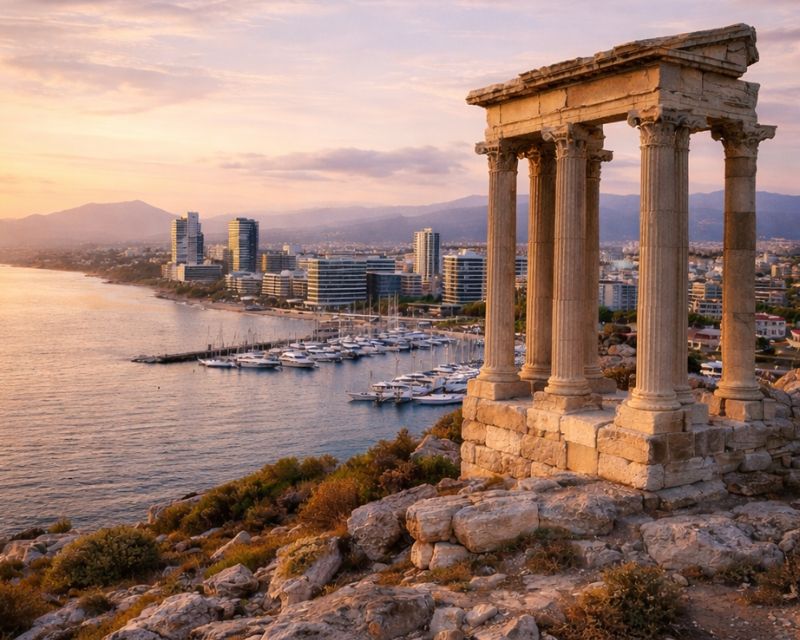
Interest in Cyprus grows as global families seek EU base
Cyprus is attracting growing attention from international families, entrepreneurs and businesses looking for EU stability and access to European markets.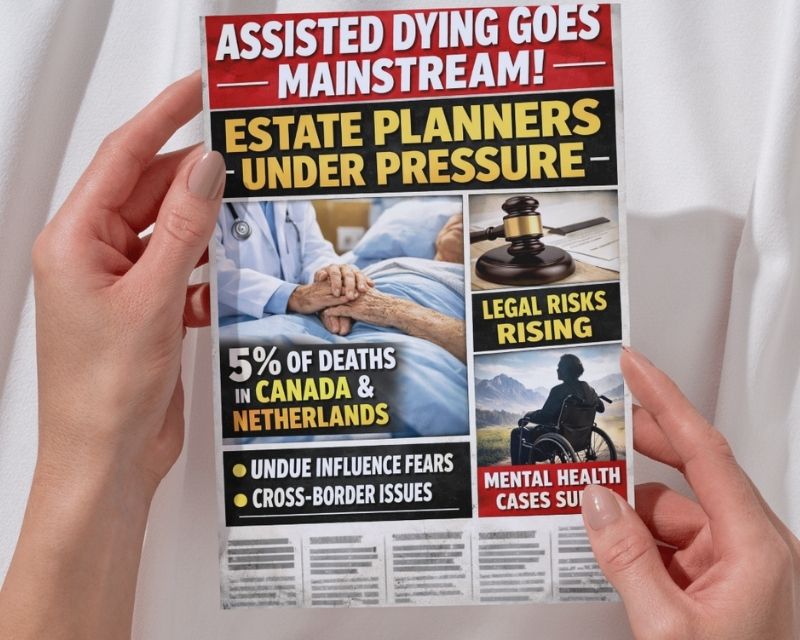
Assisted dying moves into the mainstream as estate planners face new scrutiny
Assisted dying reaches five per cent of deaths in Canada and the Netherlands.