


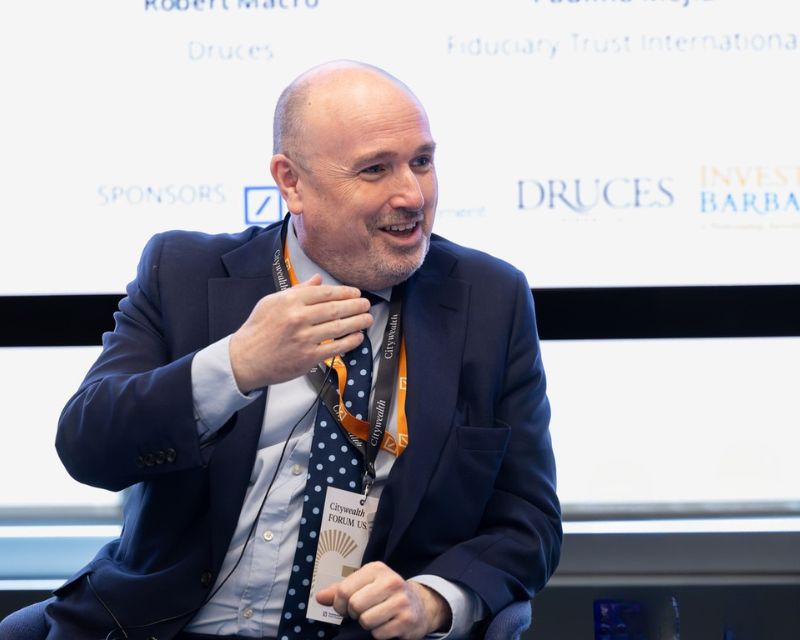
Citywealth Forum USA 2026 speaker spotlight: Robert Macro, Partner and Head of International Private Client, Druces
Trusts and Investment Strategies
Overview
Robert Macro brought a legal perspective to the panel, focusing on how trust structures must adapt to an increasingly complex and fast changing regulatory environment. His remarks addressed both the widening range of assets now held in trust and the legal uncertainty that can arise as responsibilities shift between trustees, advisers, and beneficiaries.
Key Themes from Robert Macro
1. Expanding Asset Classes and Legal Implications
Macro highlighted that trusts are now routinely expected to hold a far broader range of assets than in the past, including:
- Listed shares
- Private equity holdings
- Family businesses
- Real estate and alternative investments
This diversification introduces legal challenges around valuation, liquidity, and control. Traditional trust provisions are not always designed to accommodate these asset types, particularly where investments are illiquid or require active management.
2. Blurred Lines of Responsibility
A key legal concern raised by Macro was the growing ambiguity between the roles of trustees, investment advisers, and beneficiaries. Trustees may increasingly rely on (or defer to) sophisticated investment advisers for complex decisions, raising questions about who is truly responsible if something goes wrong.
As investment strategies become more complex and collaborative, there is often a grey area in decision making.
Macro noted that this can create uncertainty around accountability, particularly if investments underperform or disputes arise. Clear documentation and defined roles are essential to mitigate this risk.
3. Cross Border Risk and Jurisdictional Planning
Macro emphasised the importance of jurisdiction in determining how trusts operate and are enforced.
Different legal systems take varying approaches to trust recognition, taxation, and beneficiary rights. As families and assets become more international, trustees must ensure that structures are robust across multiple jurisdictions.
4. Adapting Structures Through Legal Mechanisms
To remain effective, trusts must be capable of adapting to legal and regulatory change.
Macro pointed to mechanisms such as decanting and restructuring as important tools in updating trust arrangements. These allow trustees to respond to evolving tax rules, asset profiles, and family circumstances without undermining the original purpose of the trust.
5. PPLI: A Considered Addition
Macro also addressed the use of Private Placement Life Insurance within trust planning, taking a balanced legal view.
He noted that PPLI can be a useful addition within certain structures, particularly where there is clarity over ownership, control, and risk. Its effectiveness depends on how well it aligns with the underlying assets and the wider legal framework.
Rather than a universal solution, he positioned it as a tool that, when carefully assessed and appropriately structured, can support both flexibility and efficiency within a trust.
6. Governance and Litigation Risk
From a legal standpoint, Macro underlined the importance of governance in reducing the risk of dispute.
Clear decision making processes, well documented advice, and defined fiduciary responsibilities help ensure that trustees can demonstrate proper oversight. This is particularly important where complex assets and multiple advisers are involved.
Defining Insight
Macro’s central observation was that as trusts take on more complex assets, the legal framework around them must become more precise. Tools such as PPLI can play a role, but only where responsibilities and risks are clearly understood.
Closing Perspective
Robert Macro’s contribution highlighted the legal pressures shaping modern trust structures. The combination of broader asset classes and shared decision making has introduced new areas of complexity, making careful drafting and governance more important than ever.
His analysis reinforced the need for trust structures that are both flexible and legally robust, capable of supporting complex investments while maintaining clear lines of accountability.
Key Takeaways: Trusts and Investment Strategies
- Trusts are holding a wider range of assets, including private equity and alternative investments
- Legal responsibility can become blurred between trustees, advisers, and beneficiaries
- Private Placement Life Insurance can be effective when properly assessed and structured
- Jurisdictional planning and governance are critical to reducing risk
Fellow Panellists
- Julie L. Neitzel, Partner and Senior Advisor at WE Family Offices
- Nikita Gibson, Managing Director at Geneva International Insurance
- Paulina Mejia, National Fiduciary Counsel at Fiduciary Trust International
For more information, click here.
Subscribe to the Citywealth Weekly Newsletter to learn more about Private Wealth Management.


Citywealth Forum USA 2026 speaker spotlight: Jess Alden, Partner, Slateford
The Billion-Dollar Game: Women’s Sport, Celebrity Capital & the Future of Investment Citywealth Forum USA 2026.
Citywealth Forum 2025 speaker spotlight: Sarah Bartram-Lora Reina
Sarah Bartram-Lora Reina, Trustee-Director in the Stonehage Fleming Family Office.