Assisted dying moves into the mainstream as estate planners face new scrutiny
Assisted dying reaches five per cent of deaths in Canada and the Netherlands.
With assisted dying now accounting for around five per cent of deaths in Canada and the Netherlands and now closer to home, the Isle of Man and Jersey, Channel Islands approving assisted dying, private client advisers must navigate rising psychiatric eligibility, cross-border cases and increasing evidential risk.
If you contributed to this article and would like to make a post, you can take one paragraph of text with a link back to the Citywealth site.
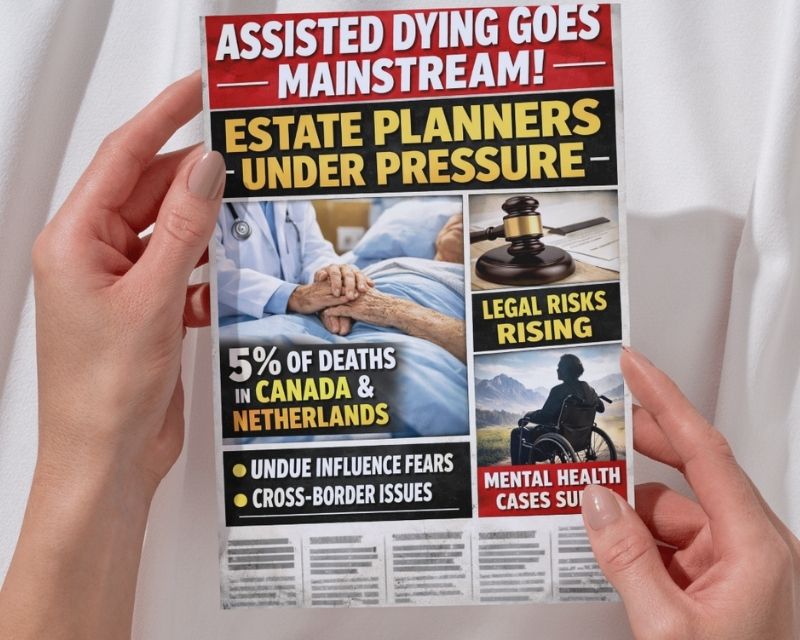
Assisted dying is no longer a marginal or purely philosophical debate. In Canada it now accounts for roughly five per cent of all deaths, with 16,499 people using medical assistance in dying in 2024. In the Netherlands, euthanasia represented 5.8 per cent of deaths. The trajectory is equally striking. In the Dutch system, the most controversial growth is in psychiatric cases, which rose from 138 in 2023 to 219 in 2024.
Importantly, these psychiatric cases are distinct from neurodegenerative conditions such as dementia. They relate to individuals experiencing severe and enduring mental health disorders, a category that has intensified ethical and legal scrutiny. In Canada, disability rights groups are mounting legal challenges to a proposed expansion of eligibility to mental health conditions, underlining how contested this area remains.
The figures mark a decisive shift from abstract ethical discussion to embedded legal practice. Assisted dying is no longer rare, nor confined to terminal physical illness. As regimes mature and eligibility evolves, the implications extend beyond healthcare and into the advisory sphere.
The scale of change has practical consequences beyond healthcare.
Implications for Private Client Practice
For estate planners, private client lawyers and trustees, the consequences are practical and immediate. Capacity assessments must be robust and defensible. Medical evidence will require closer scrutiny, particularly where psychiatric vulnerability is present. The risk of undue influence claims may increase, especially where testamentary decisions are made close to death. Existing wills, trust structures and fiduciary governance frameworks may also need to be reviewed to ensure they adequately anticipate a legally assisted death.
Joshua Rubenstein, Partner and Global Chair, Private Wealth Department, Katten, New York said. “Another factor contributing to the rise in applications for assisted dying is people with severe mental health issues, regardless of their age, for whom life is unbearable.”
United States: political divide and practical tools
The political and regulatory context differs markedly in the United States.
The legal and political landscape
Rubenstein said. “Control over one’s own body is quite the politically charged and divided issue in the U.S. Euthanasia, like abortion, is by and large regulated at the state level. Suicide, like homicide, is criminal in all 50 states (of course by definition, one cannot be criminally prosecuted for a successful suicide). Involuntary euthanasia is similarly illegal in all 50 states. Passive euthanasia, i.e., allowing someone to decline further medical treatment, however, is legal in all 50 states. It is assisted suicide that is somewhere in between and is legal in about a dozen states, most recently in New York. It is ironic that while we can put our beloved pets out of their misery, in most states we cannot assist our dying loved ones in ending their misery for fear of criminal prosecution for a final act of kindness. When life ends, like when life begins, is an area in which some people believe that society has a right to tell you what to do.”
Estate planning mechanics in the US
“When clients ask us about this topic, we handle it with so-called “living wills” (advance medical directives for example), in which they make an informed decision to decline medical treatment under certain stated conditions, such as when their condition is terminal and they have no brain activity. We also use ‘health care proxies’ (like medical powers of attorney), in which you appoint someone to make medical decisions for you if a doctor determines that you cannot make those decisions yourself, for instance in the case of Alzheimer’s. Living wills and healthcare proxies in the US are widely used and accepted, and almost never go wrong — except where the current spouse and the children by prior marriages disagree as to health care decisions being made for the person in question (and the perceived impact of those decisions upon the timing of inheritances).”
Public opinion in the United States on assisted dying shows broad overall support for allowing terminally ill adults to end their lives with medical help, with recent polls indicating majorities in favour across the country. However, the issue divides along political lines to a noticeable degree. Democrats are consistently more likely to support legalisation, often by wide margins, while Republicans tend to express greater caution or opposition, frequently citing moral, religious or ethical concerns. Despite this partisan split, support among Republicans has remained substantial in many surveys, meaning the debate is influenced by party identity but not as rigidly as on topics like abortion. This political dimension helps explain why assisted dying laws have advanced mainly in Democrat-leaning states, even as broader voter approval crosses party boundaries.
Channel Islands: Jersey leading, Guernsey considers
In parts of the British Isles, legislative change is now also under way.
Henry Wickham, Channel Islands, Head of Estate Planning, Wills and Probate, Ogier based in Jersey. “Jersey has approved legislation permitting assisted dying for eligible terminally ill adults, subject to Royal Assent. The regime will apply to those expected to die within six months, or 12 months in the case of certain neurodegenerative conditions and includes a 12-month residency requirement.”
“For private client advisers, the key feature is the statutory requirement that the individual must have decision-making capacity at the time of the request. The legislation sets out a defined capacity test, requiring assessing doctors to be satisfied that the person can receive, understand, retain and weigh relevant information, and communicate their decision clearly.”
“The decision is personal and cannot be delegated. Based on the published framework, assisted dying will not be capable of being authorised under a Lasting Power of Attorney. Advisers should ensure clients and families understand that LPAs do not extend to this area.”
“The introduction of assisted dying is also likely to increase scrutiny of capacity, medical evidence, and the timing of testamentary decisions. Where an assisted death is anticipated, careful process, clear records made at the time and strict execution formalities will be essential to reduce the risk of later challenge, including allegations of undue influence.”
“Trustees and fiduciaries should consider whether existing structures adequately address end-of-life scenarios, particularly in complex or high-value estates. Clear governance and record-keeping will be important.”
As assisted dying becomes part of Jersey’s legal framework, the focus for advisers is practical: ensuring that estate planning arrangements are structured and documented in a way that can withstand scrutiny.
Deputy Tom Binet, Minister for Health and Social Services at the Government of Jersey, described the law as a landmark moment for the Island.
The Minister for Health and Social Services, Deputy Tom Binet at the Government of Jersey said: “The significance of today in Jersey’s history should not be underestimated. Our Island now has a world class assisted dying law. This is a testament to the people of Jersey who have actively shaped the development of this law; all those who shared their hopes and concerns and spoke with such candour about death and dying; a subject we so often avoid. I wish to express my thanks to all of them.”
“We reach this point after five-years of hard work, thoughtful and informed debate. I am thankful to my fellow States Members for their willingness to grapple with the issue of assisted dying.”
“Islanders living with a terminal illness and experiencing unbearable suffering deserve the autonomy to make decisions about the end of their life, with the help of medical professionals. I am pleased that we can now move forward in establishing this service, with the robust safeguards in place to protect those who are vulnerable.”
In neighbouring Guernsey, however, the debate has yet to reach the same stage.
Steve Falla, People’s Deputy, Minister for External Relations, Member of the Policy & Resources Committee, States of Guernsey said. “Guernsey is behind Jersey on this issue. There was a move to bring a debate here last political term but this did not materialise. It doesn’t appear to be a pressing issue in our community, but I expect Jersey’s progress will encourage protagonists in Guernsey”
Isle of Man: first mover, with advisor reservations
Tim Henwood, Senior Advocate & Notary Public, Legal and Trust and Estate practitioner, Mann Benham Advocates, Isle of man said. “From a personal point of view and as a professional observing people, of all ages mentally incapacitated in a hospital ward or a care home room is a devastating sight.”
“Assisted dying legislation in the Isle of Man and I believe in other jurisdictions does not provide a good enough solution to people in these situations. The current legislation in the Isle of Man requires that, when a person decides to have their life terminated, they must have capacity and there is no provision for advanced decisions. They must have a clear diagnosis agreed by two and possibly three doctors that they have less than six months to live. The authorisation to participate in assisted dying having been agreed by the court or an appropriate authority, there is ‘a two-week cooling off period’ which, in my view further degrades the process to the process of purchasing a motor vehicle on hire purchase. Then and only then will the assisted dying process progress. The issue of a diagnosis of six months to live is highly subjective.” Which means Doctors can estimate life expectancy based on experience, data, and clinical indicators, but they cannot know for certain. Different doctors might give slightly different prognoses for the same patient.”
Switzerland: a long-standing and distinct model
Switzerland occupies a distinctive place in the global assisted-dying landscape. Unlike most countries that require terminal illness or narrow medical criteria, Swiss law has permitted assisted suicide for many decades so long as the act is carried out by the person who wishes to die and those assisting are not motivated by ‘selfish motives’. Under Article 115 of the Swiss Criminal Code, providing assistance to a suicide is not an offence if the motive is altruistic and the person seeking to die has capacity and a settled wish to end their life. Active euthanasia, where a third party directly causes death, remains illegal.
In practice, assisted suicide has grown markedly. Figures from the Swiss Federal Statistical Office show a large increase in assisted deaths over recent decades, with more than 1,700 assisted suicides reported in 2023. Much of this increase has been in older age groups, with nearly 91 per cent of assisted suicides in 2023 occurring among people aged 65 or older.
The system operates largely through non-profit organisations such as Dignitas and EXIT, which work with doctors to assess decision-making capacity and provide the means for assisted suicide. Dignitas in particular has become well known internationally and has assisted thousands of people, including many from abroad, to end their lives in Switzerland.
High-profile cases that shaped public debate
In July 2009, Sir Edward Downes, the British conductor, and his wife Joan travelled to the Dignitas clinic in Switzerland to end their lives. Sir Edward was 85 and almost blind and deaf but not terminally ill. Lady Downes had terminal cancer. Their joint decision attracted significant media attention in the United Kingdom and internationally, raising questions about so-called assisted dying tourism, non-terminal eligibility and the circumstances in which couples may seek to die together.
In the United States, Brittany Maynard, a 29-year-old with terminal brain cancer, moved from California to Oregon in 2014 in order to use Oregon’s Death with Dignity Act. She spoke publicly about her decision and died in November that year. Her case reignited national debate and is widely regarded as contributing to California’s subsequent End of Life Option Act in 2015, as well as influencing similar legislation in other states.
While such cases are exceptional, they illustrate how assisted dying can move rapidly from private medical decision to public legal and political debate.
England: cross border and litigation risk
Rhea Rughani, Partner and Head of Private Wealth at Child & Child law firm said. “The increasing prevalence of assisted dying in jurisdictions such as Canada, Jersey and the Netherlands poses immediate practice questions for private client lawyers in England. While the legal position here remains distinct, clients are increasingly exploring cross-border options and seeking advice that anticipates the legal and ethical implications of a legally assisted death abroad.”
“Rigorous capacity assessments are critical. Where clients contemplate end-of-life choices, lawyers should ensure contemporaneous, well-reasoned assessments that address understanding, retention, weighing of information and communication of a decision. These assessments should be refreshed at key junctures and aligned with the timing of any estate planning or advanced directives, with clear file notes documenting the advice given and the client’s reasoning.”
“Comprehensive medical evidence is indispensable. Independent medical opinions should address diagnosis, prognosis, symptom burden and any psychiatric comorbidities, including screening for depression or cognitive impairment. Where a client is discussing assisted dying, corroborating reports from relevant specialists and, where appropriate, second opinions will help substantiate capacity and voluntariness and reduce downstream challenge.”
“The risk of undue influence claims is likely to rise. Practitioners should maintain heightened vigilance for coercion or manipulation, including financial pressure or dependency dynamics. Best practice includes seeing the client alone, keeping a clear audit trail of instructions and changes, and considering red flags such as abrupt variations to testamentary dispositions or the involvement of beneficiaries in decision-making. Independent witnesses and, where proportionate, counsel’s involvement can add resilience.”
“Testamentary and trust structures merit proactive review. Wills, letters of wishes and trustee discretions should be examined to ensure they function as intended where death may occur lawfully overseas. This includes checking substitutional provisions, survivorship periods, death-in-service or life policies, reserved powers and succession to fiduciary offices. Cross-border advice should consider domicile, situs-based succession rules, forced heirship exposures and death certification requirements to avoid delays in probate or trust administration.”
“Lawyers must stay informed on the evolving legal and ethical landscape. Firms should maintain horizon scanning protocols, update client-facing materials and precedents, and train teams on capacity, safeguarding and cross-border risk. Thoughtful, well-documented advice that integrates medical evidence, capacity analysis and structural planning will be essential to protect client autonomy while mitigating litigation risk.”
That practical emphasis on evidence and process is echoed by other advisers.
Safeguarding and reputational exposure
Heledd Wyn, Partner, Rothley Law, Bristol said. “The data clearly shows that assisted dying is becoming legislated for and practised around the world. What this means for private client lawyers is that we must place safeguarding and evidential certainty at the centre of our advice. By definition, many individuals exploring assisted dying are living with serious illness, disability, or psychiatric conditions – and these are all factors that elevate concerns around capacity, vulnerability, and the risk of undue influence in any contemporaneous estate planning. So it’s absolutely essential for lawyers to undertake robust, well documented capacity assessments, obtain independent medical opinion where appropriate, and maintain clear records showing that decisions were informed, voluntary, and free from external pressure.”
“Potential reputational and fiduciary exposure may also grow, particularly if families later scrutinise the circumstances surrounding a death or any late-stage changes to testamentary arrangements that don’t seem right to them. As always for lawyers the most prudent approach is rigorous process, transparency throughout, and the early involvement of specialist advisers where appropriate – especially where complex trust structures or significant lifetime gifts are concerned.”
Legislative timeline: British Isles and beyond
Isle of Man — first in British Isles
• 25 March 2025: Tynwald (Isle of Man parliament) passes Assisted Dying Bill 2023, becoming the first part of the British Isles to approve assisted dying legislation. The bill is sent for royal assent, expected to make law and potentially be implemented with services by 2027.
Jersey — second in British Isles
• Feb–March 2026: Jersey’s States Assembly votes to approve assisted dying legislation. The draft law must now receive royal assent before it formally becomes law.
Royal assent required
Both Isle of Man and Jersey, as Crown Dependencies, require royal assent, approval by the monarch on the advice of the UK government, for primary legislation to enter the statute book. This process can be lengthy and has already delayed the Isle of Man law.
In both Cayman and Bermuda, there is no equivalent assisted dying regime in force, and end of life planning tends to focus on advance directives and refusal of treatment.
What best practice looks like in established regimes
Canada’s MAID framework is built around procedural safeguards and clear documentation, which is exactly the direction private client work needs to mirror when a client is making late stage decisions. Government guidance sets out safeguards including structured assessment and consent rules, and distinguishes requirements depending on whether death is reasonably foreseeable.
Practical parallels for lawyers and trustees
• Capacity notes that map to the legal test and are refreshed at key junctures.
• Independent medical evidence where there is psychiatric vulnerability.
• Clear file notes on voluntariness and who was present.
• A plan for loss of capacity scenarios, where relevant, since Canadian guidance addresses waivers and timing risks.
Netherlands: ‘due care’ criteria, second doctor, and reporting
In the Netherlands, the system is designed around due care criteria and post event review. Physicians are not criminally liable only if they meet the statutory criteria and report the death, which is then reviewed. One core safeguard is a consultation with an independent physician who sees the patient and provides a written opinion on whether the criteria are met.
Switzerland: capacity, ‘no selfish motive’, and a self administered final act
Switzerland’s framework is different because it sits largely in criminal law. Assisted suicide is permissible if the person has capacity, carries out the final act themselves, and assistance is not given for selfish motives.
For advisers, the practical point is that Swiss processes tend to revolve around:
• documenting settled intention and capacity
• demonstrating the absence of improper pressure
• and ensuring the individual’s own final action is clear in the record
A practical checklist for private client lawyers and trustees
• Meet the client alone at least once and record that you did.
• Write a capacity note that covers understanding, retention, weighing and communication.
• Where there is psychiatric vulnerability, seek independent medical input and keep it on file.
• Keep a clear log of who attended meetings, and whether beneficiaries were involved.
• If changes are made late, record why now, and why the decision is consistent with the client’s wishes.
• For trustees: minute decisions, keep clear governance records, and document why the decision was proper.
The Law Society has practical guidance on working with clients who may lack capacity. https://www.lawsociety.org.uk/topics/private-client/assisted-dying
Subscribe to the Citywealth Weekly Newsletter to learn more about Private Wealth Management.
Key Takeaways
- Assisted dying now represents approximately five per cent of deaths in Canada and the Netherlands, leading to new challenges for estate planners.
- As psychiatric cases increase, legal scrutiny intensifies, particularly in cases involving mental health disorders and eligibility criteria.
- Estate planning must include robust capacity assessments and medical evidence to navigate the risks associated with assisted dying.
- Private client lawyers need to adapt their practices, focusing on safeguarding against undue influence and ensuring clear documentation of client wishes.
- Legislative changes are occurring in the Isle of Man and Jersey, indicating a shift in societal attitudes toward assisted dying and its impact on estate planning.
Read More:


Dubai Is Not Just Attracting Wealth. It Is Anchoring It.
Dubai’s private wealth ecosystem is moving beyond rapid growth into long term institutional depth. With DIFC assets reaching US$700 billion and foundation registrations accelerating, international families are increasingly using the UAE as a structuring hub rather than simply a capital destination.
Private Jets: When Tax Policy Moves the Market
From Trump’s bonus depreciation to Canada’s abandoned luxury tax, policy is shaping private aviation.