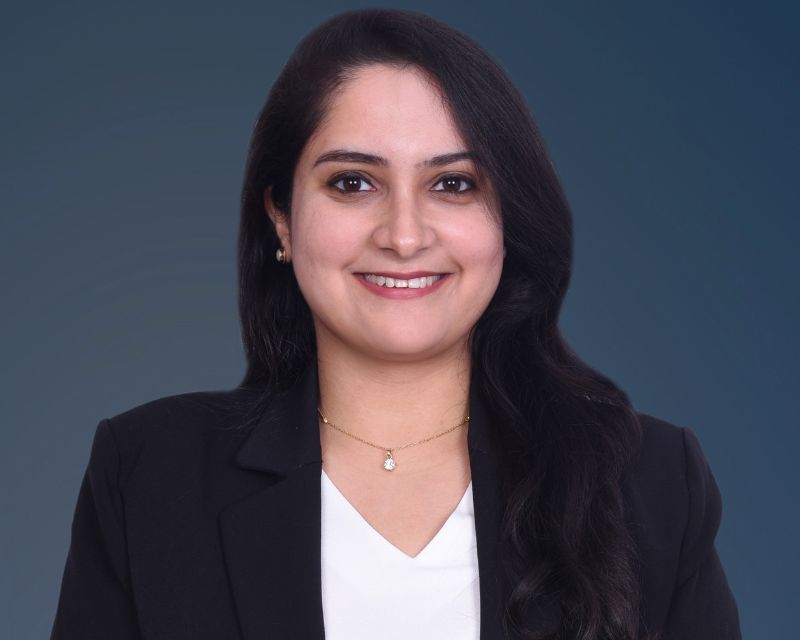
Citywealth Quick Insight Series on Wealth Trends, Arielle Ingrassia, Evelyn Partners
This week’s Citywealth Quick Insight Series on Wealth Trends is dedicated to Arielle Ingrassia, Associate Director, Investment Specialist at Evelyn Partners.

What is your assessment of the current global political landscape and its impact on wealth management strategies?
The global political landscape feels more fragmented and less predictable than it has in recent years. Heightened geopolitical tensions, shifting alliances and more polarised domestic politics have all contributed to periods of market volatility.
That said, political uncertainty is not new. Markets have always operated through election cycles, policy shifts and geopolitical events. What changes is the narrative, not the underlying principle.
For wealth management, the response isn’t to position portfolios around any single political outcome. It’s to build resilience through diversification, active risk management and a clear long-term strategy designed to perform across different political and economic environments.
Politics will continue to evolve. A disciplined, well-constructed portfolio remains the most effective way to navigate that uncertainty while preserving and growing private wealth.
In your opinion, how have recent policy shifts in major economies like the US, EU, China affected the long-term stability of private wealth?
Policy shifts shape the environment in which companies operate and, ultimately, their earnings. For example, fiscal expansion can support growth in certain sectors, regulatory tightening can pressure profitability, and changes in trade or energy policy can alter cost structures and margins.
That doesn’t necessarily undermine long-term stability for private wealth – but it does require more thoughtful positioning. When policy paths diverge across major economies, earnings outcomes can diverge too. Portfolios need to be flexible enough to navigate different interest rate environments, tax regimes and regulatory landscapes.
Rather than anchoring portfolios to one economic outlook, we focus on maintaining balance: global diversification, careful asset allocation and ongoing risk oversight. Over time, stability comes from adaptability – ensuring portfolios are structured to perform across a range of policy environments, not dependent on any single one.
As we continue to navigate uncertainty in global markets, how are wealth managers adjusting their strategies to preserve and grow clients’ wealth?
The backdrop has changed. Inflation is less predictable, rates are higher than much of the past decade, and geopolitical risk is more visible. That demands a more deliberate approach to portfolio construction.
There’s a stronger focus on resilience – stress-testing portfolios and avoiding concentration in any single outcome. Diversification has broadened beyond a simple equity-bond split, with greater use of alternatives and real assets to manage volatility and add differentiated returns.
Active asset allocation and disciplined rebalancing are also playing a larger role in protecting capital while positioning for growth.
The goal remains the same: preserve wealth in downturns and grow it steadily over time. Achieving that today simply requires a wider toolkit and greater flexibility.
How important is diversification in a post-pandemic world, and which asset classes are your clients focusing on?
Diversification is even more important today. In 2022, we saw equities and bonds fall at the same time — a clear reminder that the traditional 60/40 portfolio is not infallible. Many investors had assumed bonds would always offset equity risk. That assumption doesn’t always hold in a higher inflation, more volatile world.
As a result, clients are looking beyond the traditional equity-bond split. Hedge funds, infrastructure, gold and other real assets are playing a larger role in portfolios. These areas — once primarily used by institutional investors — can provide differentiated return streams, income generation and inflation resilience, as well as a hedge against geopolitical risk and rising sovereign debt.
This isn’t new territory for us. We have been managing multi-asset portfolios for decades. Bringing institutional-quality portfolio construction to private clients has long been central to our approach. The current environment has simply reinforced the value of that discipline.
Sustainability investing has gained traction over the past few years. How are you seeing it affect the portfolios of high-net-worth individuals, and is this trend sustainable?
We’re seeing clients increasingly want the option to reflect certain values or preferences within their portfolios. For some, that means a stronger sustainability focus. For others, it’s about avoiding specific sectors or emphasising particular themes. It’s rarely one-size-fits-all.
Our role is to offer flexibility. We build bespoke portfolios, so sustainability considerations can be incorporated in a way that aligns with a client’s objectives, risk tolerance and long-term goals.
Importantly, we don’t treat sustainability as a separate strategy bolted on to a portfolio. Where relevant, we integrate ESG analysis into our broader investment research and engage actively with companies we invest in. But the starting point is always sound portfolio construction and long-term value.
This trend is likely to remain because it is being driven by structural factors — generational wealth transfer, regulatory change and a growing recognition that environmental and governance risks are financially material.
What are the emerging risks and opportunities that wealth managers should be most aware of?
We’re in the middle of several structural shifts — geopolitical realignment, demographic change, rapid technological development, and the energy transition. These are long-term forces that will shape markets well beyond the current cycle.
On the risk side, elevated sovereign debt and looser fiscal conditions leave economies more sensitive to interest rates and inflation. Geopolitical tensions and resource nationalism are also likely to remain features of the landscape, contributing to periodic volatility and supply chain disruption.
At the same time, these trends create opportunities. Increased defence spending, reshoring of strategic industries and competition for critical minerals support parts of industrials, materials and commodities. Precious metals such as gold can benefit in periods of geopolitical strain. Meanwhile, advances in artificial intelligence and big data are driving productivity gains and creating growth opportunities not only in technology, but across the infrastructure and semiconductor ecosystems that underpin it.
Successful wealth management requires balancing capital preservation with selective exposure to long-term structural growth themes.
How have the needs and expectations of private clients evolved in recent months? Are there any new priorities or concerns they are expressing?
Private clients have more information than ever at their fingertips. The news cycle is faster and more reactive, which can heighten short-term concerns.
As a result, our role is less about providing more data and more about providing clarity – distilling what truly matters and maintaining a disciplined strategy despite the noise.
Ultimately, clients want reassurance that their portfolios are robust: stress-tested, well diversified and positioned to manage downside risk while still delivering long-term growth.
For UK clients in particular, tax and fiscal policy have become central considerations. Changes to capital gains, pensions and Budget measures directly affect long-term outcomes.
That’s where our total wealth management approach is important – combining investment management and financial planning to deliver a coordinated, tax-aware strategy aligned with clients’ broader objectives.
In what ways are clients seeking more personalized wealth management services, and how are you meeting those needs?
There’s no such thing as a typical client anymore. Circumstances vary – business owners, retirees, intergenerational families — and their needs evolve over time.
Clients increasingly expect a goals-based approach that adapts as their lives change. Investment strategy shouldn’t be static; it should evolve alongside milestones such as business sales, retirement, or succession planning.
We’re able to tailor solutions across direct equities, funds, sustainable mandates, AIM portfolios and cash management — but more importantly, we integrate that with financial planning. That combination is what delivers genuinely personalised advice.
With the rise of digital, how are private clients responding to this?
Digital tools have improved transparency and efficiency. Clients appreciate being able to access information quickly and communicate more flexibly.
But wealth management remains a relationship business. Technology enhances the experience — it doesn’t replace trust. Clients still want to know there’s someone accountable who understands their circumstances and can guide them through complex decisions.
Are there any new technologies or platforms that are making a significant impact on how private wealth is managed or delivered?
Absolutely. Advanced portfolio analytics and risk systems allow for more sophisticated stress testing and scenario modelling. Generative AI and automation are improving operational efficiency, which ultimately benefits clients through better reporting and faster insights.
For us, technology is an enabler. It allows us to spend less time on process and more time on high-value conversations — strategic thinking, long-term planning and building trusted relationships.
Evelyn Partners’ Citywealth Leaders List profile
Subscribe to the Citywealth Weekly Newsletter to learn more about Private Wealth Management.
Read more:
Evelyn Partners Interim Results 2023
Evelyn Partners continues expansion of Exeter office
Evelyn Partners agrees corporate charity partnership with Career Ready
Leaders List interview: 60 seconds with Matthew Spencer, Evelyn Partners
Evelyn Partners becomes Founding Partner of Edinburgh Futures Institute’s new financial services hub
Evelyn Partners appoints new Head of Financial Planning Advice
Citywealth Quick Insight Series on Tax Trends – Ian Dyall, Evelyn Partners

Citywealth Quick Insight Series on Trusts, Wills and Estates Disputes Trends – Shams Rahman, Edwin Coe
This week's Citywealth Quick Insight Series on Trusts, Wills and Estates Disputes Trends is dedicated to Shams Rahman, Head of Contentious Trusts & Estates at Edwin Coe.
Citywealth Leaders List, 60 second interview – Emily Dreas, Bank of America Private Bank
This week's 60 seconds Citywealth Leaders List interview is dedicated to Emily Dreas, Managing Director, Senior Market Executive at Bank of America Private Bank.