


Citywealth Quick Insight Series on Wealth Trends – Ben Kumar, 7IM
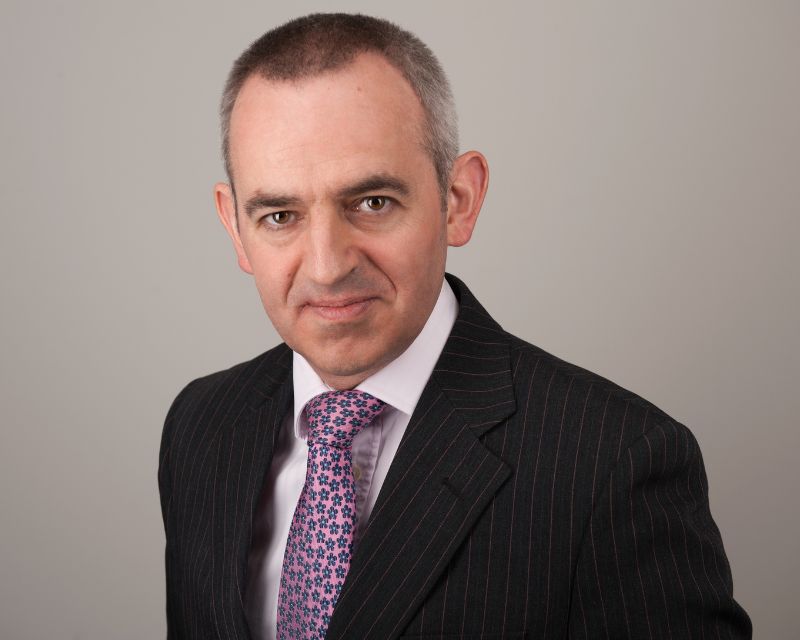
This week’s Quick Insight Series on Wealth Trends is dedicated to Ben Kumar, Head of Equity Strategy at 7IM, a UK-based investment and wealth management firm.

What is your assessment of the current global political landscape and its impact on wealth management strategies?
There’s often a narrative that the world’s getting worse, and that there’s never been a more difficult time to manage money. I just flat-out disagree. I’m not saying it’s EASY to manage money now – just that it’s never been easy. The 1970’s had oil shocks and inflation, the 1980’s and 1990’s was a tale of booms and busts, Cold Wars and Middle Eastern conflicts, and if anyone tells me that the 2000’s was a financial walk in the park, they’re lying! I imagine that in 2040, as Bangladesh and Indonesia come to blows (I’m making it up!), people will be wistfully remembering the 2020’s as a golden period.
I guess my point is that managing wealth is about taking risk. And it is the constantly changing world that leads to risks, and the chances which follow. The reason most clients choose to have someone like us invest their money is that the world is complicated – we get paid to navigate that, not complain about it!
In your opinion, how have recent policy shifts in major economies like the US, EU, China affected the long-term stability of private wealth?
A lot of long term growth, and a lot of short-term work!
The biggest policy shift has been the global movement away from defined benefit/guaranteed income/final salary schemes: It’s. On. You. All across the world, people are being given more and more financial responsibility for the futures. And that means more money flowing in, more need for advice, more need for communication and expertise. Chuck into the mix a permanent push-notice news cycle, and clients are more in need of someone to rely on than ever.
As we continue to navigate uncertainty in global markets, how are wealth managers adjusting their strategies to preserve and grow clients’ wealth?
“Don’t just do something, stand there.” No one’s quite sure who really said this first, but it’s useful to bear in mind. As the world gets noisier and noisier, the temptation is always to DO something. To shift portfolios, to hedge, to tinker. But some of the most successful positions we’ve held over the past five years have been the ones we’ve not touched. Simply owning global equities over the last two or three or five years has been a fantastic way to grow wealth – despite the ‘reasons’ to sell (COVID! Ukraine! Trump! AI bubble!).
So we try to resist the urge to muck about with portfolios. On average, we might do one or two important things a year – but that average might well be skewed by a year like 2020 where we did a LOT of buying of cheap things, vs a year like 2021 where we did almost nothing, but watch our previous positions appreciate.
How important is diversification in a post-pandemic world, and which asset classes are your clients focusing on?
Diversification is at the heart of what we do. If the entire investment team were sunk at sea (unlikely), the bones of the portfolios are built to last for the next decade or more.
The problem with diversification is that it will never be the best performer, by definition. You’ll always be holding something that doesn’t do so well … that’s the plan! So we don’t try to look for the next big thing, instead we want to own lots of different things. In equities for example, financials spent years in the wilderness, as investors questioned whether banks could ever be trusted. And then, in 2025 banks outperformed almost everything. How to capture that shift? Own them already, even when others don’t!
The same is true in fixed income and alternatives – look for lots of different things; different markets, different sectors, different approaches.
Sustainability investing has gained traction over the past few years. How are you seeing it affect the portfolios of high-net-worth individuals, and is this trend sustainable?
The pendulum has actually started swinging back. In 2021, sustainable indices were top performers, so it felt like you could eat your cake and have it too, with strong performance and a moral bump. But then the momentum swung away, and it turned out that going green cost money … A lot of people shifted back into more traditional portfolios – following the returns, not the philosophy. And fair enough – it’s as much a choice as vegetarianism or buying an electric car.
What are the emerging risks and opportunities that wealth managers should be most aware of?
I think the biggest shift in the next decade or so is going to be away from supply chain efficiency and towards supply chain security. The last decade has shown that if you rely on the other side of the world for your oil or vaccines or tanks or microchips, you’re at risk of being cut off. The “reshoring” trend that was started by Donald Trump in 2016 is spreading across the world. National champions are coming back – which might mean a few current giants struggle.
The other thing investors need to change their thinking on is the “Emerging Markets”. It’s not the way the world works any more, you can’t just bundle unrelated groups of nations together. China and India are the 2nd and 4th biggest equity markets in the world. Take them seriously and separately!
How have the needs and expectations of private clients evolved in recent months? Are there any new priorities or concerns they are expressing?
I actually think that many clients have become more relaxed about market volatility. They’ve built up a resistance. I’ll give you an example; when Russia invaded Ukraine in 2022, we were swamped with calls. But this year, when the US bombed Iran, zero. Many of them are more worried about their personal tax/inheritance situation in the UK, and they just let their investments compound. Great!
In what ways are clients seeking more personalized wealth management services, and how are you meeting those needs?
If you’re going to put your life’s savings in someone else’s hands, the very least you might expect is being able to talk to the people doing the investing. You want to know their names, what kind of person they are, how they think. Doesn’t mean a detailed portfolio walkthrough, but we’re seeing more and more face-to-face intro’s, just to make the whole service more tangible.
With the rise of digital, how are private clients responding to this?
It’s helpful for information gathering, useless for connection. So we’re having more face to face meetings, where the client is fully aware of the portfolio performance/positioning, but wants to re-inject some humanity into the relationship. It’s the digital gateway to the physical world (seen in other industries too – Disney produce content to get you into their theme parks, record labels want you at concerts etc).
Are there any new technologies or platforms that are making a significant impact on how private wealth is managed or delivered?
There’s a lot of hype about AI revolutionising the finance industry. It will. But not immediately. It’s worth remembering that the investment world is a lot like the electricity grid, or the sewage system; built decades, or centuries ago, and it takes a massive amount of work to change even a tiny part ( some trades still have to be placed by fax!). There are lots of little improvements which will add up over time, but most clients won’t even notice them (it’s about efficiency in the part of the process they never see).
Perhaps the most obvious thing they’ll notice is that their advisers will ask to record every meeting, so that AI can transcribe the notes. Other than that, the progress will be piecemeal and largely invisible.
Subscribe to the Citywealth Weekly Newsletter to learn more about Private Wealth Management.
Read more:
Citywealth Brand & Marketing Awards 2026
Members of industry leading ‘UK Wealth Managers on Climate Group’ come together to initiate change
Wealth Management Awards: Recognising Excellence – Citywealth
Key Takeaways
- Wealth management faces risks from global political changes, but managing wealth has always been challenging.
- Policy shifts have increased financial responsibility for individuals, leading to heightened demand for expert guidance.
- Diversification remains crucial, as successful strategies often involve holding various asset classes over time.
- Clients are seeking more personalised services and face-to-face interactions to reinforce trust in their wealth managers.
- Sustainability investing trends fluctuate, often influenced by market performance more than adherence to ethical philosophies.

Citywealth Quick Insight Series on Tax Trends – Ian Dyall, Evelyn Partners
This week’s Tax Trends is dedicated to Ian Dyall, Head of Estate Planning at wealth management firm Evelyn Partners.
Quick insight series, Top 10 Crypto & Digital Asset Trends – Sean Kiernan, Greengage
This week’s Top 10 Crypto & Digital Asset Trends is dedicated to Sean Kiernan, CEO, Greengage & Co.