


Citywealth: Family, Wealth Management, and the Power of Planning
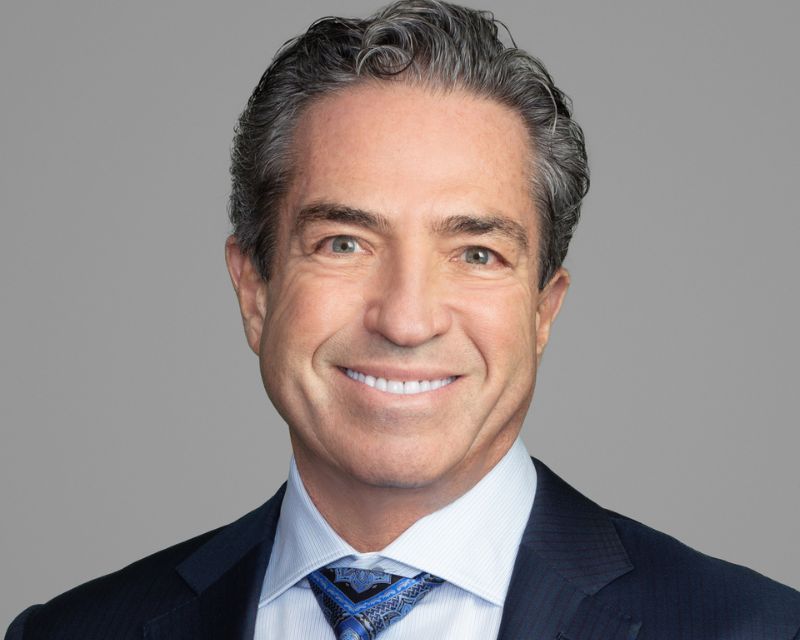
Quick insight series on wealth management and family dynamics with Joshua Rubenstein, Partner, National Chair, Private Wealth at Katten Muchin Rosenman
How do you manage the challenges of family dynamics when advising UHNW clients, especially across multiple generations?
That depends upon so many factors. Is there a family office? If so, does the family office help or hinder the process. Is there one lawyer for the family, or do different family members use different lawyers (or does the family office itself use multiple lawyers)? Do you have a wide range of age diversity on your team, so that family members can form relationships with the team members they relate best with? Having a diverse team can be critical.
What role do family values play in wealth management decisions? Can you give an example where these values shaped a key decision?
This depends upon whether the family has a diversified investment portfolio or has their wealth predominantly in a family business. In the latter case, agreement as to family values is critical. And if there is not complete agreement as to family values, then it becomes critical at least to give everyone input. In the former case, it is easier to set things up so that wealth management decisions can be made differently for different family members. Sometimes that means that selling the family business is the best way to go.
How do you help families communicate about wealth management and succession planning?
The first step is to remind the patriarch or matriarch that even if they are reserving all decisions to themselves, clearly communicating their decisions to everyone is crucial. Most family disputes arise over surprise and disappointment — from a lack of clarity as to what the matriarch’s/patriarch’s true intentions were.
Have you helped set up family governance structures? What are the key elements of a successful one?
Family governance structures are unique to each family. They need to be clearly understood and capable of being administered by the family. Structures that are too complex can backfire. The structures need to be understood by everyone, and there needs to be buy in.
How do you handle situations where younger family members have different financial goals or risk preferences than older generations?
This is hard to achieve if the wealth is in a single asset. Rather than have one massive trust for everyone, it can be best for each beneficiary to have his or her own trust (or his or her own trust for his or her separate family line). Then each trust can be administered differently.
Family conflicts often arise during wealth transitions. How do you manage disagreements about wealth distribution or management?
It is a mistake to force family members to remain economically tied to one another. Good family structures provide an exit mechanism for beneficiaries who want to separate. There should be a buy out mechanism, whether at book value, appraised discounted value, or appraised undiscounted value, depending upon whether you want to encourage family members to stick together by creating a financial penalty for not sticking together. But setting forth a clear separation mechanism helps to avoid the disagreements.
Can you share a challenging family conflict related to wealth or succession, and how you helped resolve it?
The creators of a vast, privately held US oil and gas business left it in a completely discretionary partnership holding structure which was in turn owned equally by five completely discretionary trusts, one for the primary benefit of each of their five children. They named their youngest son and the husband of their youngest daughter as executors of their estates, as trustees of everyone’s trusts, and as managers of the business. This foolish plan had the effect of putting the two youngest (who were our clients) in charge of the three oldest, and made the interests of the trusts of negligible value, as the trusts and the partnership were completely discretionary, and profits were to be plowed back into the business. Even though there was no buy-out mechanism, we settled a ten year estate contest by buying out the interests of the trusts for the three oldest children for a negotiated some, freeing up our clients to run the business in the future for themselves without interference.
How do you address differences between generations on issues like legacy, social impact, and aligning wealth with family values?
It is important to have different pots of money for different groups of family members, so each can have input into the management of their pot in a manner that comports with their own values, without negatively impacting anyone else’s pot. This way, some can be more ESG conscious than others, and some can be more philanthropic than others.
Can you tell us about a family that faced an unexpected crisis, like the sudden death of a family leader, and how you helped them manage the transition?
We represented a family whose patriarch created a vast real estate empire, but who had no heir apparent to run it. During his lifetime, we had him attempt to turn over the reins to one child at a time, to see who would emerge as the natural leader. It turns out that the youngest son was far and away the most capable and most fair minded. We had him installed as successor during the patriarch’s lifetime. Following the patriarch’s death, three of the five children went along with it, and two did not. But because it had been carefully planned out while the patriarch was alive and competent, the structure withstood attack by the two children who chose to contest.
How do you prepare UHNW families for the unexpected and ensure their wealth plans remain strong during times of crisis or sudden change?
These days, UHNW families cannot write anything in stone. They must assume that everything they do will need to change, and that everything they do will be viewed with an eye toward contest. So even irrevocable structures must be amendable by someone according to a process that is spelled out. Further, each and every decision must be carefully documented, and impeccable records kept, so that decisions can be judged by the contemporaneous thought process, not by 20:20 hindsight.

Citywealth Leaders List interview: 60 seconds with Theo Antoniou, Spencer West, Cyprus
This week's 60-second piece is dedicated to Theo Antoniou, Founding Partner at Spencer West, Cyprus.
Citywealth Leaders List interview: 60 seconds with Eleni Drakou, Michael Kyprianou, Cyprus
This week's 60-second piece is dedicated to Eleni Drakou, Partner at Michael Kyprianou Advocates & Legal Consultants.