


Big boats and their buyers
For those of us not fortunate enough to be spending late September in Monaco at this year’s Yacht Show, this feature brings tidings from the annual event. We get the inside scoop on who’s buying what, how sustainability is showing up, and where the industry may see stormy seas.

Taking place from 27-30 September in the idyllic Port Hercule, the Monaco Yacht Show (MYS) is the standout superyacht event of the year. This year will see the consolidation of the first cycle of MYS’ three-year development programme ‘Seducation’ – an initiative designed in collaboration with the industry and based on the four key pillars of environmental innovation, design, understanding of yachting, and visitor experience. The MYS is striving to highlight the true ‘ecosystem’ of yachting by promoting environmentally responsible innovation and enabling visitors to discover the latest and most innovative yachting trends in an immersive and educational fashion. Andrew Charlier, Partner at HFW, agreed that sustainability is at the fore of this year’s show. He said: “[W]e are seeing some innovative yachts in build working on alternative fuels as well as looking at efficiency gains from technological changes. Some of this will be showcased at the MYS this year. There is still work to be done but we are seeing some measurable progress.”
Mark Needham, Partner and Joint Head of the Superyacht and Luxury Asset Group at Hannaford Turner, said: “Sustainability is extremely topical and we are seeing some of the leading shipyards in the industry proactively working on sustainable solutions to common points of concern. Taking Burmese teak for example, the forward thinking shipyards are introducing prohibitions into their contracts preventing the use of Burmese teak and recommending the use and development of alternatives. This trend is likely to continue as the demand for sustainable materials continues to grow.”
He added: “From a fuel perspective, market data indicates that the world orderbook for vessels generally (i.e. not just superyachts) with alternative fuel propulsion is increasing. LNG is still the dominant alternative fuel source being selected for commercial tonnage, although this is widely now referred to as a “transition fuel” in the pathway to decarbonisation. Around 30 per cent of gross tonnage on order will be able to operate on alternative fuels on delivery, with methanol and hydrogen-fuelled newbuildings starting to emerge and strong interest being shown in ammonia. There is considerable interest in batteries and hybrid solutions (where a battery typically combines with a diesel engine). In short, it is a time of great change in maritime propulsion technology, which will affect almost all vessel types (including superyachts), albeit one that will last many years. It is clear that there is no one solution and that many challenges lie ahead.”
David Reardon, Partner at Hill Dickinson, Monaco commented: “Sustainability is a prominent theme and the Show will showcase many cutting edge technologies that strive to reduce the environmental impact of yachting. On the propulsion side, this includes technologies to reduce emissions through filtration, increase fuel efficiency through improved chemical reactions and even replace conventional oil entirely. These innovations are being adopted – and effectively subsidised by – yacht owners and illustrate how the industry can drive changes that are ultimately deployed in the commercial shipping sector.”
He continued: “While operation is obviously significant, the raw materials consumed in constructing yachts is also a hot topic for discussion. There are improvements to the environmental impact that can be made in the newbuild process, which will be showcased during various educational lectures and group sessions hosted by the organisers during the week, but it is also significant that refitting a large yacht is gaining in popularity. While the motivation may in part be due to the congested order books and long lead times required to build large yachts of this type, refits – no matter how extensive – represent a more environmentally sensitive approach than starting entirely from scratch and elevate the vessels themselves to modern environmental standards. The perfect illustration of this approach and what can be achieved is CARINTHIA VII which has recently emerged from a long refit and will feature as one of the stars of the Show.”
What’s for sale? And who’s buying?
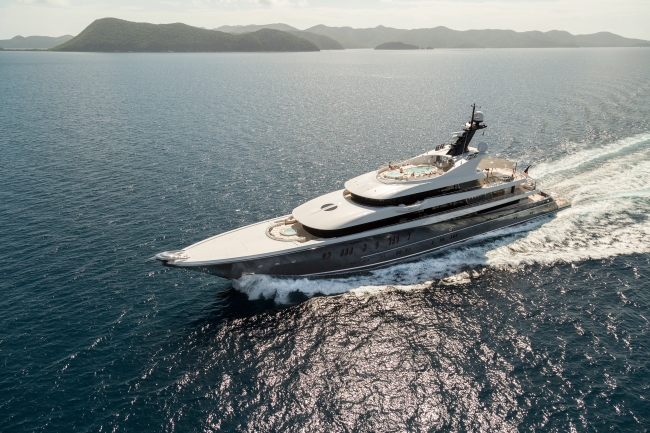
Cecil Wright, a boutique superyacht brokerage house specialising at the very top end of the yachting market, are responsible for one of the largest yachts for sale at this year’s show. The company, which has a particular focus on Northern European yachts over 60m, will have three yachts attending this year and one at anchor, including the 90m Lurssen PHOENIX 2 (selling for €124,950,000 VAT PAID) and the sleeker MISS SILVER (36.12m, selling for €7,950,000).
Andrew Charlier highlighted some of the second-hand yachts that have sold this year, “including AHPO (115m), MADSUMMER (95m), HERE COMES THE SUN (89m), KISMET (95m) to name a few. The HFW yacht teams in London and Monaco have been kept very busy again this year.”
But who is putting down the big bucks for these specimens? David Reardon said: “The market for large yachts is very international in nature with no particular nationality dominating. Clearly with the ongoing conflict in Ukraine and the associated sanctions, the Russian community is not active at present. The American market remains strong with no shortage of interest or apparent concern for global economic conditions. As regards the age profile, our experience is that yacht owners reflect the broader UHNWI community although with Millennial UHNWIs under represented.”
Mark Needham agreed: “There has been a noticeable increase in spending from US and Middle Eastern buyers and a significant decline in the number of Russian buyers in the market, as a consequence of the sanctions and restrictions imposed on Russian buyers and owners of superyachts. There is certainly a greater look west’ attitude prevailing in the market.” He highlighted: “As an overall trend, the number of younger buyers entering the market has never been higher, which is a direct reflection of wealth generally becoming younger.”
Navigating stormy seas
Despite the glitz and glamour of the event, not everything is always such smooth sailing. We uncovered the areas where the industry may be navigating stormier seas. Mark Needham noted the “sharp rises” in the cost base of labour and materials necessary for the construction of these yachts on show, which “has given rise to the need to introduce price escalation clauses into shipbuilding agreements in a way that hasn’t been necessary in the past decade.” He continued: “This has necessitated focused discussions between shipyards and buyers about the cost risks associated with building superyachts and a discussion on how those cost risks are allocated between the parties. Whilst these are not ‘novel’ issues in the construction of yachts per se, with new technology such as batteries so dependent on raw material production, in the future any shortages in these could impact supply and cost, the consequences of which will ripple through the supply chain. This has been seen in the semiconductor supply chain, which was already under pressure before the covid-19 pandemic, but industry disruption during lockdowns, together with geopolitical issues and natural disasters, led to a global chip shortage from late 2020.”
David Reardon said: “While there are no new barriers per se, there have been a number of examples of protests and yachts being vandalised such as the two recent attacks on KAOS by environmental groups. While these are isolated occurrences, they do highlight the risk that the industry becomes inextricably linked with pollution and climate change and ultimately socially unacceptable, the impact of this perception being intensified by the global trend towards greater transparency as to beneficial ownership.”
Subscribe to our weekly newsletter here, to ensure you don’t miss out on any future features.


Switzerland: market shifts and maintaining stability
Citywealth caught up with professionals working in the wealth management market in Switzerland to discover recent news and domestic views from the historic home of private wealth.
Winners of the Brand Management and Reputation Awards 2023
Citywealth interviewed some of the individuals who won an award at the Brand Management and Reputation Awards 2023, learning more about their industry and career journeys.